

A Day in Saijo: Walking Through Hiroshima’s Sake Capital
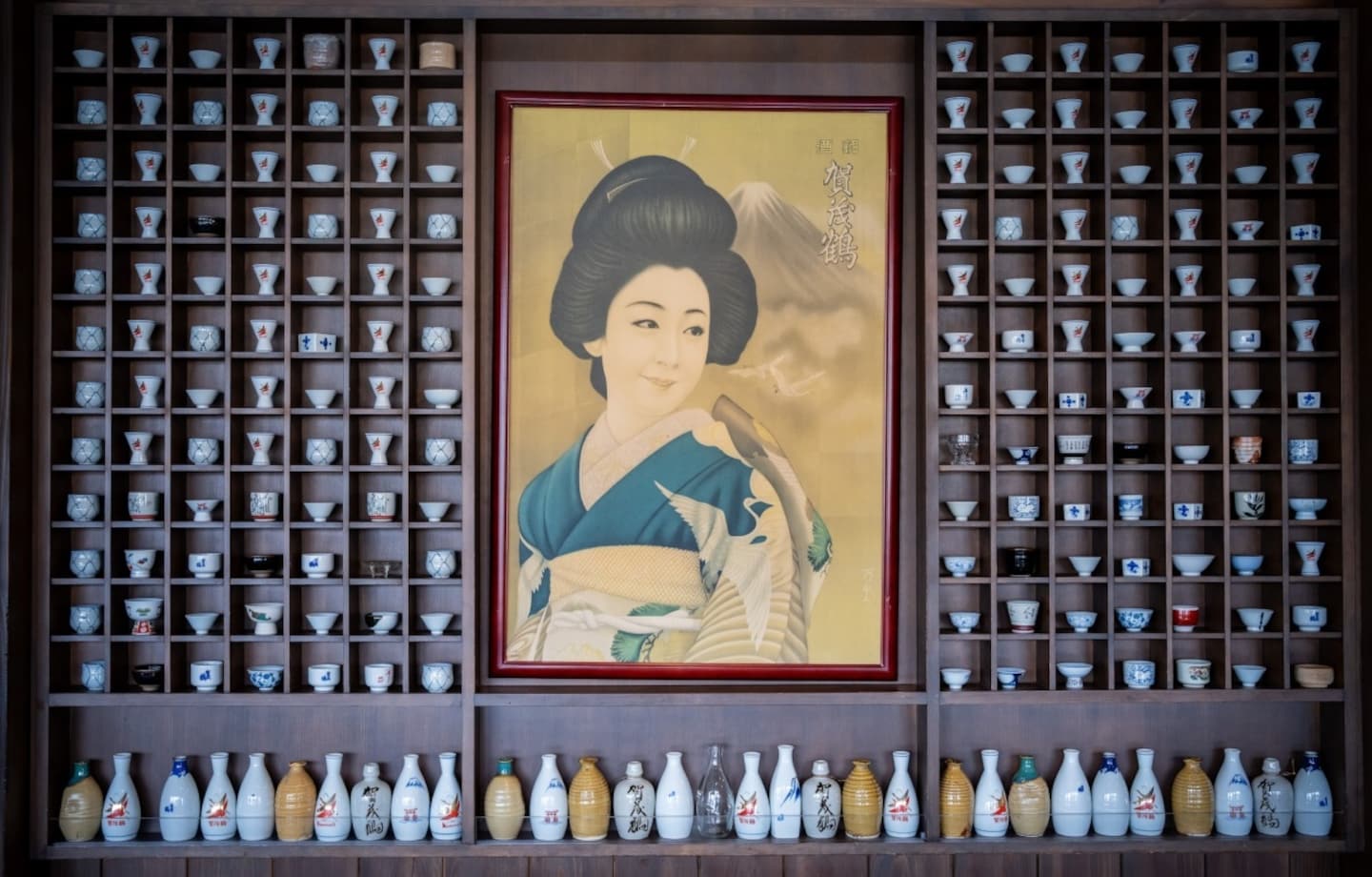
A historic Kamotsuru advertisement framed by countless sake cups offers a glimpse into Saijo's enduring brewing culture.
For anyone interested in sake, Saijo should be high on the list of places to visit in Japan. Less than an hour from Hiroshima Station, it is one of the country’s most compact sake destinations. Seven breweries sit within walking distance of one another along Sake Brewery Street, their namako-walled storehouses—with their distinctive white-and-black plasterwork and tall brick chimneys—shaping the townscape.
By Cindy Bissig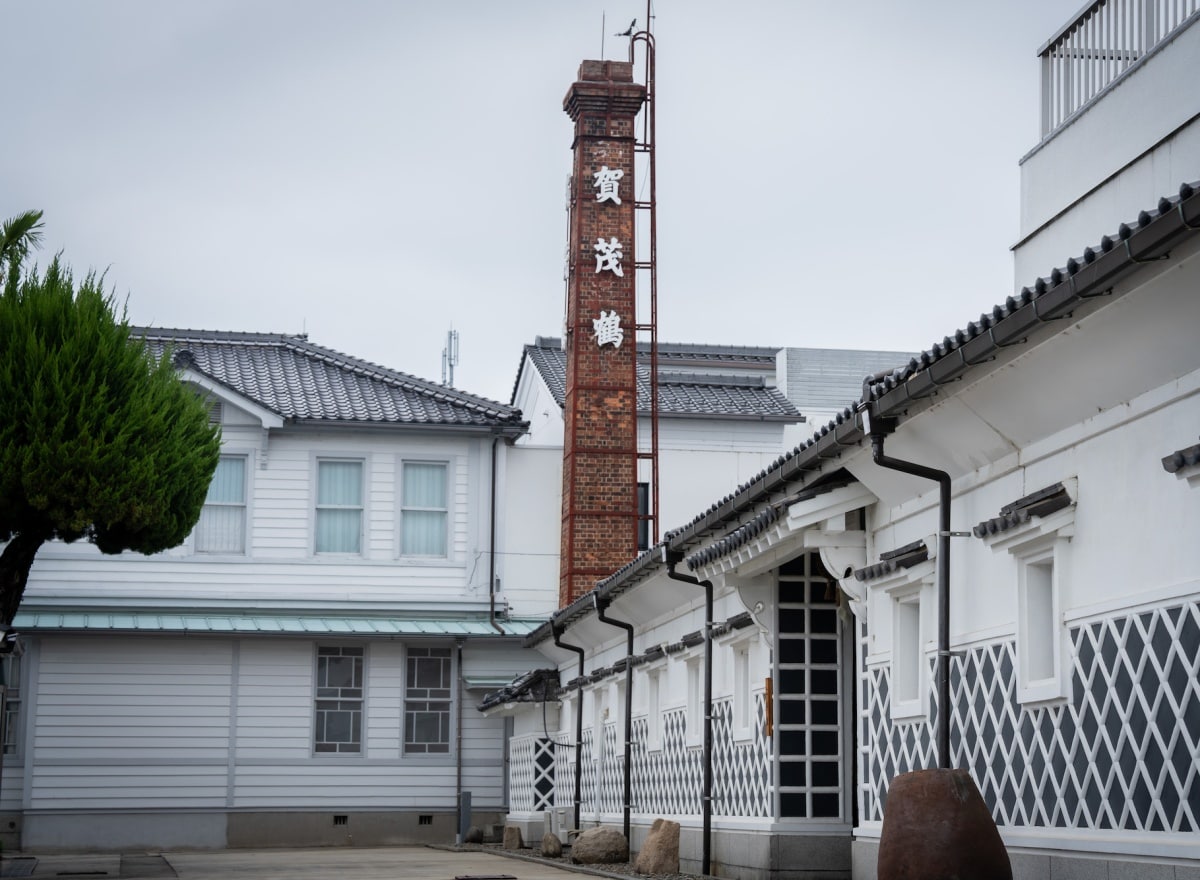
Traditional white-and-black namako walls meet Kamotsuru's landmark brick chimney in the heart of Saijo Sakagura-dori.
Hiroshima has long been considered one of Japan’s great sake-producing regions, despite the local soft water once being regarded as a disadvantage for brewing (Its low mineral content left yeast short of the nutrients needed for vigorous fermentation, making the process slower and less reliable). That changed largely through the work of Senzaburō Miura in the late nineteenth century. Miura developed a brewing method adapted to soft water and, rather than keeping his discoveries secret, shared them with other brewers. In doing so, he helped transform Hiroshima into a major sake-producing region and earned a reputation as the “father of ginjō-shu.”
I had visited Saijō before, but I had never managed to visit all seven of its historic breweries. This time, I arrived with a challenge in mind: Could I explore the entire brewing district in just one day?
Getting Ready for the Breweries
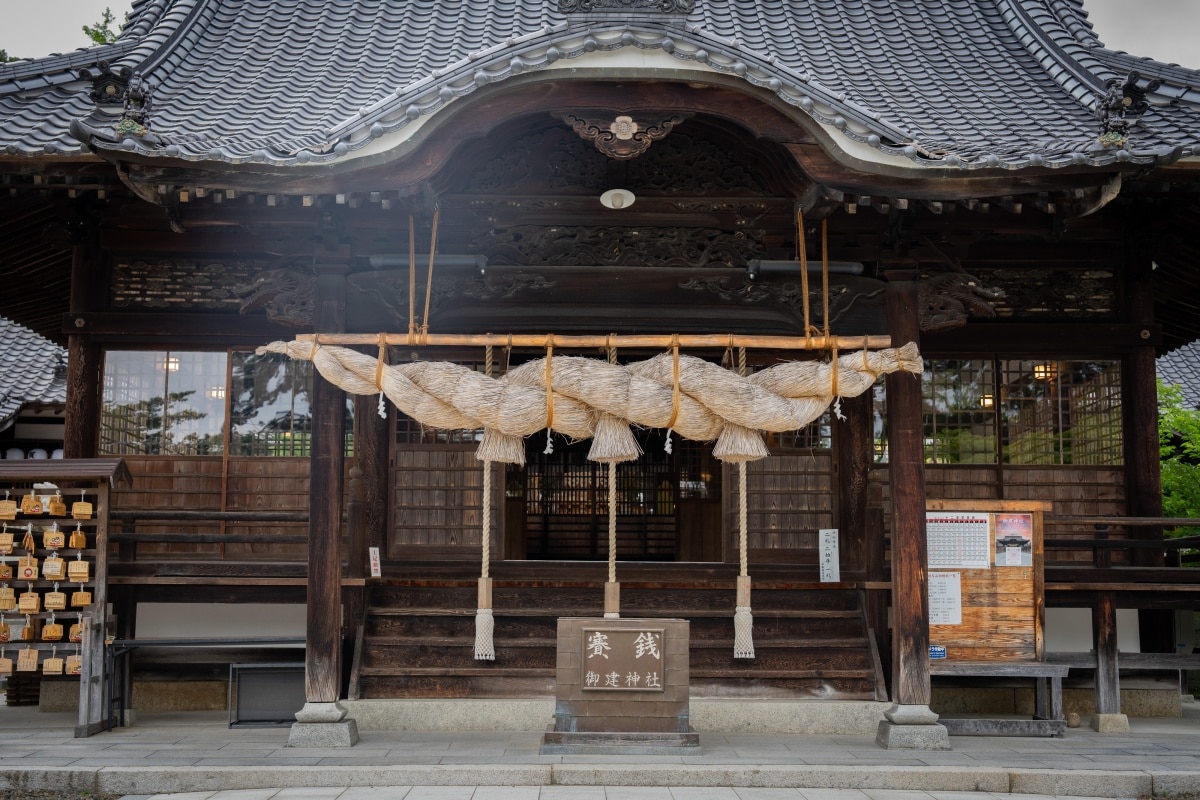
Mitate Shrine provides a quiet starting point for a day spent exploring Saijo's celebrated sake culture.
The first thing I did after arriving was head to the Higashihiroshima City Tourist Information Center on the station’s second floor. It is a useful first stop for several reasons. You can pick up an English walking map, find out which breweries are open that day, and check current tasting times—important, as not every brewery opens every day of the week.
Most charmingly, here you can also collect a small piece of paper shaped like Nonta, the sake-loving tanuki—or Japanese raccoon dog—mascot of Higashihiroshima tourism.
You write a wish on the Nonta-shaped paper and carry it to Mitate Shrine, one of Saijo’s sake-related spiritual sites on the north side of the station. In front of the shrine stands Nonta Daimyojin, a small guardian figure with one remarkably large ear. It is customary to whisper something you want to get off your chest into his ear, then place your wish and a small donation in the box beside him. Of course I did, as this seemed like such a great way to start the day before making my way to the tasting rooms.
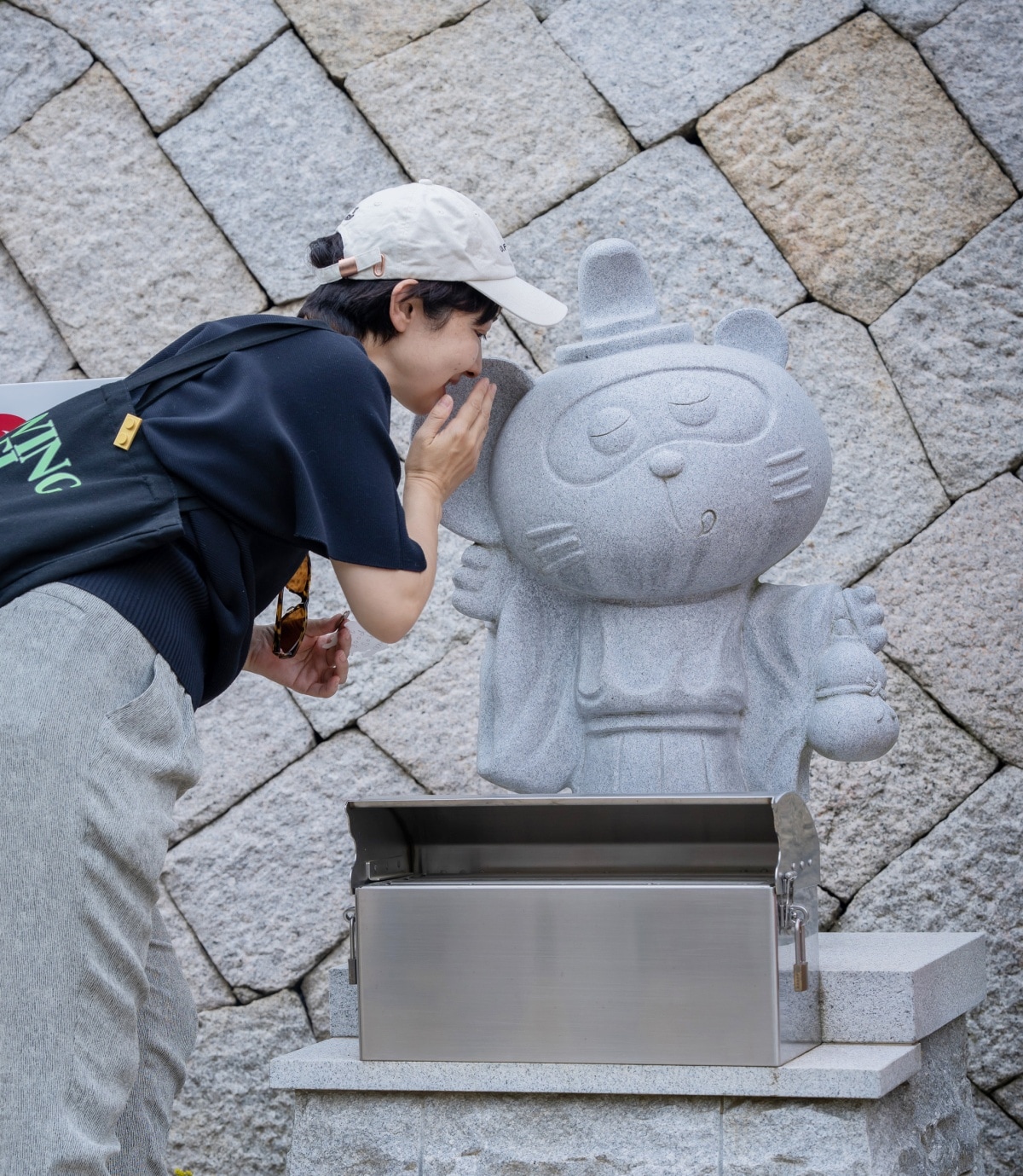
Nonta Daimyoji is waiting for you and is all ears. Share your confessions or anything else you need to get off your chest before heading to the breweries.
Learning More About Sake at Kamotsuru
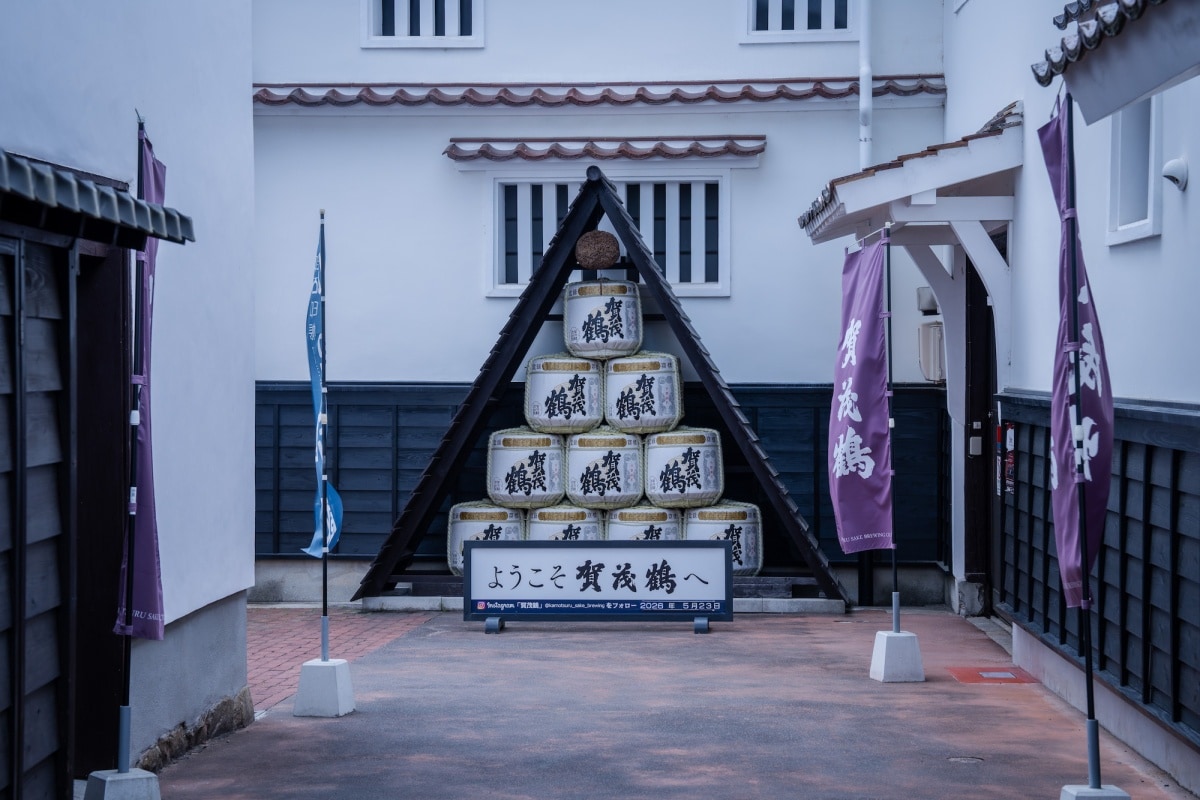
Decorative sake barrels welcome visitors to Kamotsuru, the first brewery stop of the day!
I adjusted the official route and began at Kamotsuru, founded in 1873 and one of Saijo’s best-known producers. I made this change because its excellent visitor room offers one of the best introductions to sake brewing in the district.
Before going inside, I stopped to drink from the well at the entrance. Water has played such an important role in Hiroshima’s brewing history that tasting it before trying the sake felt like the right way to start. Inside, displays explain how sake is made and introduce the brewery’s history. For a first tasting, the Daiginjo Tokusei Gold is a must. Famously served to then-U.S. President Barack Obama during his visit to Japan in 2014, it is dry yet mellow, with an elegant aroma and rounded texture.
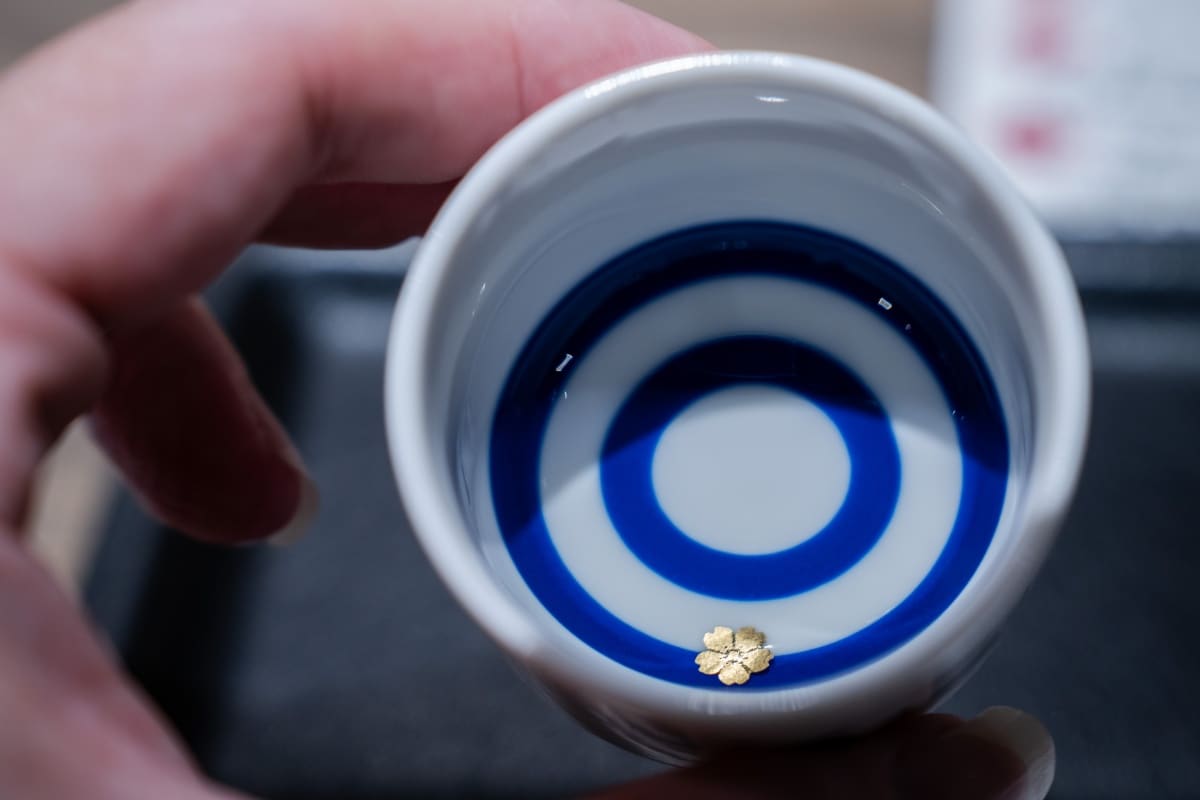
Count yourself lucky if you find one of Kamotsuru's Daiginjo Tokusei Gold delicate gold-leaf cherry blossoms in your cup.
There is something else that makes this sake special. Two pieces of gold leaf shaped as cherry blossom petals float inside each bottle. If you are lucky enough to find one in your cup, do not throw it away; it can be attached to a smooth surface as a tiny memento of your visit. Also, don’t miss the optical-illusion sake photo op—a little reminder that sake should, first and foremost, be fun.
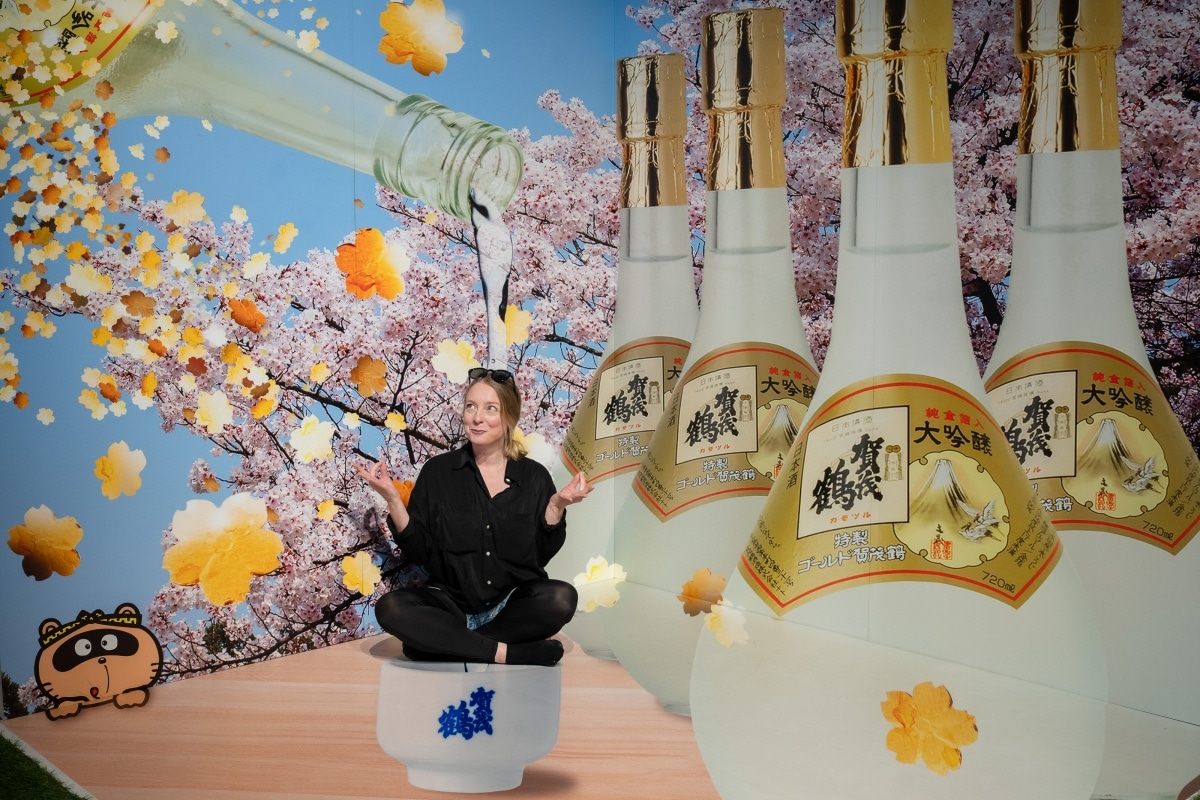
If only finding my inner Zen were always that easy.
Moving Deeper into the Brewery District
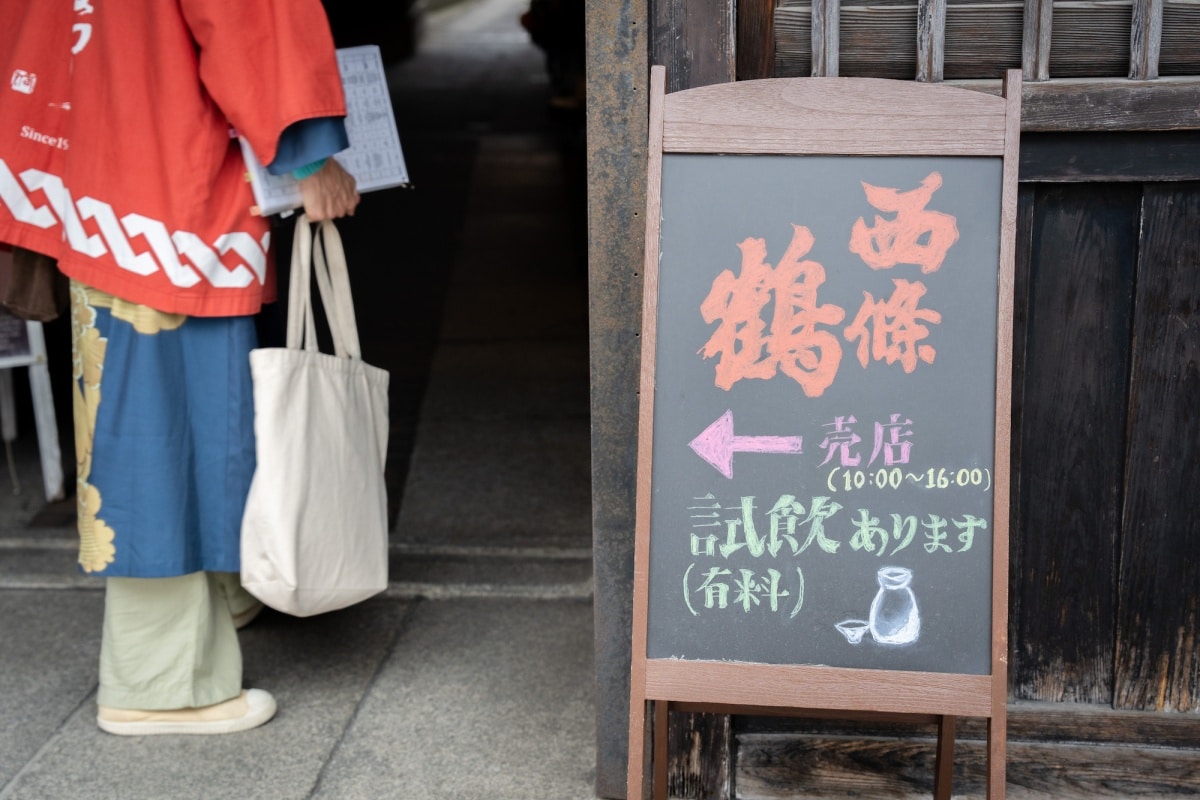
Follow the arrow: tastings await at Saijotsuru, but the ginjo-flavoured gelato may just steal the show.
My next stop, just around the corner, was Saijotsuru. Before entering, look for the Meiji-era stained-glass window depicting a crane. It is a beautiful piece of art and exactly the kind of detail that can be missed when focusing only on the sake. A good choice here is the Muroka Junmai Namazake, an unfiltered, unpasteurized junmai sake available only at the brewery. They also have ginjo-flavored gelato, which was delicious.
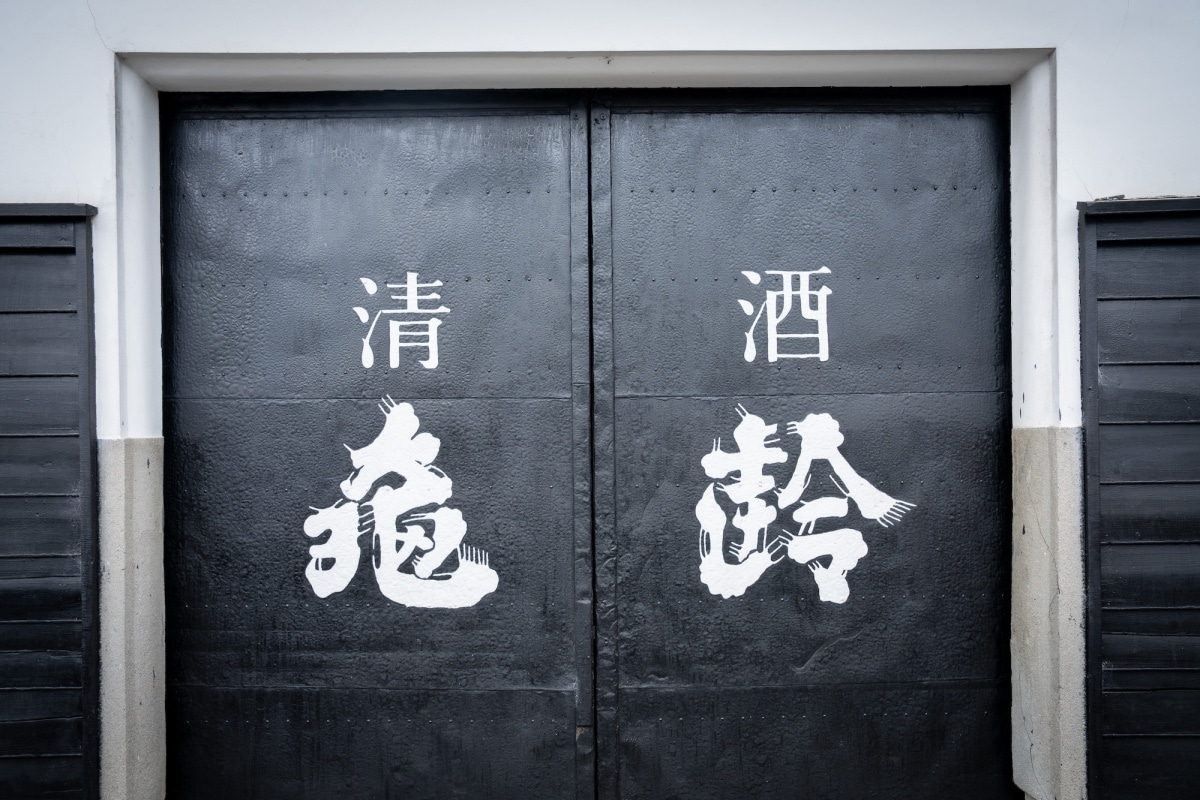
Behind these imposing doors lies Kirei. The first kanji '亀' means tortoise, a traditional symbol for longevity and prosperity, and perhaps a subtle hint to stay a little longer
From there, I continued to Kirei, which may be one of my favorite Hiroshima sake brands and one I tend to order whenever I spot it. Its sake is generally somewhat drier, providing an interesting contrast with the regional norm. The brewery’s name includes the character for tortoise, a traditional symbol of longevity and prosperity, and you will see them throughout the visitor space. The recommended sake here is the Daiginjo So, made with highly polished Yamadanishiki rice. It is rich and aromatic, with a clean finish.
A Midday Pause at Kugurimon
With three breweries down and four to go, I was ready for a short lunch break. I chose Kugurimon because the café serves several local specialties incorporating sake kasu, or sake lees, as well as amazake (a nonalcoholic drink made from rice kōji or sake lees). I could not resist its sakekasu cheese toast. There is something quite addictive about the combination of sakekasu and cheese. And as expected, it hit just the right spot and was substantial enough to slow the pace without turning lunch into a lengthy restaurant stop.
Back on the Brewery Trail
Freshly recharged, I continued to Fukubijin. Founded in 1917, the brewery was formerly known as the Saijo Brewing School and trained brewers who later carried their knowledge to breweries across Japan. For the tasting, I ordered the Special Junmai Himeama. It comes in a soft pink bottle that, to be honest, I probably would not have chosen based on its appearance alone. This sake was definitely on the sweeter side but so well balanced it was a pleasant surprise.
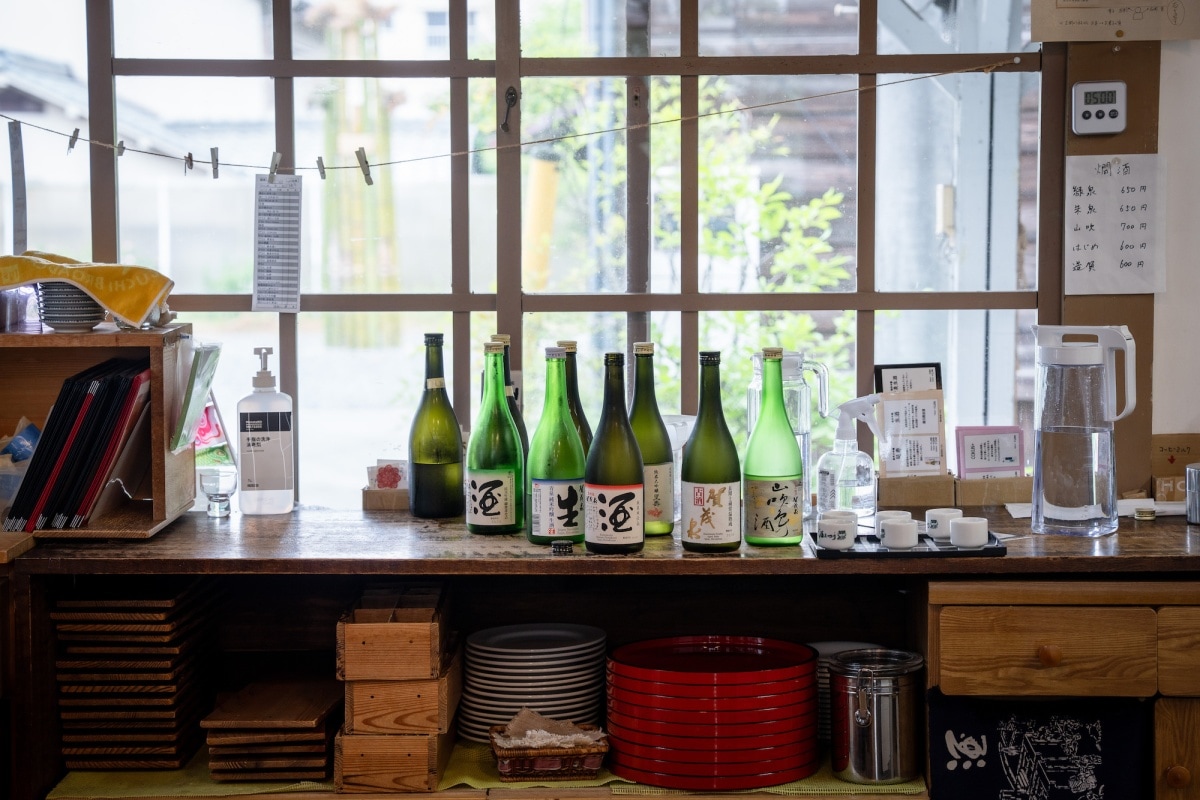
At Kamoizumi, choosing the bottle is only half the challenge. Many of their sake are equally (or even more) delicious when warmed—if in doubt, choose nurukan, which is slightly warmed to around 40°.
Next came Kamoizumi, founded just a few years earlier in 1912 and known for its commitment to junmai sake made only from rice, koji, and water. Its Sake Café Shusenkan is an inviting place to stop. Here, you can also get coffee brewed with the same water used to make the sake and browse a small sake library. The books are all in Japanese, but it is worth looking around even if you cannot read them. I had the Junmai Ginjo Shusen Honjikomi and could easily have ordered another glass and called it a day. But with two more breweries on the roster, I decided to move on.
Completing the Challenge
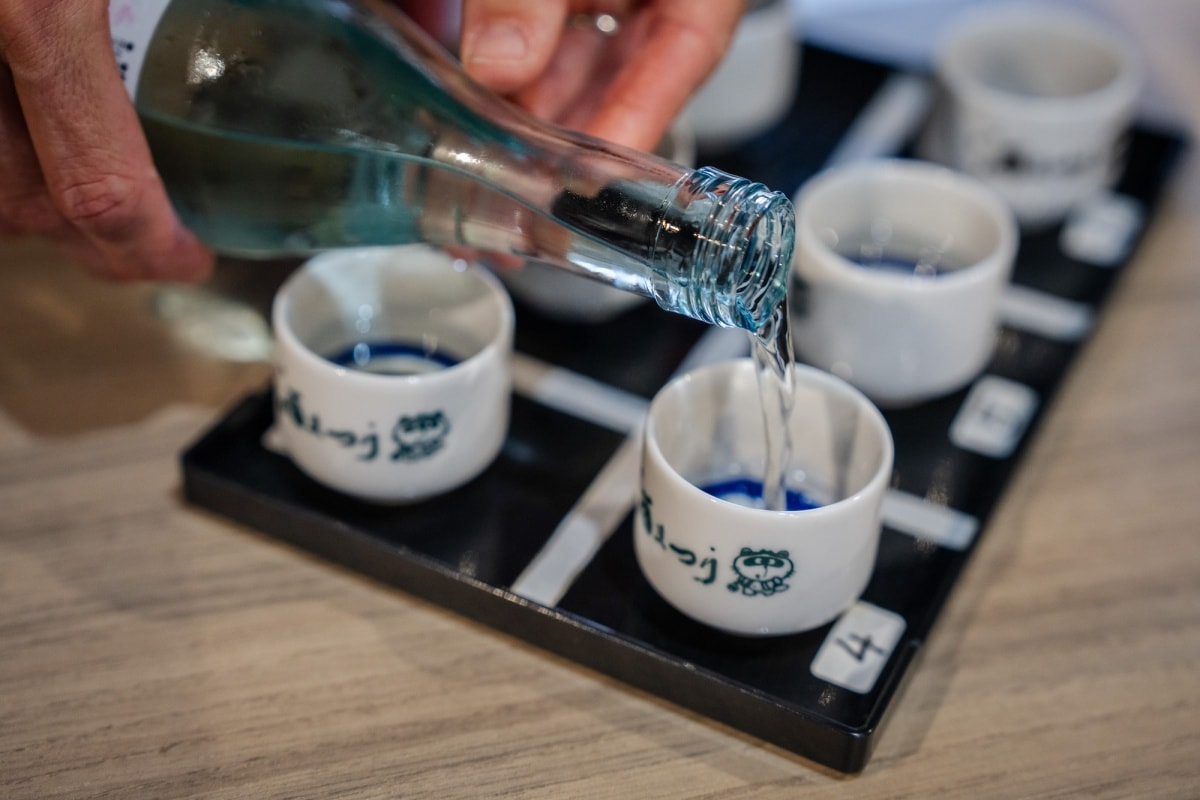
At Hakubotan, more than 350 years of brewing history are poured one small cup at a time.
If you are a history buff, Hakubotan—one of Hiroshima Prefecture’s oldest breweries, with a history stretching back to 1675—will be a real treat. Its name comes from the peony crest of the Takatsukasa family, one of Kyoto’s five regent houses, and the brewery’s visual identity is closely connected to Shiko Munakata, the celebrated twentieth-century woodblock artist. Reproductions of his peony works and bottles bearing his artwork are displayed in a small gallery. For the tasting, try the refreshing and approachable Junmai Ginjo Hakubotan. On weekdays, the visitor room is not continuously staffed, so ring the intercom for assistance—or call ahead if Hakubotan is a must.
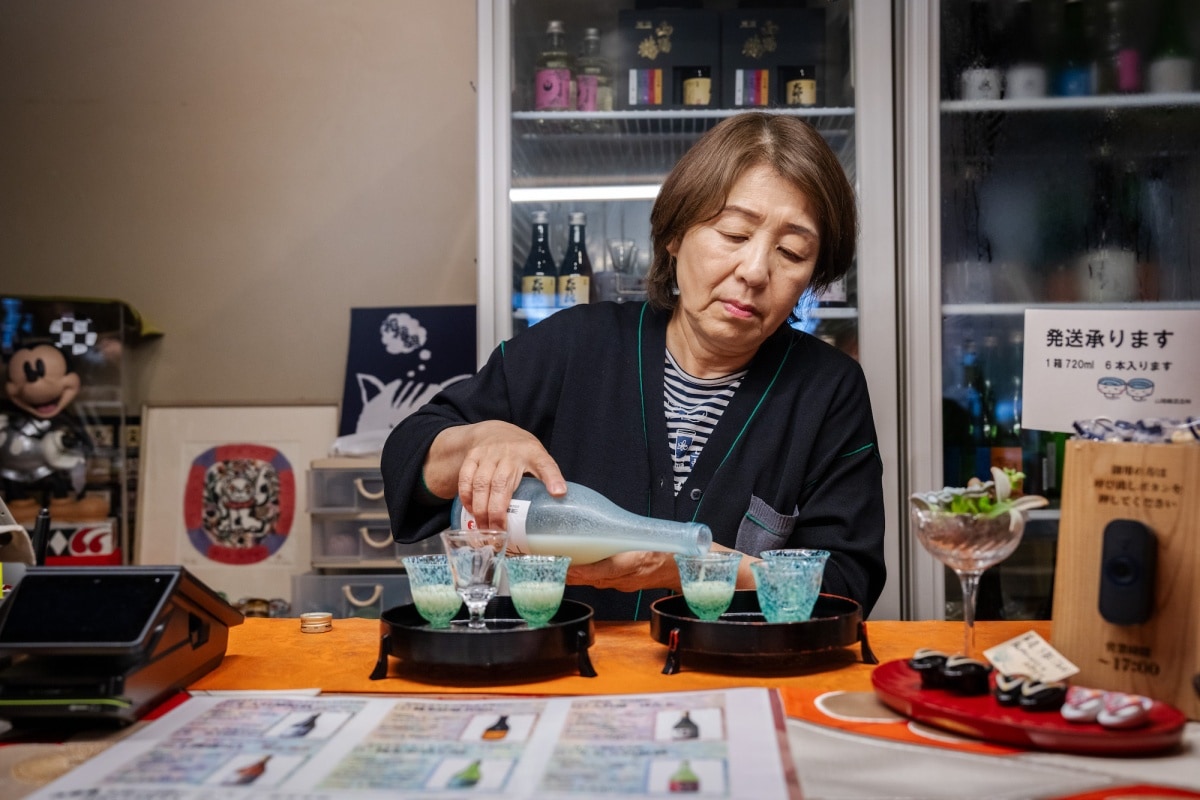
One final pour at Sanyotsuru—and a well-earned kanpai to complete all seven breweries.
The final brewery of my day was Sanyotsuru. Founded in 1912, it has a longstanding connection to calligraphy, and historic labels and works by Shuntei Adachi and Shigeru Okada can be seen on display. The tasting room is tiny and can become crowded, but that is part of its charm. I ordered Sanyotsuru’s ori-zake, a lightly cloudy sake, and raised one final glass alongside fellow sake tourists. After seven breweries, the toast felt well earned.
One for the Road at Kuradokoro Taru
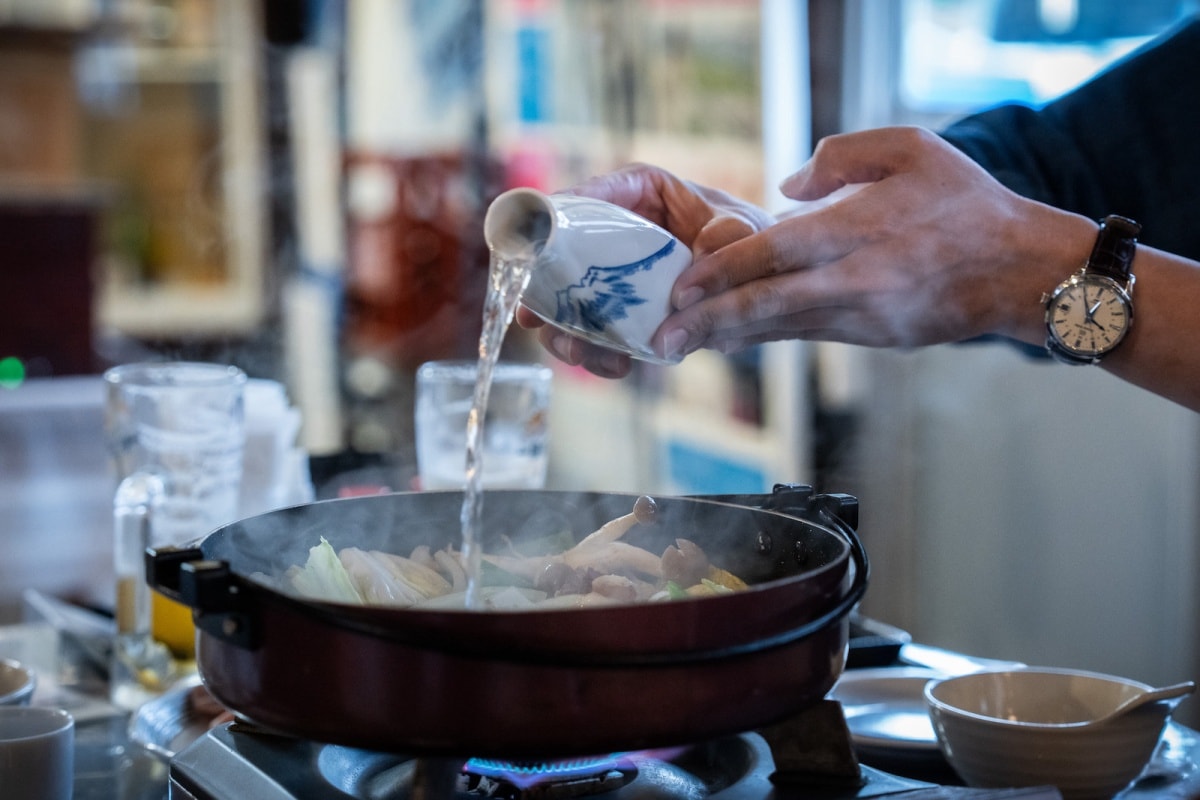
If you think sake is only for drinking, think again—a generous pour is the secret behind Saijo's beloved bishu-nabe.
Before returning to Hiroshima, I made one last stop at Kuradokoro Taru, an unpretentious local izakaya on the way back to the station. I have been here before and loved everything about it. Refrigerators are filled with local sake, and it serves Saijo’s signature dish: bishu-nabe.
This hotpot was originally prepared as a staff meal for brewery workers. Its secret? Sake takes the place of water, adding extra depth and umami—a simple but ingenious idea.
As I finished one last glass, I looked across the refrigerators, now recognizing many of the labels I had tasted throughout the day. Many others, however, still remained unfamiliar. I may have made it to all seven breweries, yet there was still much more to discover—the perfect excuse to come back.
Getting There and Around
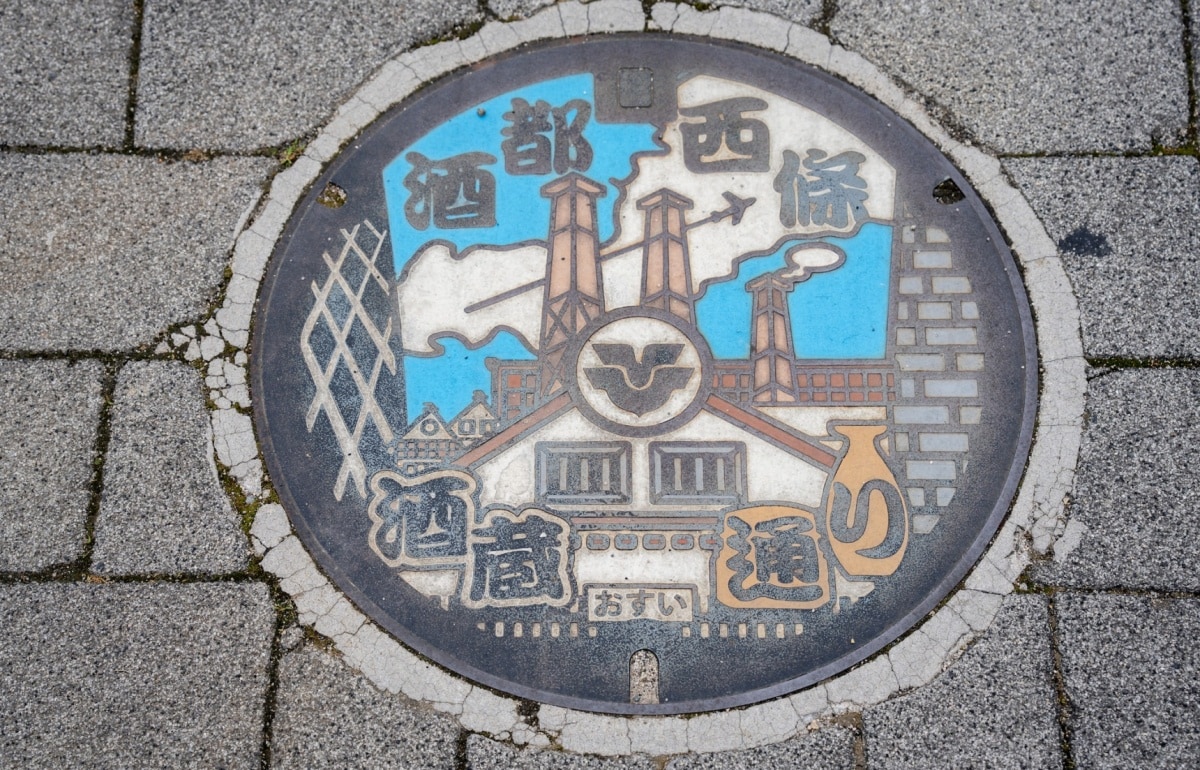
Don't forget to look down! Saijo's sake culture is even visible underfoot: its colourful manhole covers feature the district's distinct brewery storehouses, brick chimneys, and other sake references.
From Hiroshima Station, take the JR Sanyo Line to Saijo Station. Local and rapid services take approximately 35 to 45 minutes, and the one-way fare is around ¥590.
From Hiroshima Airport, a direct airport shuttle bus reaches the north exit of Saijo Station in approximately 25 minutes.
The entire brewery district can be explored on foot. Pick up a map and Nonta wish paper at the tourist information center inside Saijo Station before beginning. Brewery opening days and tasting availability can change, so confirm the current schedule when you arrive. Tastings are available for a small fee and vary by brewery. Allow at least five to six hours to complete the full route before returning to Hiroshima.
Cindy Bissig is a Swiss-born travel and food writer, photographer, and professional sake sommelier based in Japan. Organizer of the Tokyo Sake Challenge, a doburoku ambassador, and an international sake judge, her work explores the intersection of cuisine, culture, and craftsmanship. She travels widely to document regional food traditions, fermentation, and the chefs and artisans behind them, sharing stories that connect local excellence with a global audience.
www.sakenomad.com