

Noge: A Yokohama Pub Crawl through Time
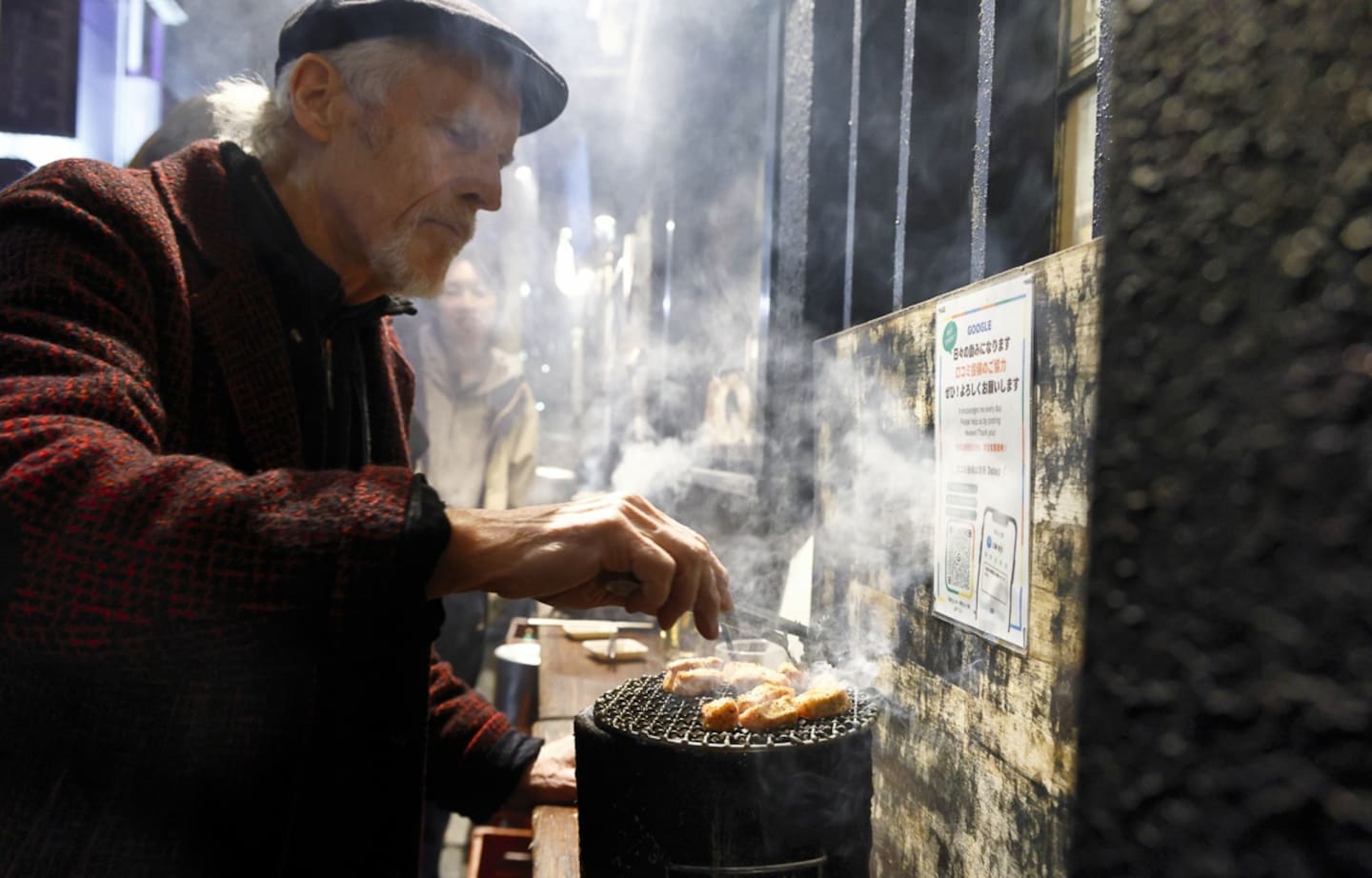
Shochu cocktails and charcoal-grilled offal: sampling the street food in Noge, Yokohama’s essential old-school nightlife district.
Tucked behind Sakuragicho station, Yokohama's Noge district is a ramshackle grid of narrow alleys and tiny bars that has been drawing drinkers, jazz lovers and night wanderers for generations. Robbie Swinnerton spent an evening crawling its smoky, atmospheric backstreets, from a 1956 jazz café to a craft brewery that just opened its doors. All photographs by Jun Takagi.
By Robbie SwinnertonCompared to Japan's other major cities, Yokohama is a newcomer. It’s just over a century and a half old, but during that time it’s seen plenty of history—and boasts the architecture to show it.
From the 19th-century expat residences on the Yamate Bluff and the grand Western-style buildings of the Kannai district and the old waterfront to the gaudy, bustling temples of Chinatown and the bold modern architecture of its new waterfront, Minato Mirai, each area has its own distinctive character and appeal.
None of these places, though, are where I prefer to spend my evenings. Instead, I feel a gravitational pull from the earthier parts of town, a craving for the down-home comforts of izakaya taverns and back-alley watering holes with their retro charm and decades of patina. Nowhere scratches that itch better than Noge.
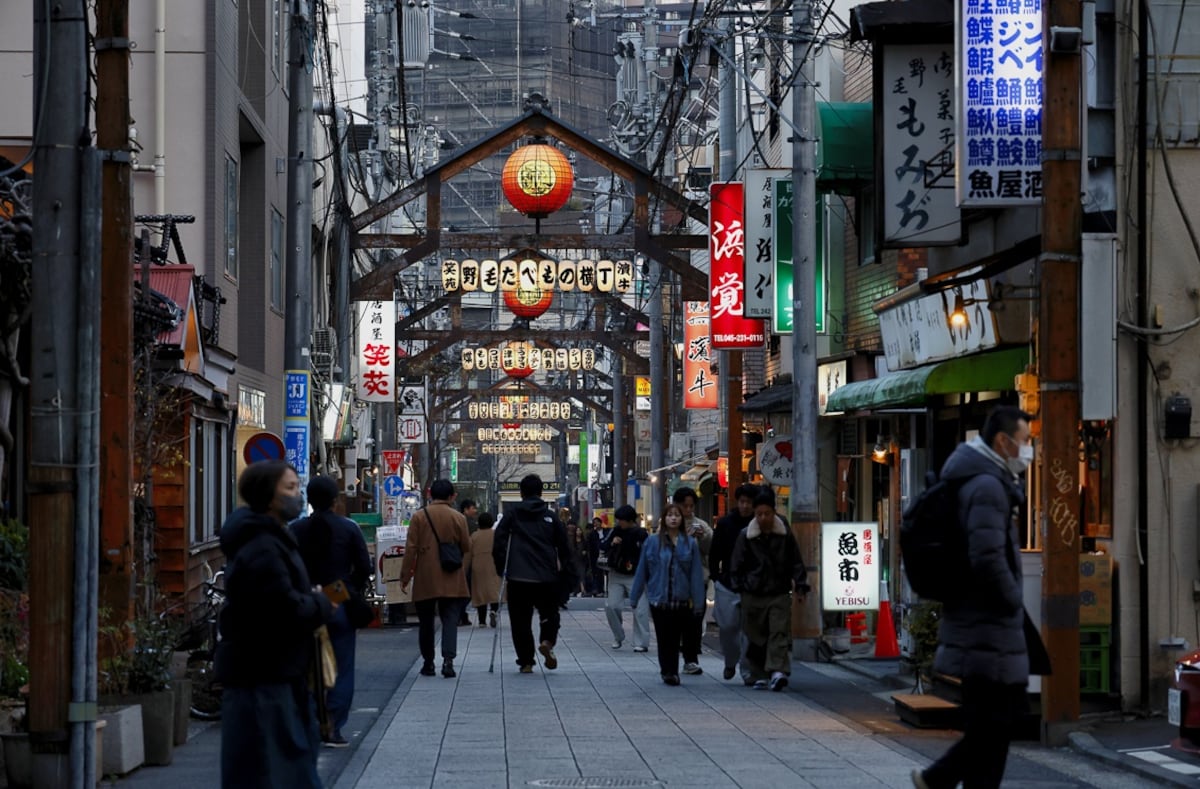
Once known as Yokohama’s “entertainment capital,” Noge remains the city’s classic nightlife center.
Just a five-minute stroll from Sakuragicho station, Noge—two syllables, with a hard "g"—is the classic Yokohama old-school nightlife district, a compact low-rise grid of alleys lined with hole-in-the-wall standing bars, late-night jazz cafés, smoky grills and low budget eateries of all descriptions.
Where most of the city has smartened up and moved with the times, Noge retains much of its old atmosphere harking back to the 19th century. Originally it was a humble fishing village on the coast of what is now Tokyo Bay. But that changed in 1859 after Yokohama became one of Japan’s first treaty ports, where overseas traders were allowed to stay and do business.
Noge was outside the area set aside for the Westerners’ settlement (modern-day Kannai). But it stood just across the river, close to one of its main entrances, and straddling the highway that led from Tokyo. Before long, the quiet fishing community had turned into a thriving commercial center, a hub for laborers looking for work, and a vibrant entertainment quarter that came to be known as Noge Miyako ("Capital").
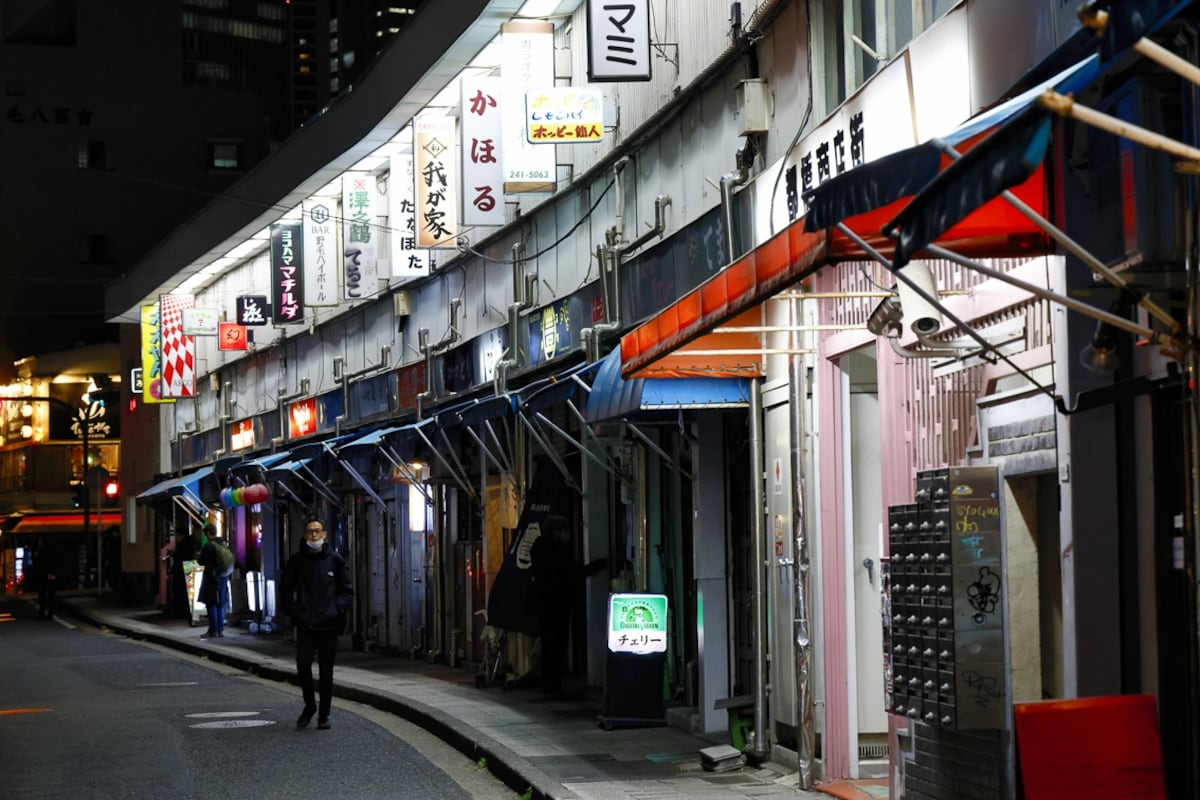
Noge is ideal for an evening out, whether it’s for a session of carousing with friends, a serious pub crawl or just a quiet date night.
Fast forward to the end of World War II. Yokohama suffered massive damage, and so too did Noge. But thanks to its proximity to US occupation facilities, it became a key hub for black-market traders. Eventually, their ramshackle stalls were replaced with proper structures and Noge was back in business with bars, eateries, risqué theaters and adult movie houses, all underpinned by the jazzy rhythms emanating from the numerous live venues.
Noge’s peak came in the late Showa era (1970s to '90s). But it still retains the sense of operating at a different pace from the rest of the city. And it has no shortage of establishments—more than 600 by recent reckonings—ready to ply you with food and drink. Some are just hole-in-the-wall standing bars; others are proper sit-down eateries where you can linger awhile. Almost all welcome first-time visitors. Which makes Noge perfect for an evening out, whether it’s for a session of carousing with friends, a serious pub crawl or a quiet date night.
First stop: a jazz café frozen in 1956
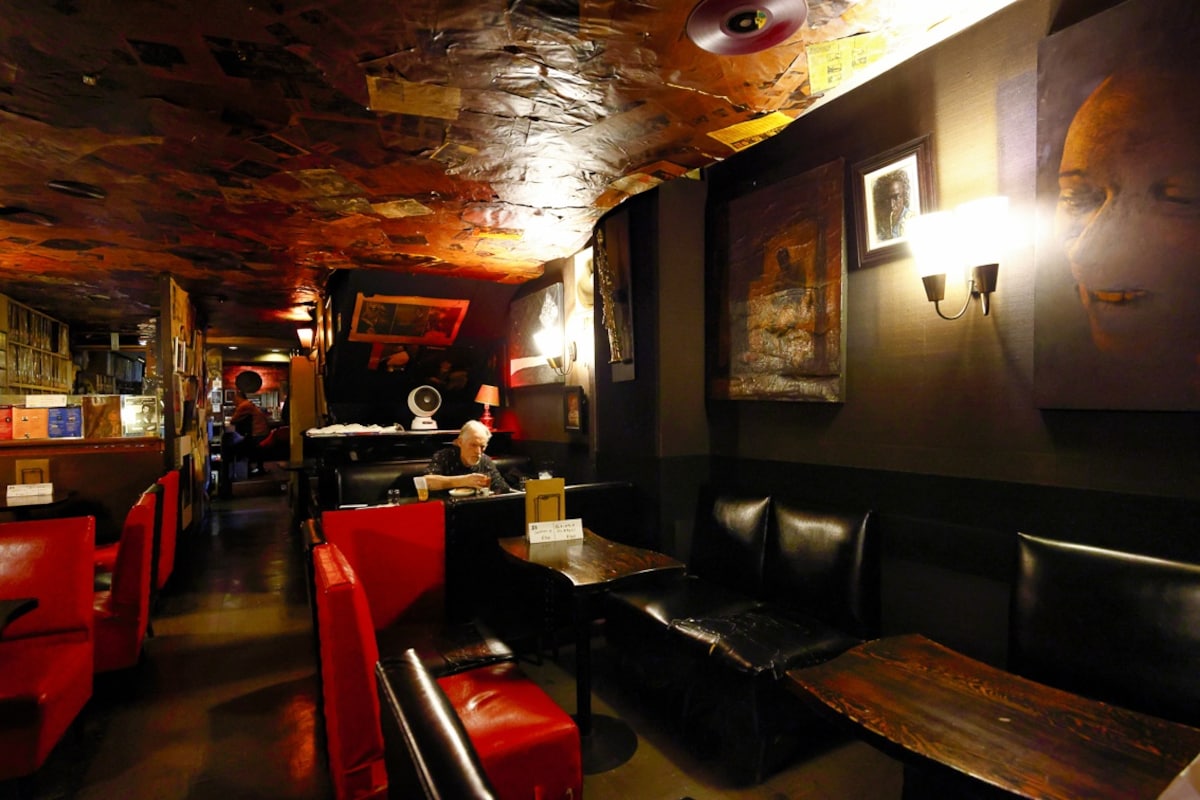
Time capsule: Downbeat has been the focus of Yokohama's abiding love of jazz for 70 years.
Recently, I met up with photographer Jun Takagi, a former colleague from decades back when we both worked for the Tokyo Journal, a brilliant monthly magazine that was essential reading in those pre-digital days when print ruled.
A word of advice for visitors: don’t even bother arriving before the late afternoon. In daylight, Noge’s ramshackle buildings and shuttered shopfronts have zero atmosphere. You might find a few eateries open on the larger streets, but little bar action takes place before 6 PM.
Nonetheless, I meet Jun early so we can swap notes, catch up, and formulate a basic strategy. Coffee is called for, and I know just the place to ease us into the right rhythm: Downbeat, one of the oldest surviving jazz kissa (coffee shops) in Japan.
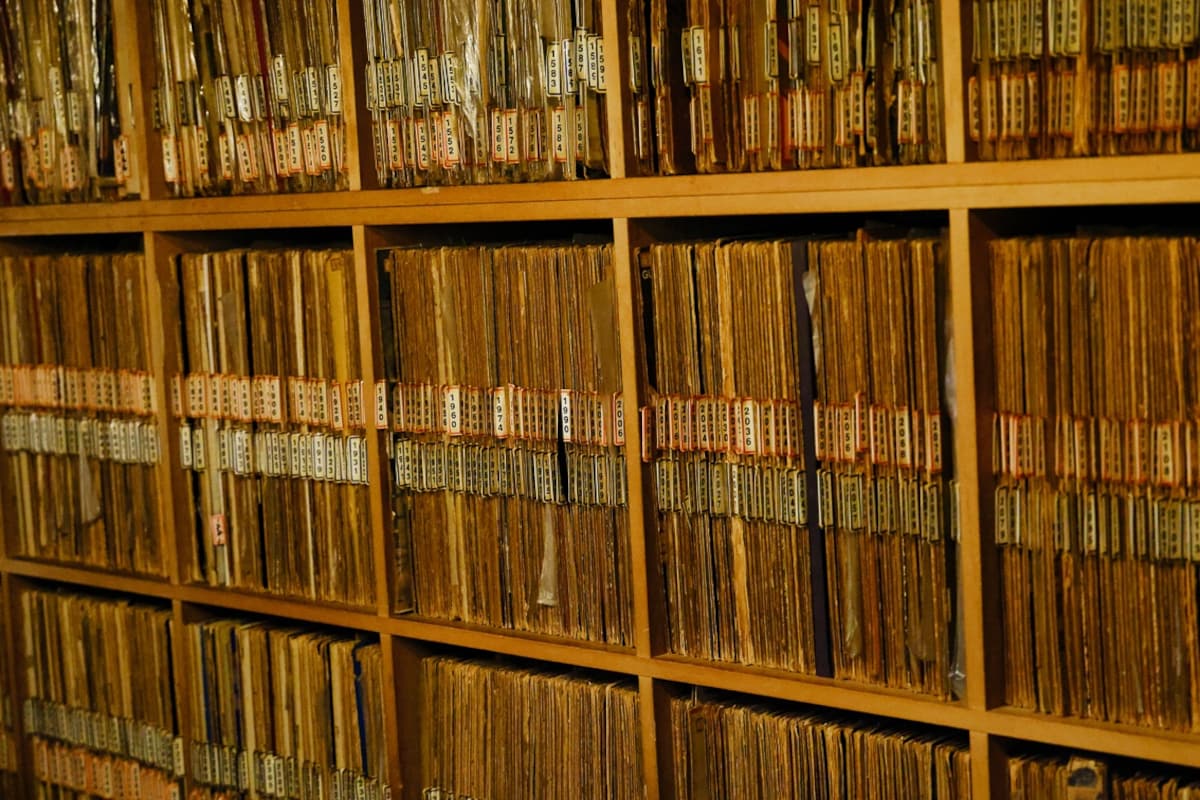
A small corner of Downbeat’s impressive collection of approximately 3,500 jazz albums.
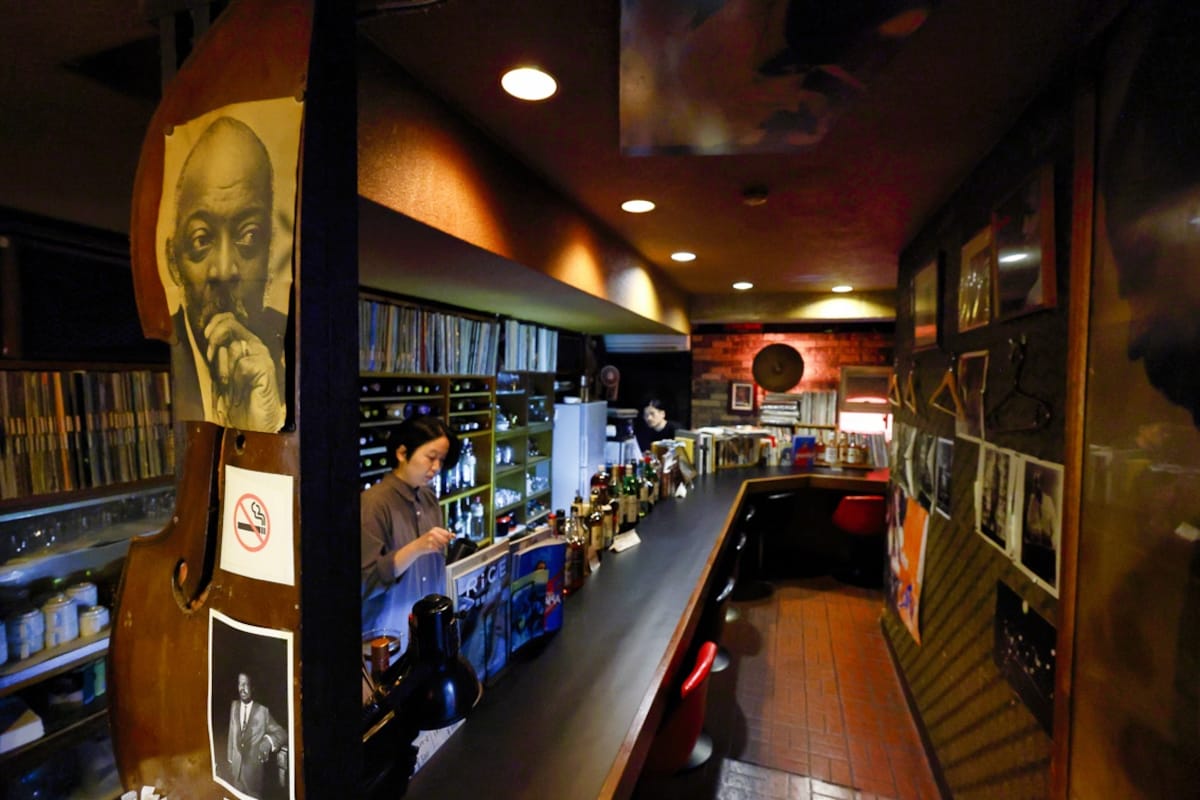
Whether you’re starting your evening or bringing it to a close, Downbeat’s menu of “Jazz, Coffee, Whisky” has you covered.
The sign at the bottom of a steep flight of stairs reads "Jazz, Coffee, Whisky." This has been the order of business here since it was founded in 1956, just four years after the end of the US postwar occupation and still in the early days of Japan’s infatuation with jazz.
The main listening room is a veritable time capsule, with its scarlet and black leatherette couches, low tables, and massive vintage analog speaker system that emits music at a volume that brooks no idle chatter. Overhead, the low ceiling is pasted with old playbills and patinated tobacco-brown—though these days the club is strictly no-smoking.
Downbeat’s vinyl collection amounts to over 3,500 jazz albums. For 70 years, enthusiasts have gathered here to listen to the latest and best from around the world. In the early days, the faithful included future Japanese stars such as all-time greats Sadao Watanabe and Toshiko Akiyoshi.
Into Harmonica Alley
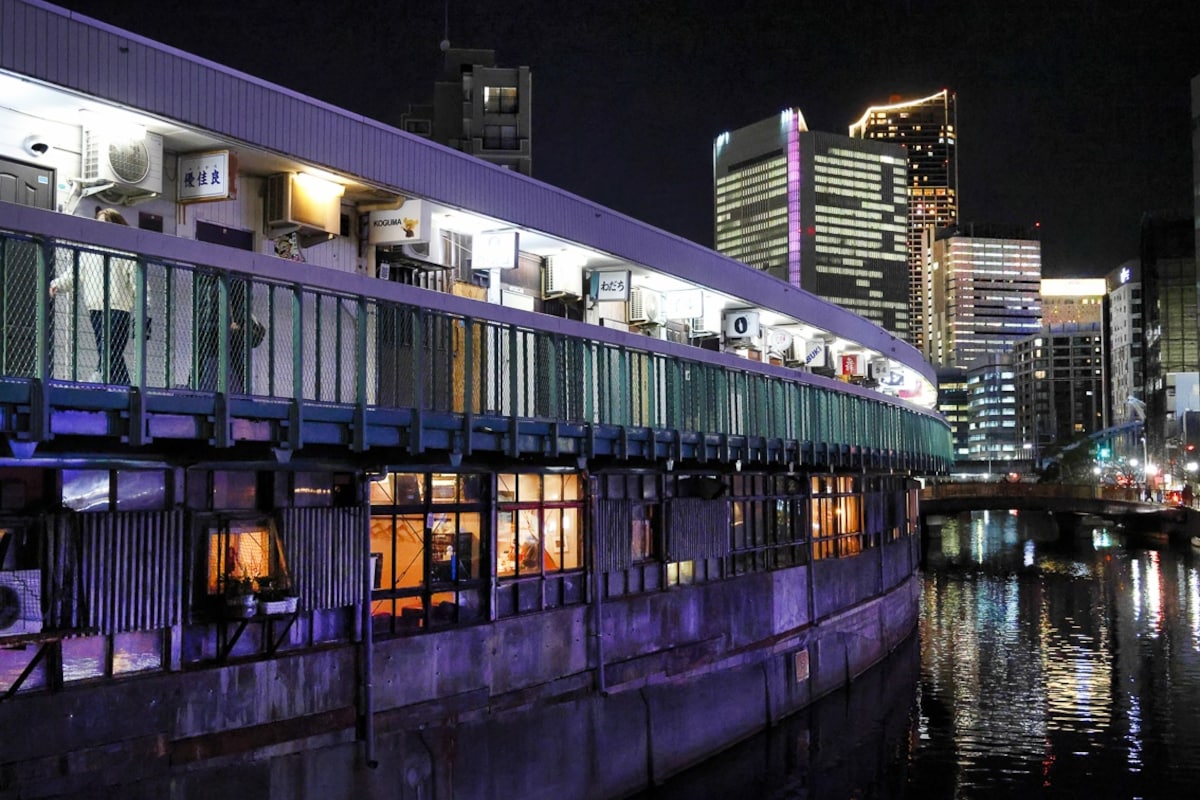
Overlooking the Ooka River, the two-story Noge Miyakobashi Shotengai, aka Harmonica Alley, is a local landmark.
It is hugely atmospheric but we have to tear ourselves away. The golden hour when twilight falls and the neighborhood lights up is when Noge looks its best. Time to head over to Noge Miyakobashi Shotengai, aka Harmonica Alley.
This striking two-story building, which curves along the bank of the Ooka River, is one of Noge’s landmarks. Dating from 1964, it was an early municipal effort to clean up the area ahead of the Tokyo Olympics by housing the street vendors whose carts had formerly cluttered the riverside. These days, the 60 or so units in the building have been converted into bars, each a minuscule 10 square meters small. Each has its own specialty: old-school highballs with karaoke, gin and tonics (smokers welcome), Brazilian caipirinhas (no smoking) . . . Take your pick.
Bar hoppers’ paradise: Harmonica Alley is home to 60 tiny but atmospheric bars, each with its own individual style.
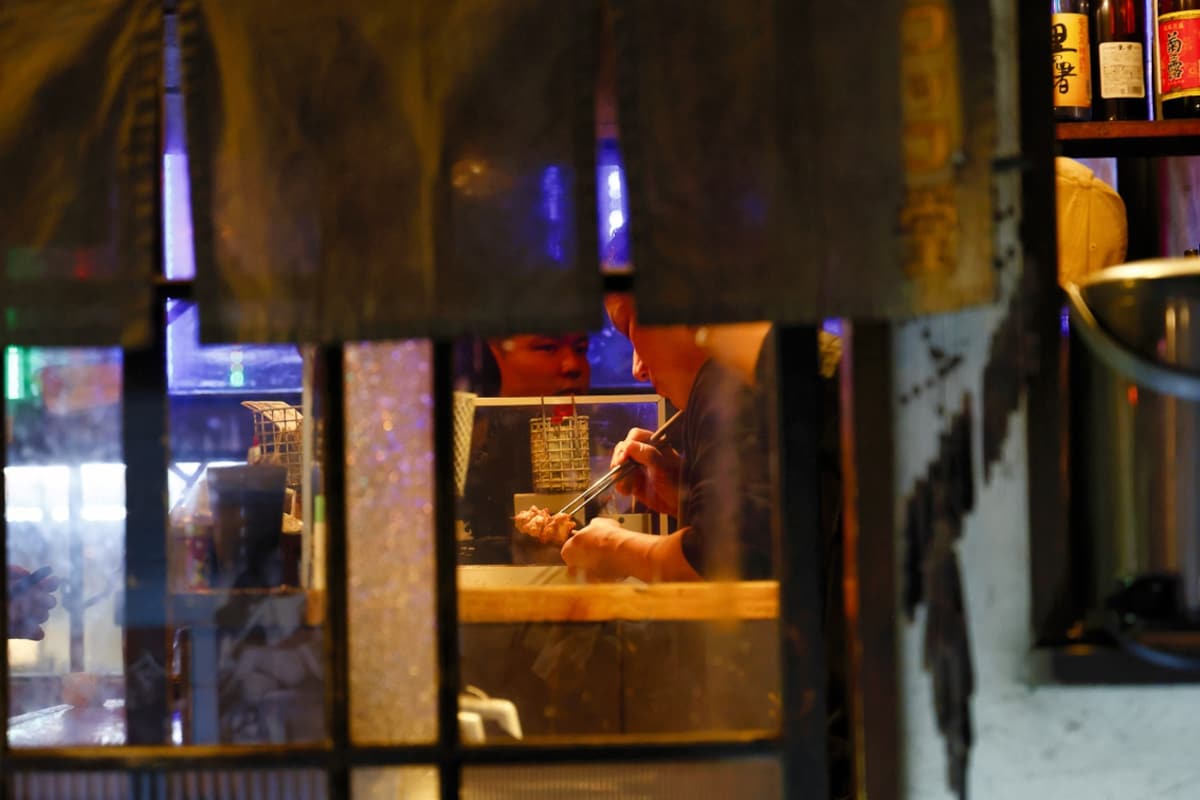
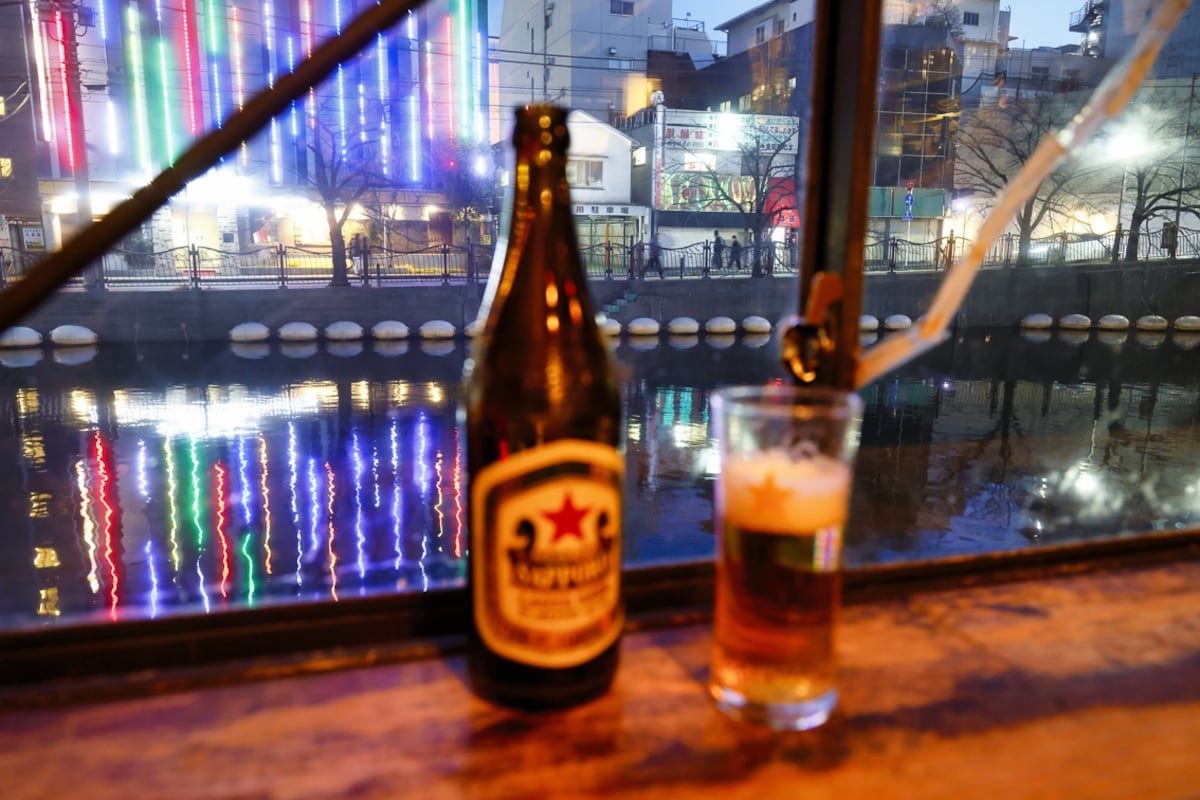
One of my favorites is Kokkodo, a bar that doubles up as a yakitori (skewered chicken) grill—or should that be the other way round? Whichever, it can only squeeze in around six people at a time, all standing. But it’s worth it when you find yourself with a flagon of draft Sapporo in one hand, a fistful of chicken skewers straight from the charcoal grill in the other. Gazing out across the river at the flickering lights of the seedy Japan Club Bunny Lounge, it is about now that you’re likely to feel the Noge magic kicking in.
A couple of doors down is another longtime favorite of mine: Una Casa de G.b. G.b. El Nubichnom. It’s a ridiculously overblown name for what must be the tiniest craft beer pub in Yokohama—and possibly all Japan. But we find we’ve arrived on one of their closing days (Tuesday to Thursday). So we move on.
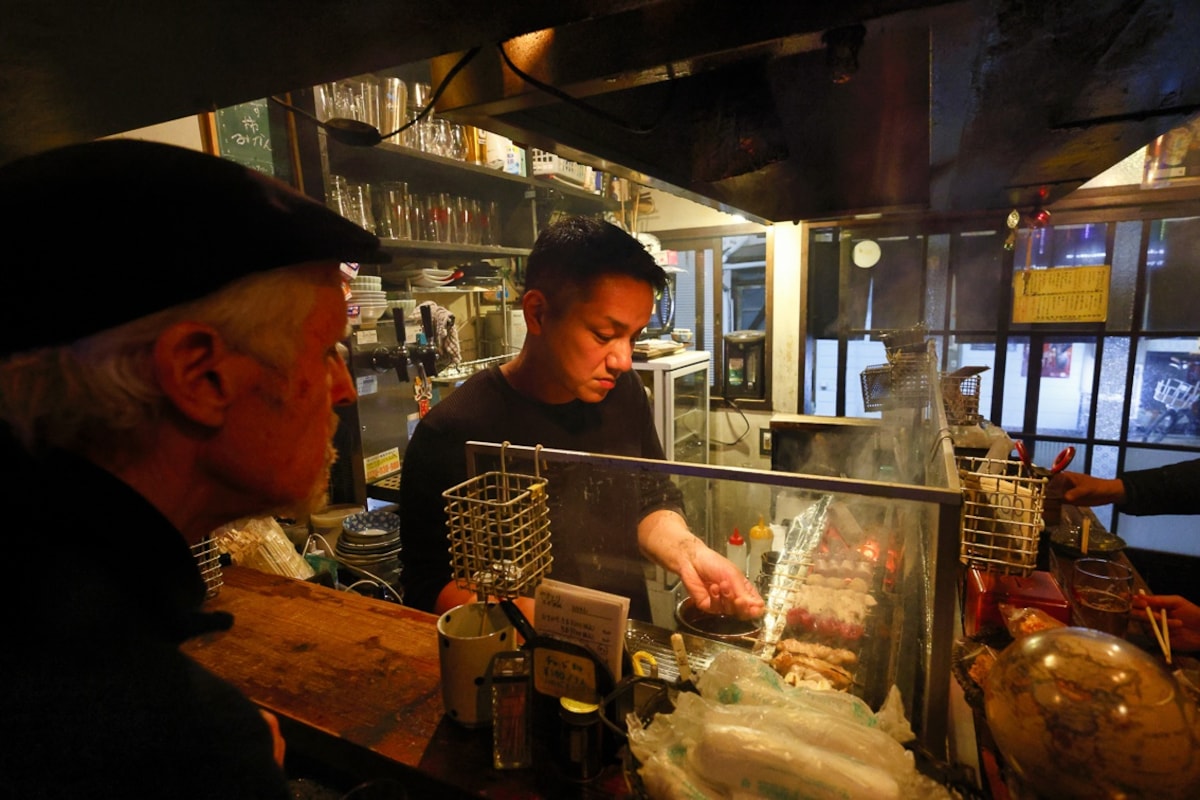
Kokkado, an all-standing charcoal grill serving yakitori (skewered chicken) in a space that can barely fit half a dozen customers.
Eating and drinking into the night
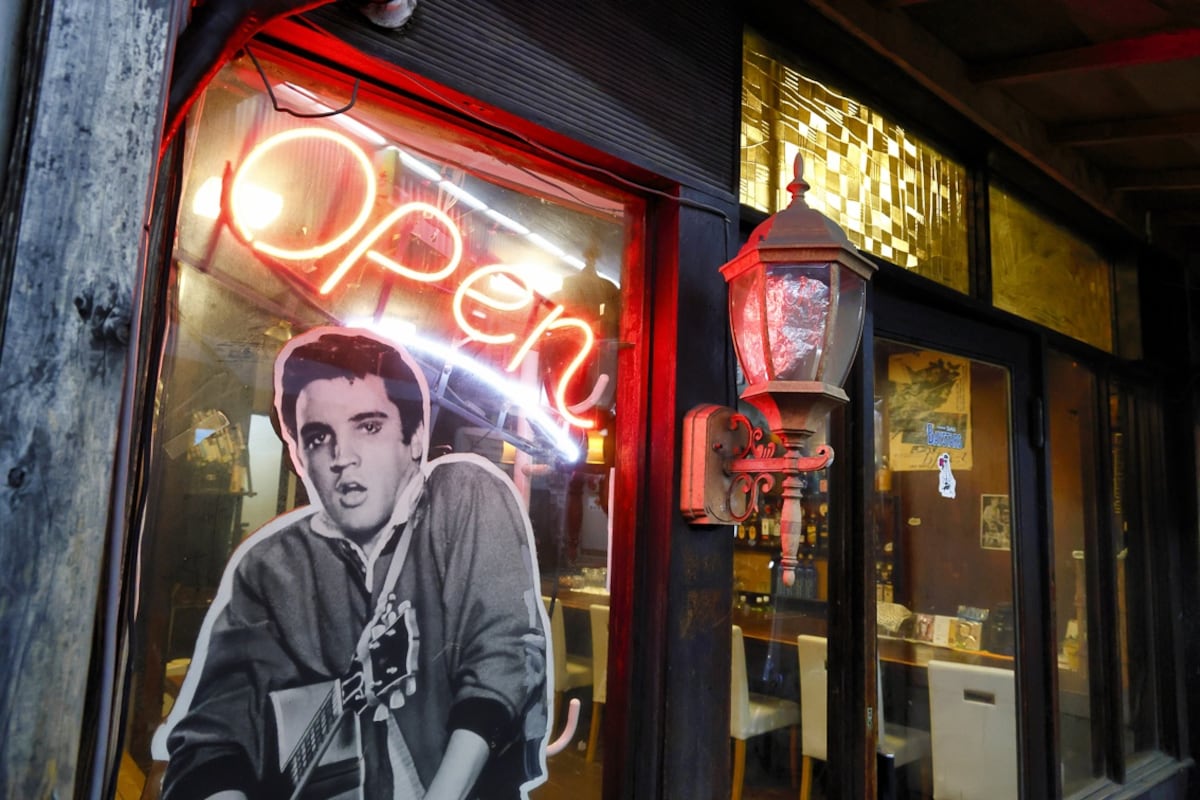
Retro mood: Many of the cafes in Noge are in buildings that date back to the days when Elvis was The King.
Not everything in this area is retro-shabby. Just around the corner stands the excellent Vertere Yokohama Taproom, from the Okutama-based brewery, which opened in January of this year. The sleek, monochrome metal-and-glass interior echoes the clean, crisp flavors of the craft beer dispensed from the half-dozen taps. Despite the premium prices, well above the Noge norm, Vertere (pronounced Va-te-re) appears to have already developed a strong following.
What Vertere shares with the rest of Noge is a lack of seating—nor indeed much in the way of edibles. So we drain our glasses and head back out onto the now-busier streets in search of more solid sustenance.
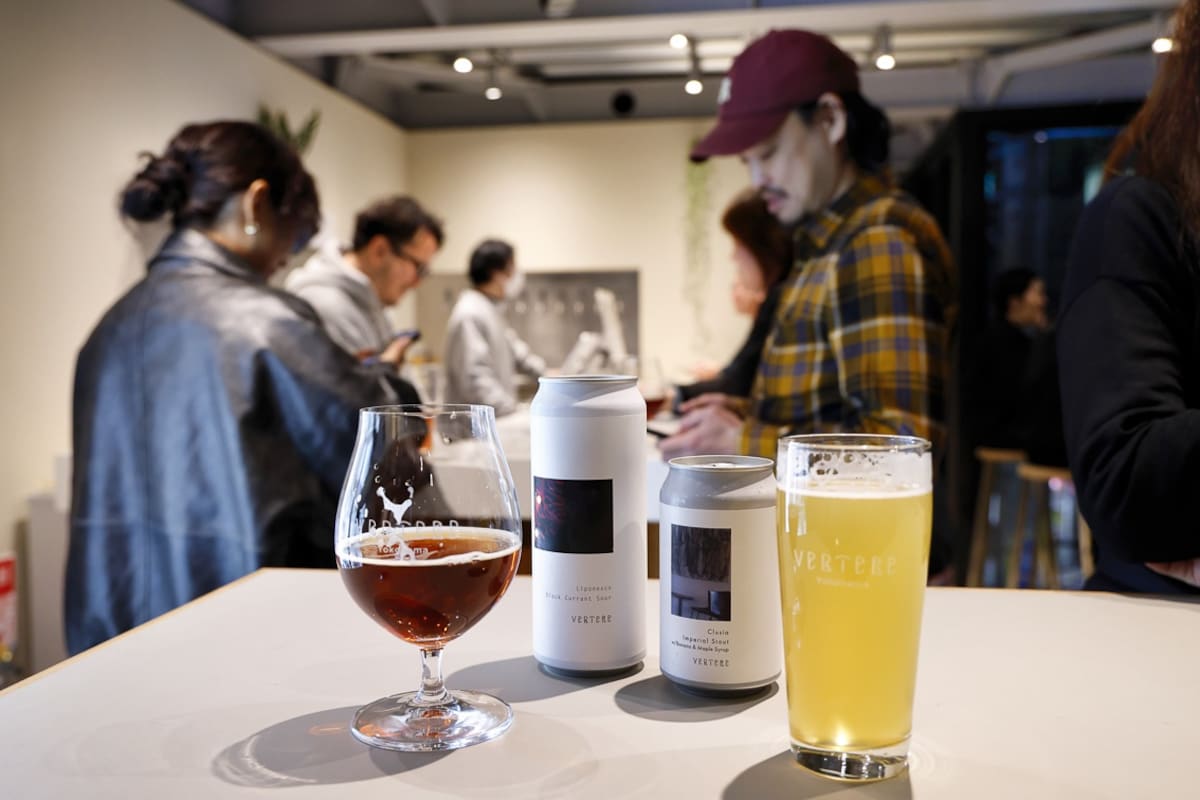
Not all the pubs in Noge are funky and faded: Vertere Yokohama Taproom serves a range of craft beers from its brewery in Tokyo’s Okutama district.
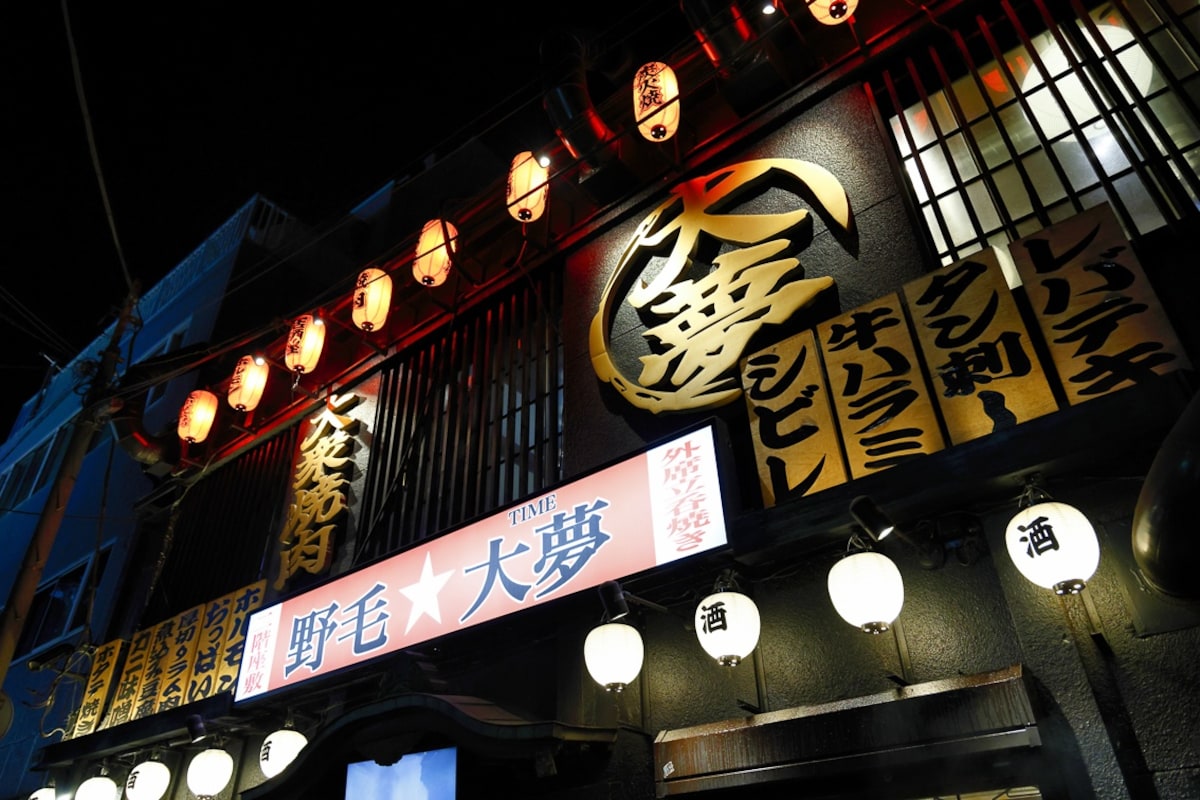
The specialties of the house, almost all offal, are advertised over the entrance to Noge Time.
Our attention is caught by Noge Time, an impressive two-story building painted all in black, its name and specialty—yakiniku (grilled meat)—emblazoned in large golden-yellow characters. Inside and out, customers grill their own meat over squat shichirin characoal grills. We opt to eat al fresco, where the smoke dissipates faster, even though seating is not provided.
Navigating the iPad menu, we manage to place a preliminary order: slices of duck breast, a serving of beef tongue, and a small selection of horumon (organ meats), with shochu cocktails. Everything is up to snuff, though we find the oppai—pork belly, which the menu cheerfully labels "boobies"—rather chewier than expected.
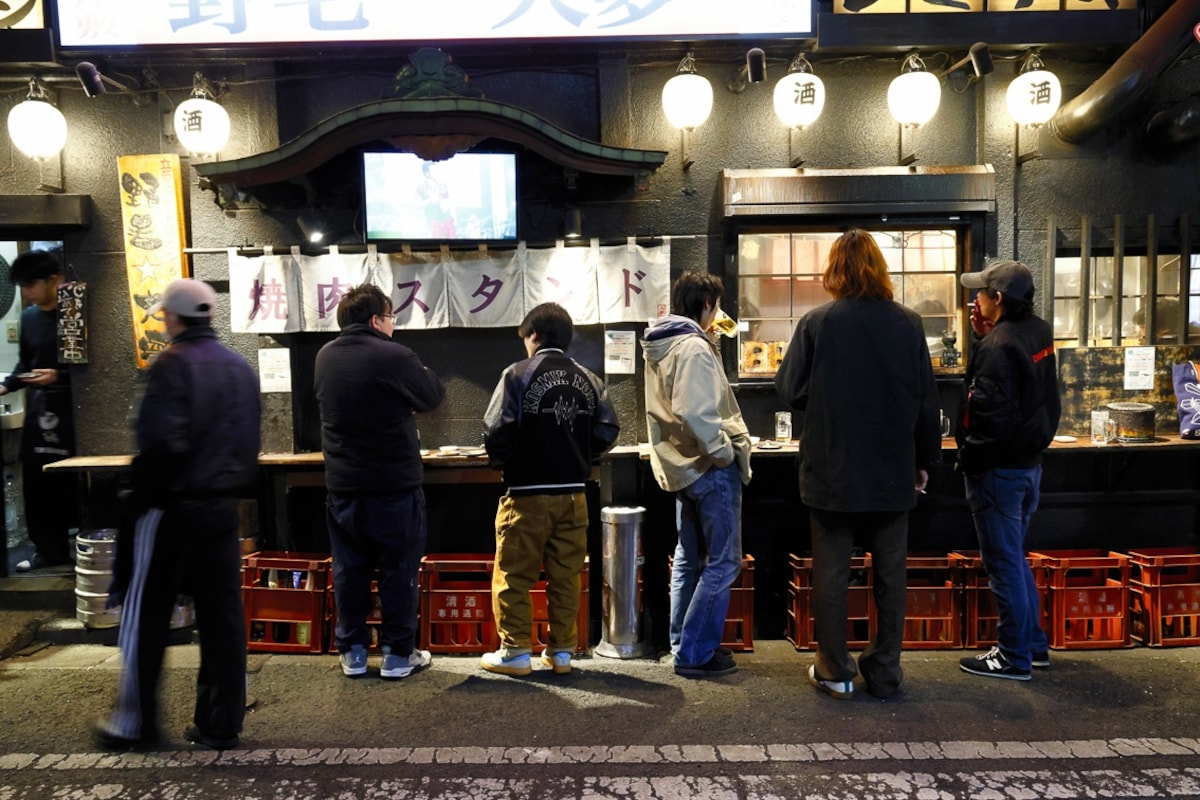
Even on a chilly night, customers crowd outside Noge Time to cook up their own grilled meat.
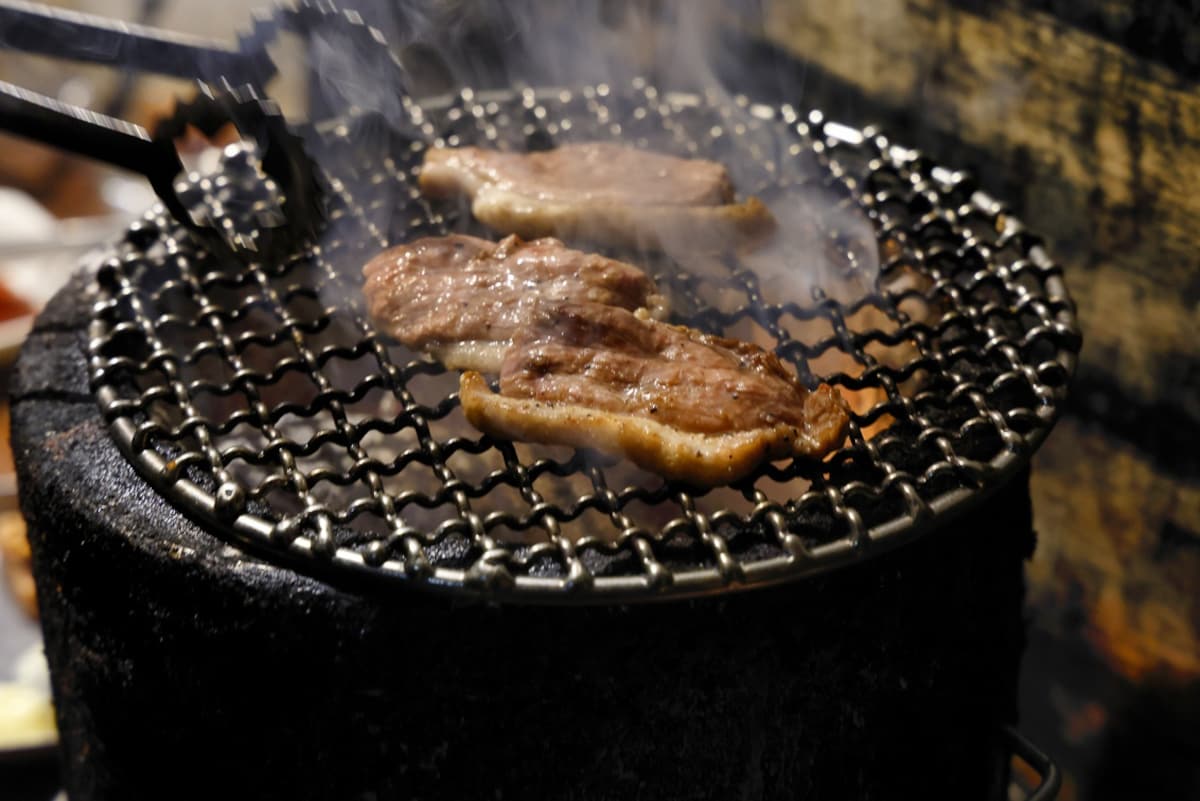
For grilling times make it Noge Time: Slices of duck breast on the shichirin charcoal grill.
A welcome oasis from the boisterous streets
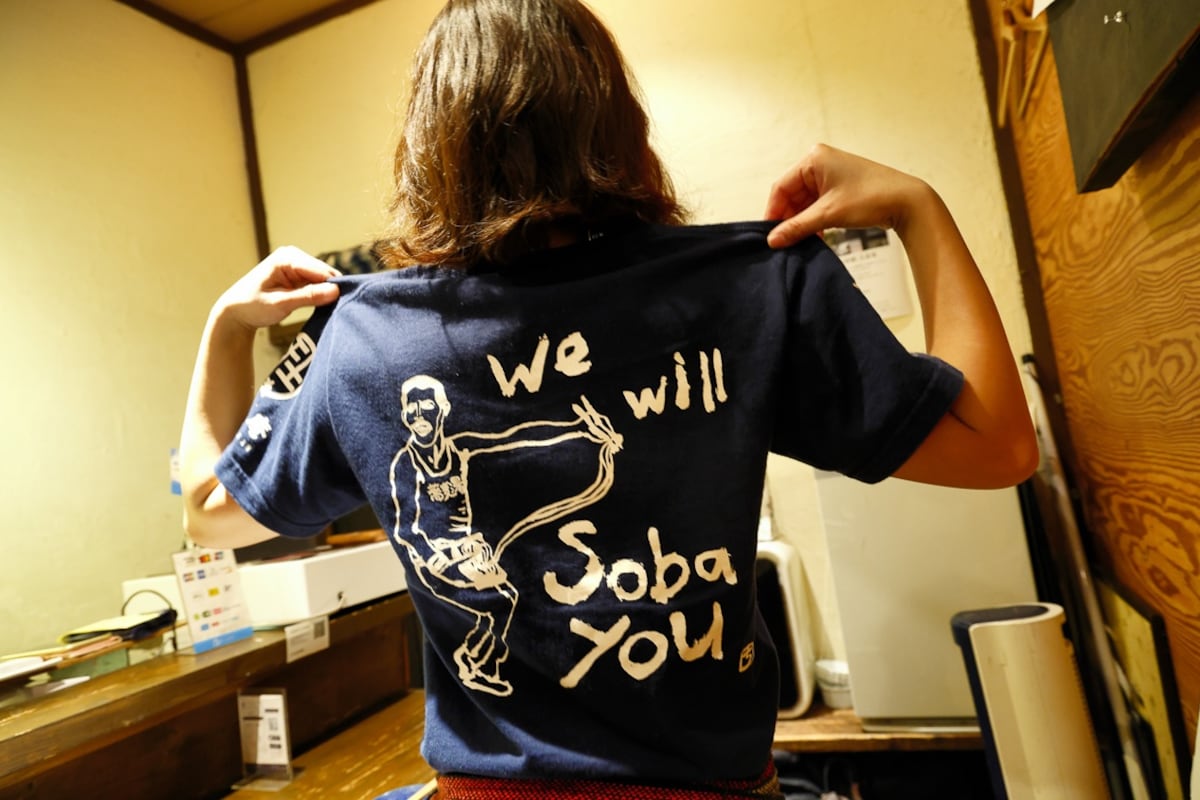
After a few glasses of sake at Shime-soba Chihana-an, you can “soba up” with buckwheat noodles.
The evening is getting chillier and our legs are tired, but I know just the place to hit next and it’s not far away. As much by luck as keen map skills, we find the inscrutable dark-wood facade of Shime-soba Chihana-an. Even better luck: there is room for us at the eight-seat counter.
This is an offshoot of a well-regarded Kamakura noodle restaurant, and its main focus, too, is juwari-soba (100 percent buckwheat noodles). What distinguishes this branch is its fridge stocked with excellent jizake (sake from small regional breweries) and a selection of excellent side dishes, especially seafood and vegetable tempura made to order.
Operating as a hybrid "soba izakaya," Chihana-an has been part of Noge since 2014, and fits the neighborhood perfectly. It’s exactly the right sort of place for lingering over one more sake, and because it has no windows, it feels like a welcome oasis from the bustling, boozy streets outside.
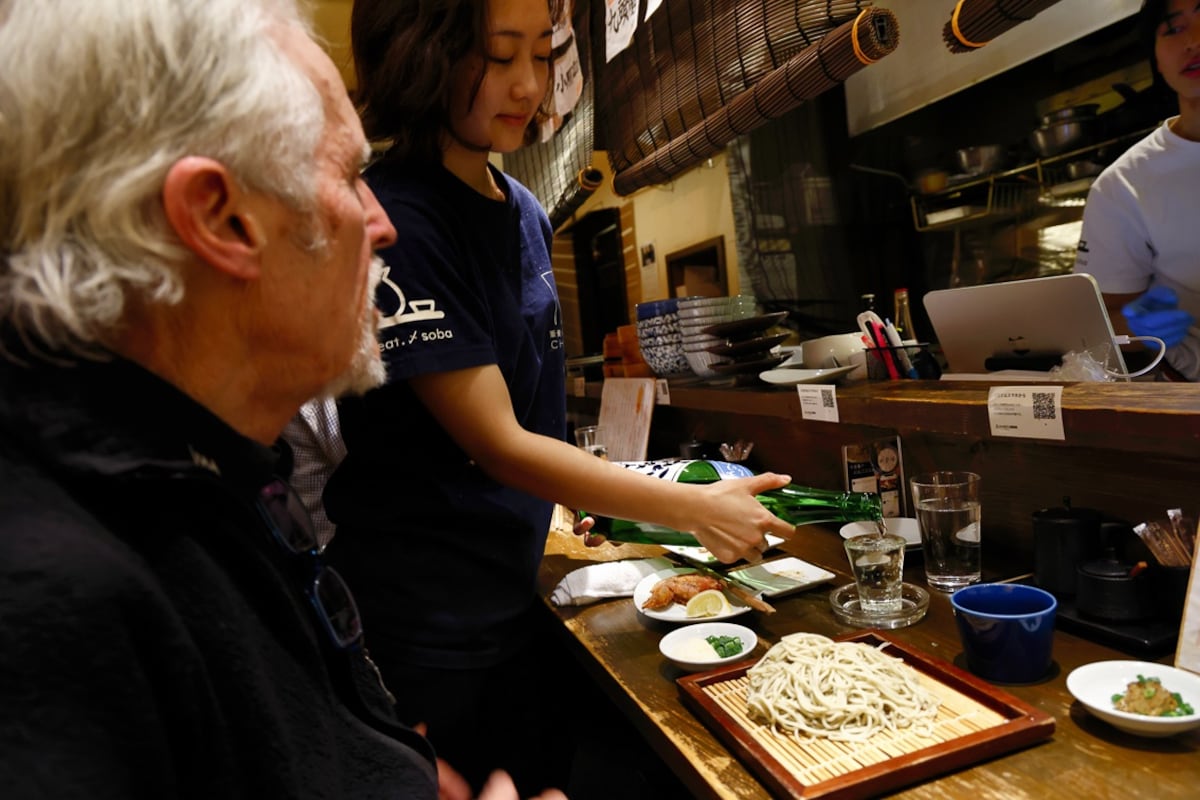
At Shime-soba Chihana-an, the menu revolves around jizake (sake from small regional breweries) and soba noodles.
The last round
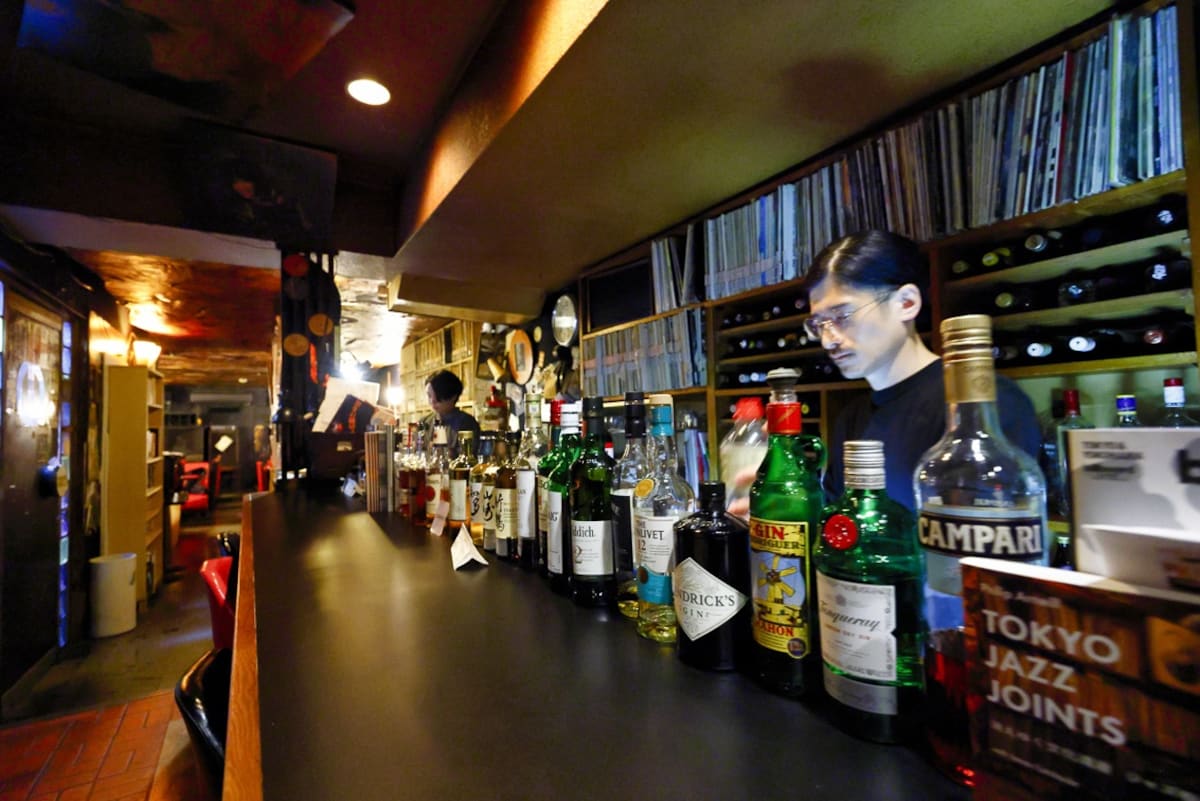
One for the road: Downbeat’s bar is the perfect spot to sip on a late-night digestif.
We slurp down our soba, polish off our sake and wrap up our Noge crawl. It’s time to go our separate ways. Except that I’m finding it hard to tear myself away. I still have time for one last digestif. Downbeat calls. In fact, it’s just around the corner.
Lured back by the glowing red sign at the top of those stairs, I install myself at the bar, cradling a Guinness, enveloped by that powerful sound system. Here at the back of the house, the look is brighter, newer and it draws a younger, hipper clientele. Downbeat continues to be relevant in 2026 not as an old-time heritage museum but as a living, breathing jazz spot.
As I head out to catch the last train, the streets are still buzzing. In fact some groups are only just arriving. While the rest of the city winds down, the lights stay on here till the wee small hours. That’s the way it’s done in Noge, and long may it continue.
I'm a writer — mostly print and online media, but also for TV documentaries and even some news — originally from the UK but based longtime in Kamakura.
My restaurant column, Tokyo Food File, has run in The Japan Times since 1998.
https://www.japantimes.co.jp/author/int-robbie_swinnerton/
