The Rope Makers of Iinan: Crafting Izumo Taisha's Giant Shimenawa
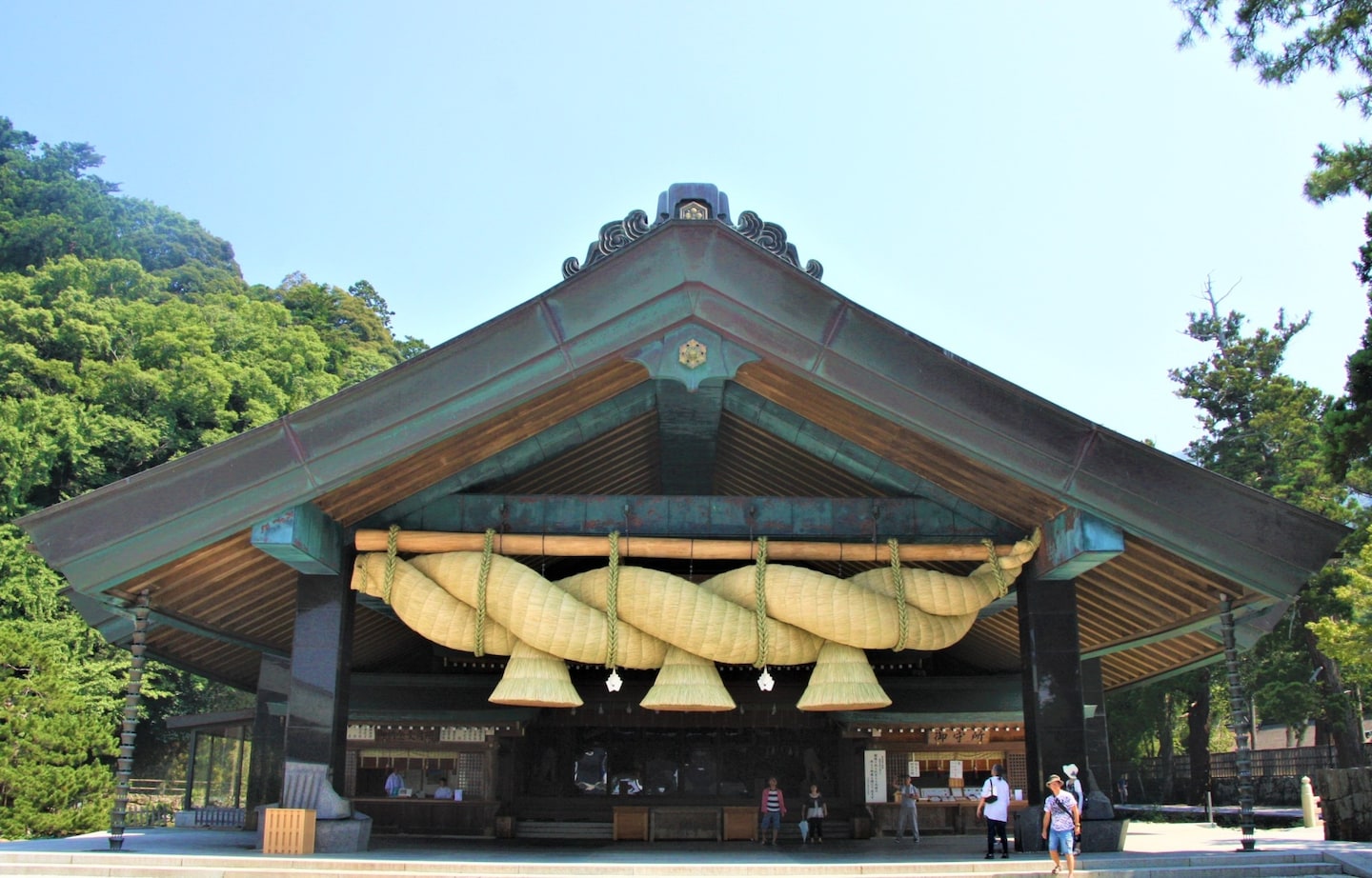
The giant shimenawa (sacred rope) at Izumo Taisha Grand Shrine (Courtesy of Shimane Tourism Federation)
Roughly every seven years, a team of artisans in the small town of Iinan spends four months twisting rice straw into a 13.6-meter, five-ton shimenawa bound for the hall at Izumo Taisha Grand Shrine. The rope is one of the best known in Japan. The work behind it is a study in teamwork, passed down through generations of a farming community.
By Louise George Kittaka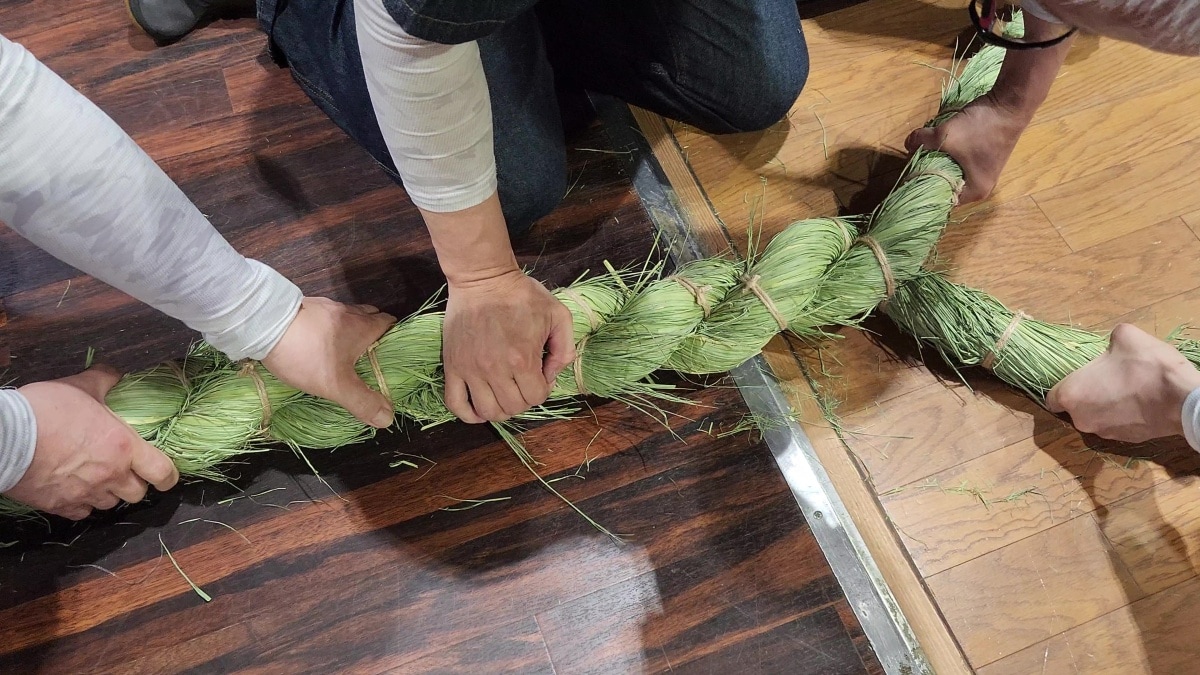
The sacred rope is made by members of the local community in the town of Iinan. (Courtesy of Iinan-cho Great Shimenawa Creation Hall)
Shimenawa are sacred ropes made from rice straw, found at shrines and other spiritually significant places in Japan. They mark the boundary between the everyday world and spaces believed to be inhabited by kami, or Shinto deities. One of the best known—and most photographed—shimenawa hangs at Izumo Taisha in Shimane Prefecture. Located in the city of Izumo, it is one of Japan's oldest and most important Shinto shrines, with a history stretching back more than 1,300 years.
The shrine’s enormous sacred rope hangs from the Kaguraden, or Sacred Dance Hall. At 13.6 meters and weighing around five tons, it is believed to be the largest shimenawa in Japan. Approximately every seven years, a new rope is crafted by artisans in the small town of Iinan, also in Shimane Prefecture. As I am about to discover, creating something of this scale is a remarkable feat of teamwork.
A Hall Built for a Special Purpose
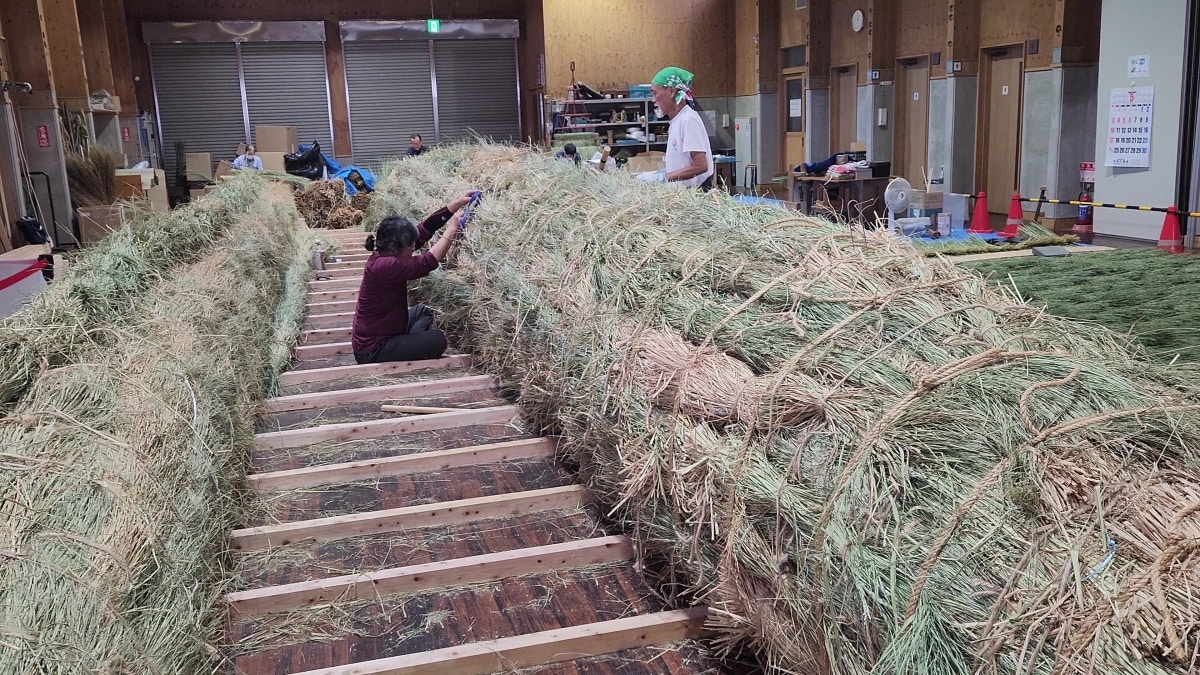
Making the enormous sacred rope is a team effort. (Courtesy of Iinan-cho Great Shimenawa Creation Hall)
About an hour's drive southwest of Izumo brings me to the Iinan-cho Great Shimenawa Creation Hall. Osamu Akutagawa of the local tourism association walks me through the building. There is straw everywhere, and the scent is warm and earthy.
Visitors usually come here to learn about shimenawa, browse the exhibits and try their hand at making a small sacred rope. However, my visit coincides with one of the years when the hall itself becomes a workshop. Every five to eight years, it is handed over to local craftspeople from the Iinan-cho Shimenawa Cooperative, who spend around four months creating the giant shimenawa for the Izumo Taisha Kaguraden.
Surprisingly, there is no fixed rule requiring the rope to be replaced at predetermined intervals. Instead, Izumo Taisha reviews its own schedule and coordinates with Iinan to agree on a replacement date that suits both sides. Sometimes the rope has been replaced after just five years, while this time the rope has remained in place for eight before the newest one was commissioned.
This part of Shimane is historically known for heavy snow, which kept farmers indoors for much of the winter. "People here have long worked with straw during the winter," Akutagawa tells me. "They made all kinds of practical items from it, including clothing to wear in the snow."
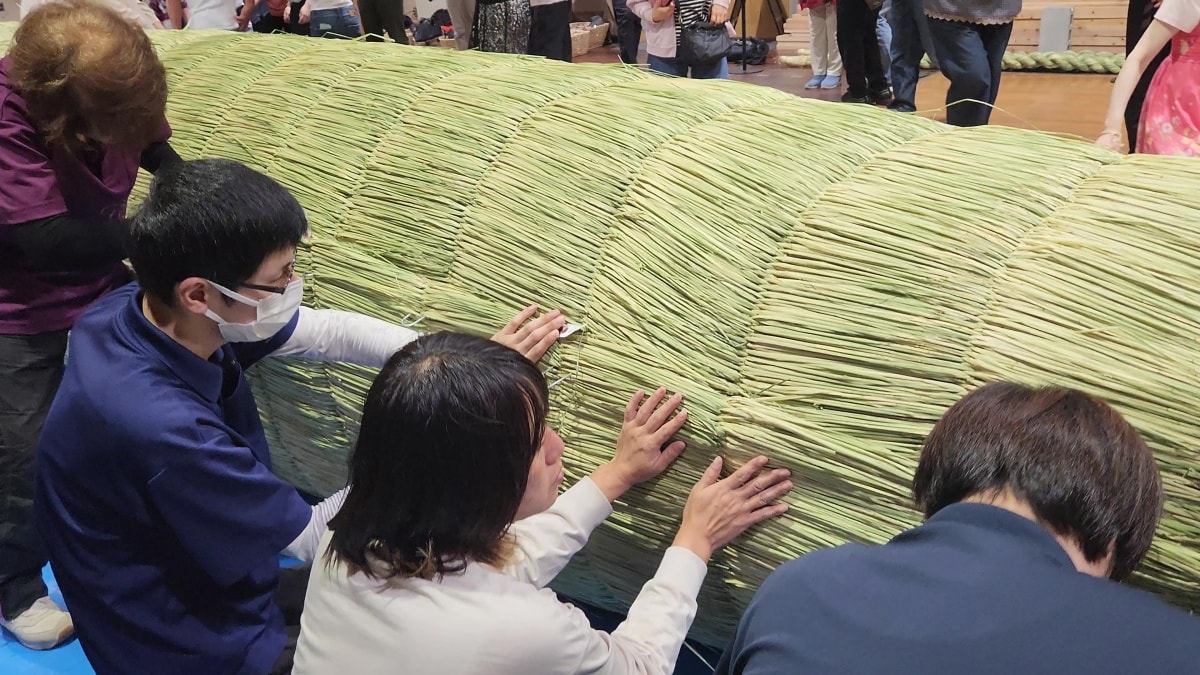
Built in 2015, the Great Shimenawa Creation Hall serves as both a facility for constructing the giant sacred rope and a museum dedicated to its history and significance to the town of Iinan. (Courtesy of Iinan-cho Great Shimenawa Creation Hall)
That local skill eventually connected Iinan to Izumo Taisha. The Hanaguri district of Iinan once
had a branch shrine of Izumo Taisha, and it was that shrine’s local believers’ association that
first crafted a shimenawa for the Kaguraden in the 1950s—a rope roughly a third the length
of today’s. When the Kaguraden was rebuilt in 1981 and a larger rope was called for, that
same association joined forces with the local senior citizens’ club to produce it, laying the
groundwork for what later became the Iinan-cho Shimenawa Cooperative.
As we pause in front of some of the photographs on display, Akutagawa points to a photo of
the huge shimenawa."It wasn't that they deliberately set out to make the biggest one in
Japan," he says. "It was more that it simply happened that way." Previously, the work took
place at local schools, until the Great Shimenawa Creation Hall was built in 2015 as a
dedicated facility for Izumo Taisha’s shimenawa production.
Rice Fields to Rope
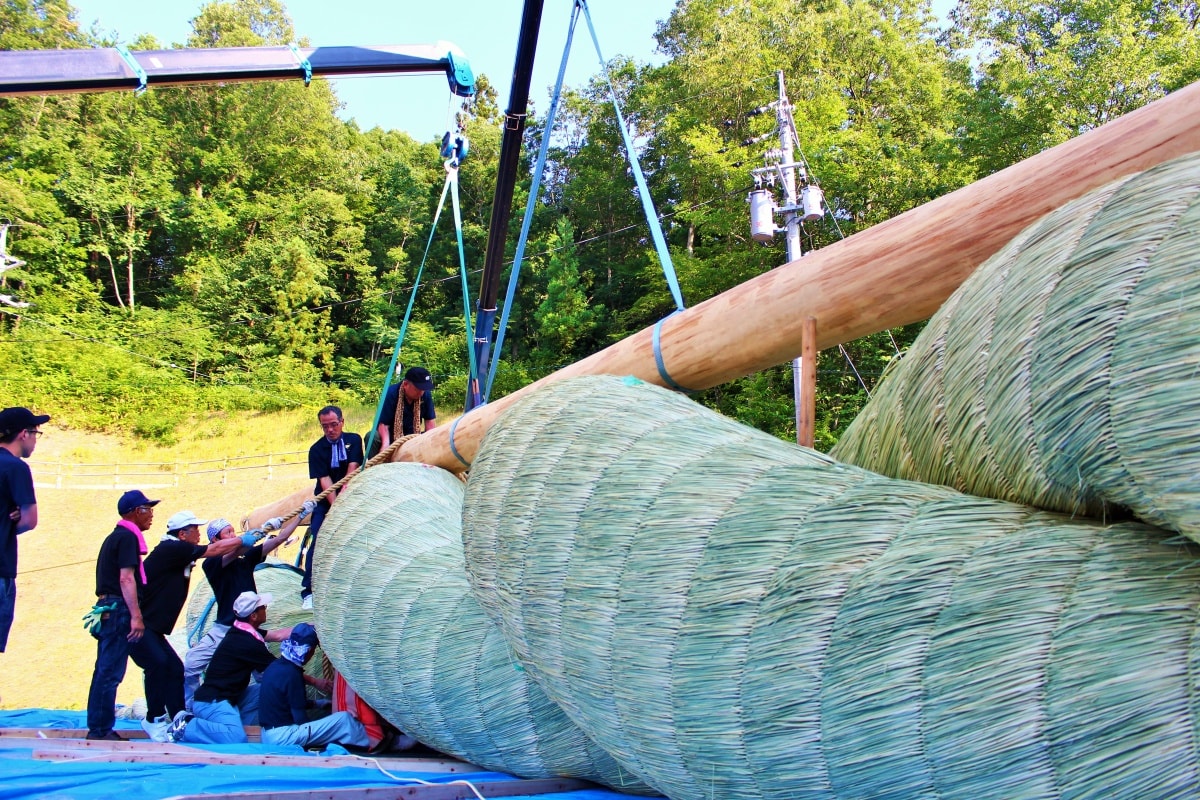
Preparing the new sacred rope for installation at Izumo Taisha (Courtesy of Iinan-cho Great Shimenawa Creation Hall)
The story behind the giant shimenawa begins long before the first strands of straw are twisted together. Each spring, local farmers plant specially designated rice fields in Iinan with a glutinous rice variety known as Akaho-mochi. Stickier than ordinary rice, it produces long, strong stalks that are particularly well suited to rope making.
The straw is cut in July, before the grain ripens and when the fibers are at their strongest, in a process called aogari, or green harvesting. The straw is then dried and stored carefully away from sunlight so it does not turn brown. The aim is to preserve its green color for the outer layer of the rope, though this too will eventually fade to golden brown.
"The outside of the shimenawa is what people actually see—and photograph," Akutagawa says. The inside of the large rope can be filled with ordinary straw, including any Akaho-mochi straw that is not of suitable quality for the exterior. Creating a rope of uniform thickness requires precise measuring, cutting, and twisting of the bundles of straw. Rather than being made as a single piece, the 13.6-meter shimenawa is constructed from multiple sections, each produced separately before being carefully combined at the end.
The painstaking process is like a giant jigsaw puzzle coming together, the overall shape only becoming apparent once most of the pieces are in place. Some of the artisans will travel with the finished rope to Izumo Taisha for its dedication.
Many Hands
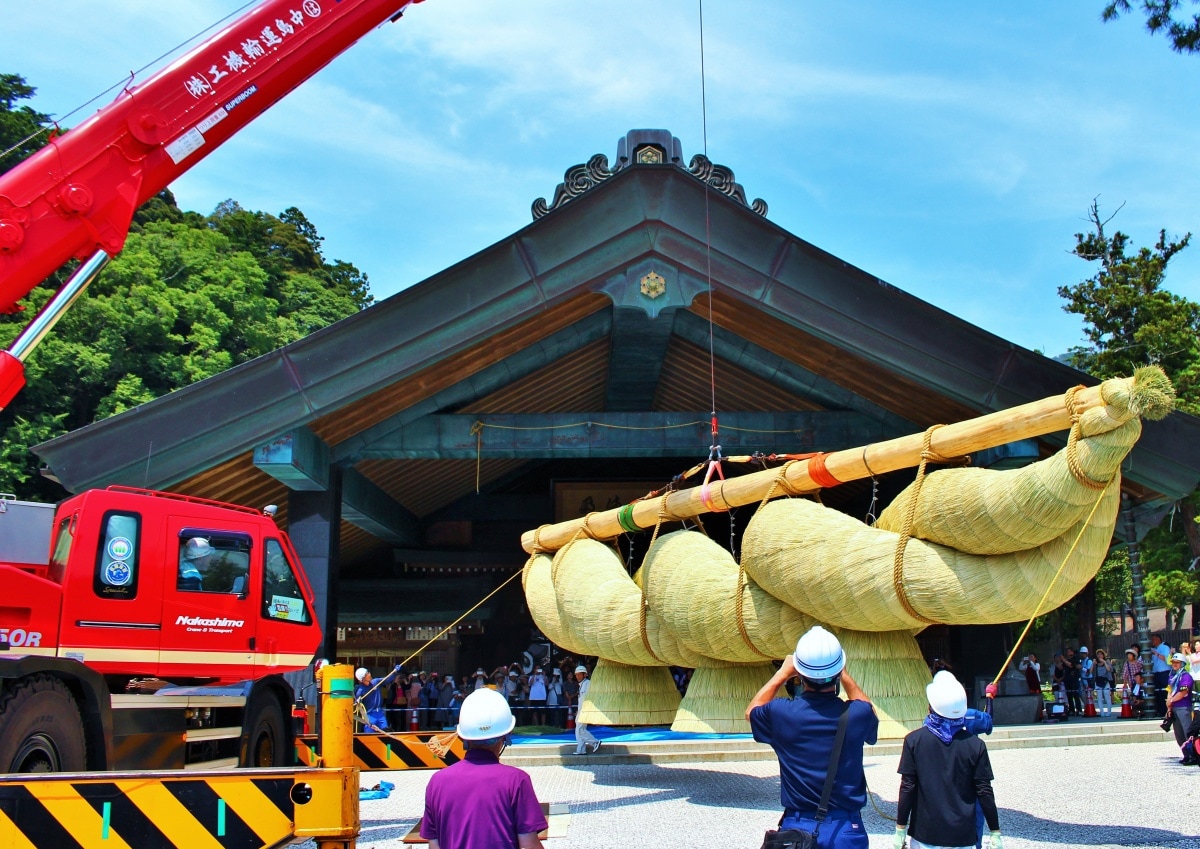
The culmination of many hours of work as the sacred rope is installed at Izumo Taisha (Courtesy of Iinan-cho Great Shimenawa Creation Hall)
The hall is a hive of activity, with many people involved in the different stages of the process. The participants span three generations: some are veterans, while others are joining for the first time. Sumako Koga is one of the younger members of the team. Originally from Tosu City in Saga Prefecture, Koga moved here in 2020 after learning that Iinan was recruiting people under the government's regional revitalization project. She chose Iinan specifically because of the shimenawa project. "I have always wanted to make things with my hands," she says. "And I have always loved Izumo Taisha."
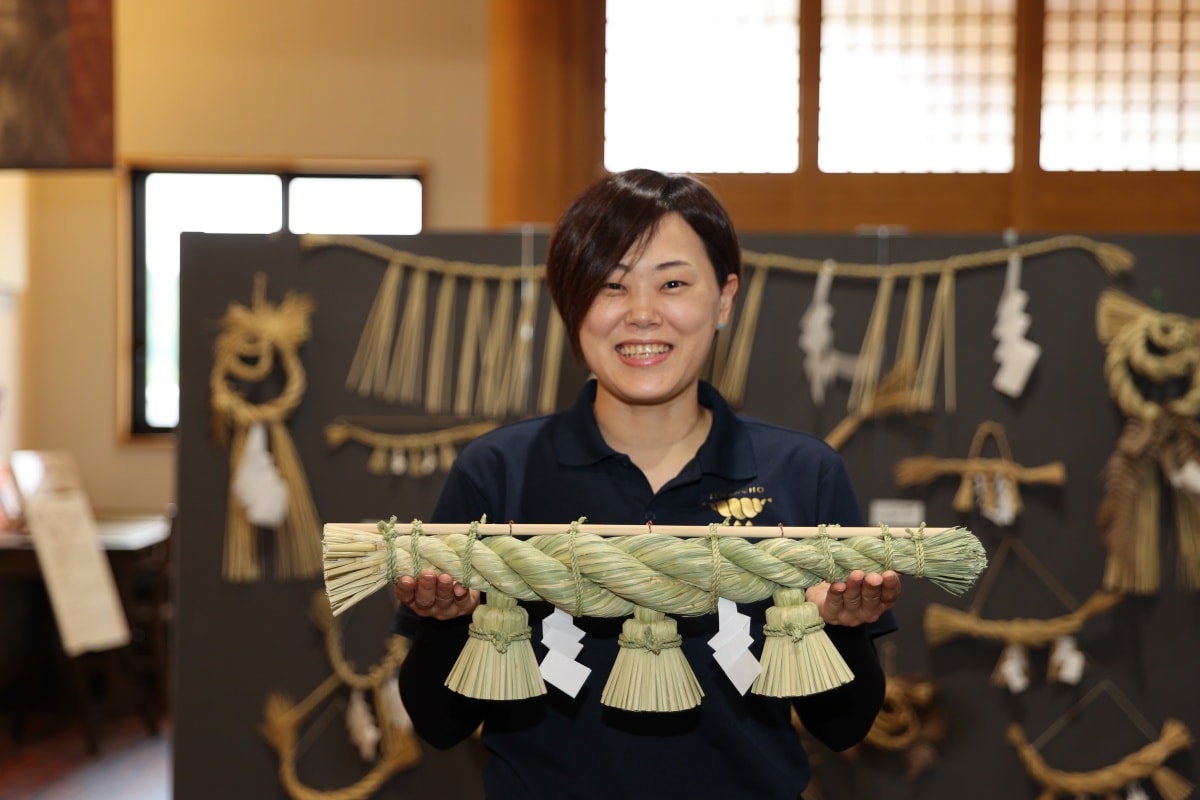
Sumako Koga moved to Iinan from Kyushu specifically for the chance to learn the art of shimenawa rope-making. (Courtesy of Iinan-cho Great Shimenawa Creation Hall)
The cooperative's work has reached well beyond Iinan. After the hall was built and the organization became incorporated, it began accepting orders from other places in Japan. It has even supplied shimenawa to Hawaii, the location of an Izumo Taisha branch shrine, and parts of Europe. The ropes travel by ship, and the installation is handled locally once it arrives. "We don't get to travel overseas ourselves in such cases, although if it were possible, of course I would have liked to go!" Akutagawa says, laughing.
Like many rural regions of Japan, Iinan faces the challenges of a declining population and a shortage of successors for agricultural work. Yet shimenawa production continues, uniting longtime and newer residents alike. Twisted together, strand by strand, the rope becomes something greater than the sum of its parts—a story of tradition and teamwork passed from one generation to the next. Soon, the giant rope will take its final form before departing for Izumo Taisha, where it will be presented to the Kaguraden.
Iinan-cho Ohshimenawa Sousakukan (Giant Shimenawa Creation Hall) Website