

The Wisdom of Wood: Why Japan’s Old Farmhouses Matter More Than Ever
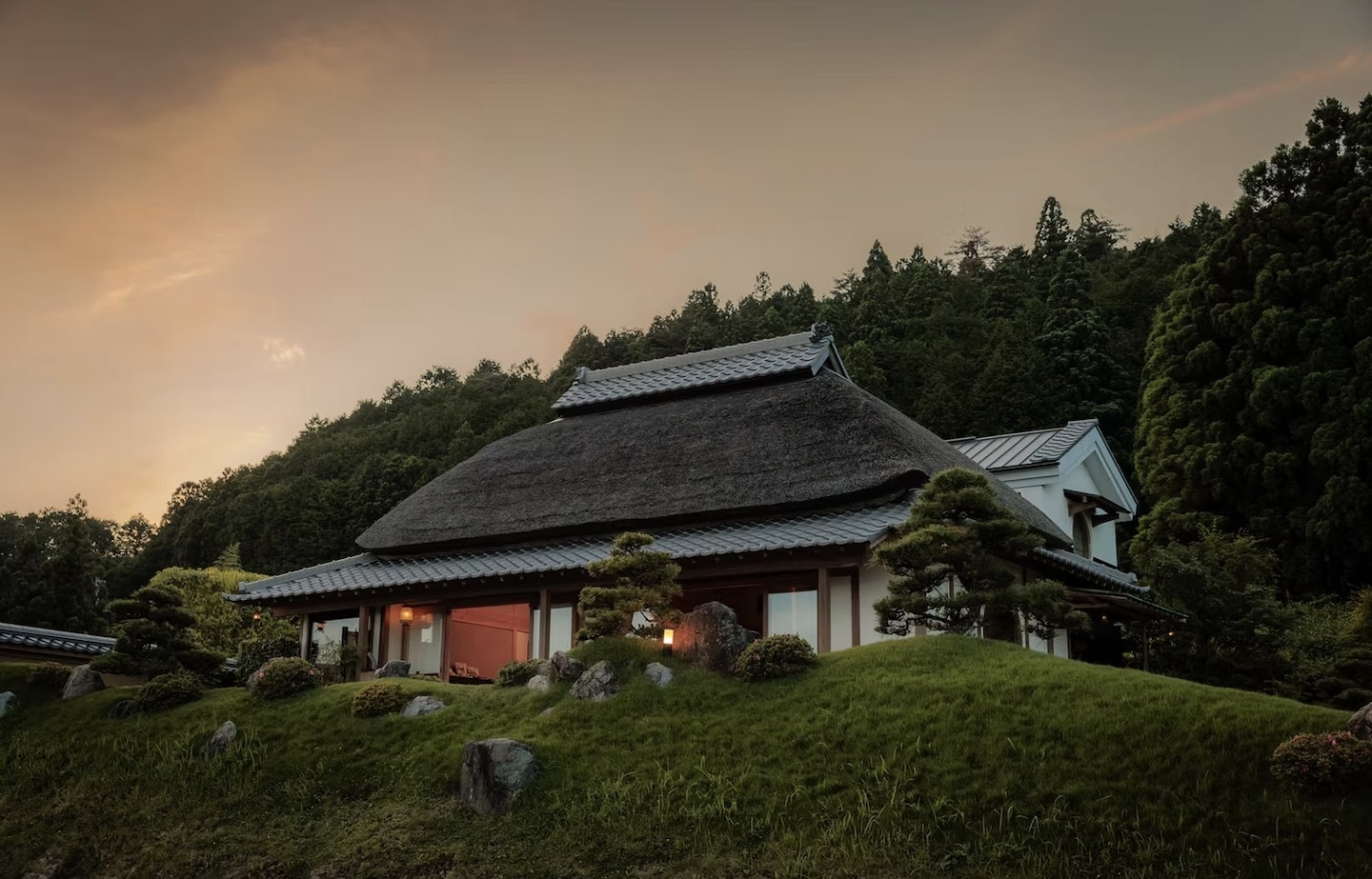
This traditional thatched-roof farmhouse at the eastern edge of Nara prefecture was restored for use as an inn. Like many minka, the main house is the centerpiece of a farmstead nestled against the hills that includes a white-walled kura storehouse and other outbuildings.(photo: Rice Terraces Villa Sasayuri Ann)
Japan’s traditional houses are commonly called kominka—“old folk dwellings”—a name that underscores their age. I still prefer minka, which simply means “folk dwelling,” because it reminds us that these houses were never meant as relics. They were built for living, working, and passing knowledge from one generation to the next.
By Azby Brown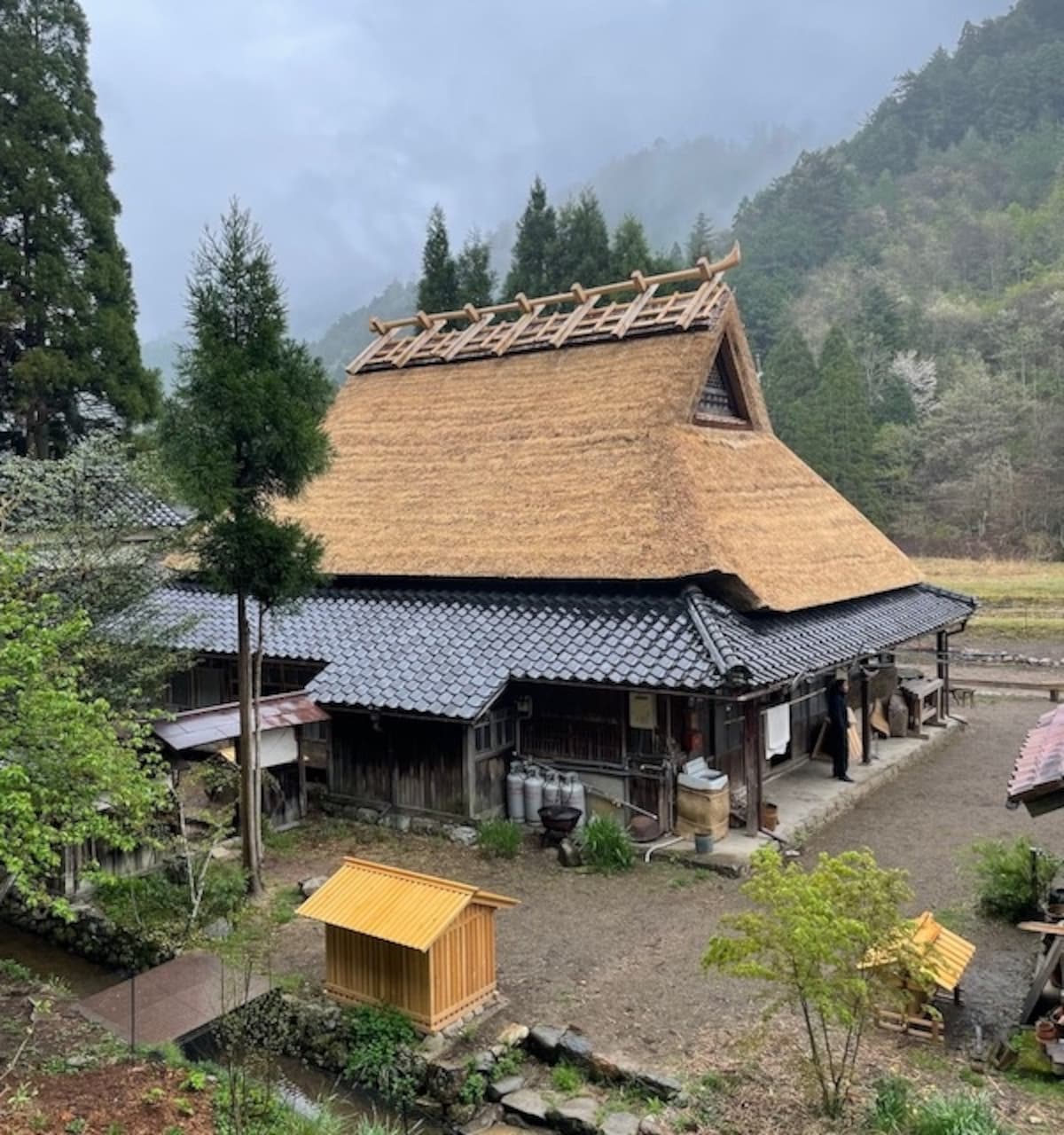
French architects Sébastien Renauld and Mélanie Heresbach restored this minka north of Kyoto. Their house displays all of the typical characteristics, including a thatched roof that echoes the shape of the mountans that surround it. (photo: Azby Brown)
My first encounter with the wonder and majesty of Japan’s traditional minka farmhouses occurred in a university library decades ago. During my undergraduate years at Yale, I was immersed in architecture and fine art, and had found myself drawn to Japan’s wooden building tradition, particularly its craft. A roommate had lent me a book about Kyoto’s Katsura Imperial Villa, and a sculpture teacher had recently returned from a year in Japan and had rich anecdotes and insights into the underlying values and aesthetics. Unbelievable as it may seem today, in the late 1970s there were few, if any, courses about Japanese architecture at any university in the United States. Even Yale, well-endowed as it was, had none.
So I found myself on my own, thumbing through a shelf of volumes in the library’s stacks. Among the small but well-curated selection of books on Japanese architecture, I discovered a substantial volume in a handsome slipcover: Nihon no Minka—Traditional Japanese Houses, with text by the noted architecture historian Teiji Ito and photographs by Yukio Futagawa. Page after page of mesmerizing black and white photos pulled me through a portal across time and distance, depicting ways of building and living that seemed to have survived with little change from the ancient past. Very few people appeared in this remarkable book, but in the grainy images I could almost smell the smoky aroma of the peoples’ lives, and sense the centuries of accumulated knowledge embedded in those structures. I knew then that I had to see these dwellings firsthand.
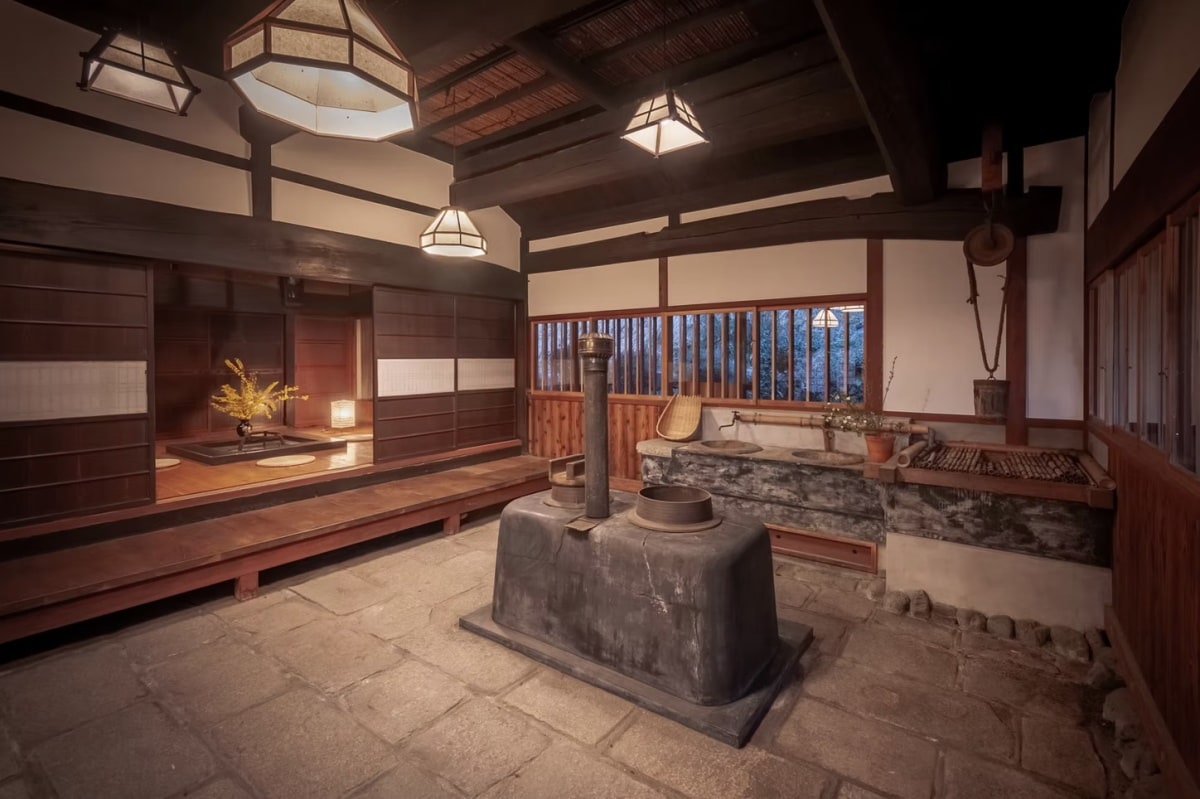
The doma is an indoor workspace. Though they commonly had floors of packed earth, this example in Miyama north of Kyoto is paved in weathered stone. The wood-fired cookstove is still functional. (photo: Miyama Futon and Breakfast)
Published in 1980, the book was the culmination of an effort begun in the 1950s to record the state of minka in different regions of Japan. It was the most influential early project to call attention to what was even then a vanishing material culture. Maps of unfamiliar, remote places and floor plans that rendered the mystical ambience of these houses tangible seemed to taunt me me into embarking on my own voyage of discovery. I began tracing itineraries, though it would take me years to finally get to Japan and see authentic minka firsthand. When I did, the experience changed my life.
"The elementary-school age daughters slept in a loft reached by a ladder hewn from a single log, like an artifact from ancient Japan."
I arrived in Japan in 1983 with only fifty dollars in my pocket and the promise of a week’s work in Tokyo. No one I met seemed to know of any minka I could visit—or much at all about minka. They were remote, marginal, and irrelevant to everyday life. Eventually someone said, “I know of a guy who…” and I found myself in Kyoto, with an English-speaking carpenter-poet named Susumu Hasegawa.
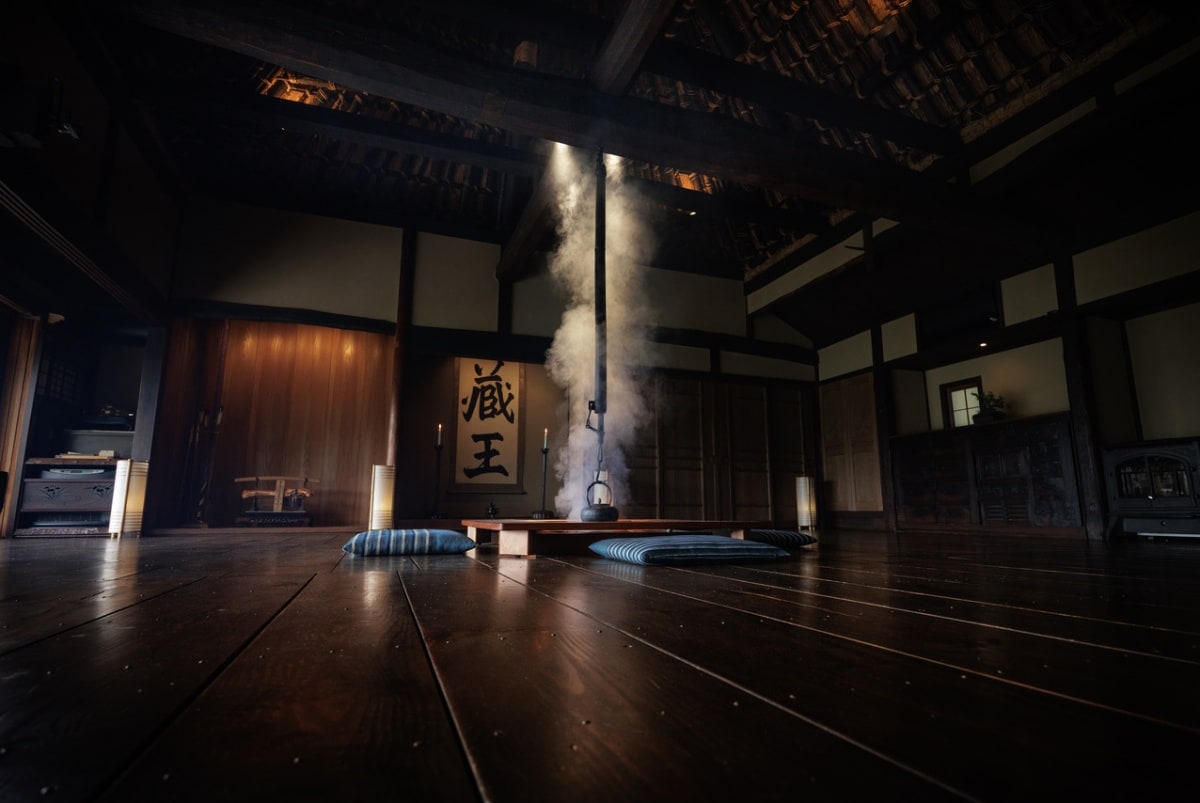
Most minka farmhouses have a large wooden-floored space, with an firepit in the center. The room was multipurpose, used for work like weaving and basketry—and an inviting place to talk, eat, or have tea. (photo: Rice Terraces Villa Sasayuri Ann)
Hasegawa-san lived in a remarkable minka near Katsura that he had relocated from Shiga prefecture. It was massive, spacious, and welcoming—and cold in winter. He had built a tatami-mat sized sunken kotatsu in the main room, under which his three sniffling children huddled to do their homework. “Japanese children have always had runny noses in the winter,” Hasegawa-san said. His youngest child, just six years old, was responsible for stoking the wood-fired hot water heater for the beautiful hinoki bath. The elementary-school age daughters slept in a loft reached by a ladder hewn from a single log, like an artifact from ancient Japan. The parents and the youngest child slept on futons in the main room, while I was shown to a low-ceilinged alcove. The aroma of wood smoke was everywhere.
When I offered to help at his worksite in thanks for his hospitality, Hasegawa-san chuckled. “Are you sure?” he asked. “The problem with foreign workers is that they’re full of questions. If I tell a foreigner to go to an address and wait for me, they’ll ask, ‘Why? How long will I have to wait? What will we be doing there?’ That’s a real pain in the ass. If I tell a Japanese to do the same, they’ll just go there and wait.” Forewarned, I accompanied him to a nearby worksite early the next morning.
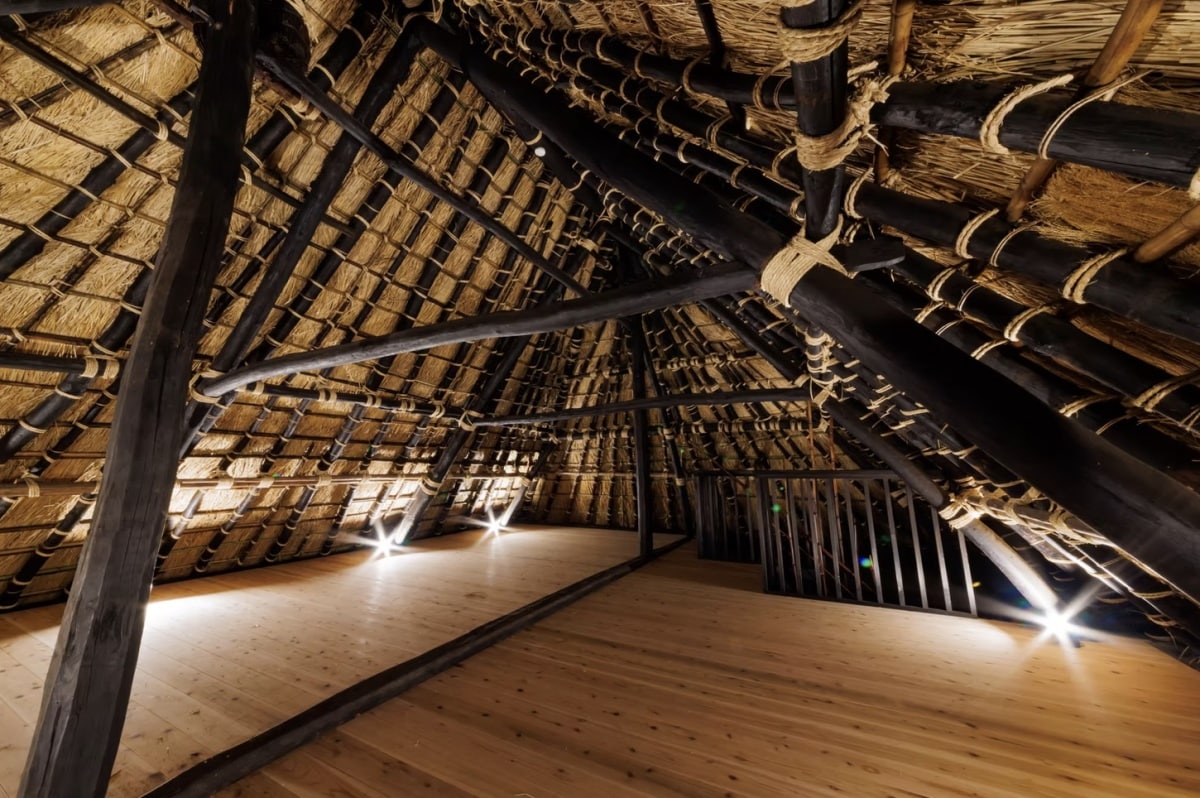
Many minka have upper attic spaces originally used for storage or raising silkworms, typically made of wooden poles and bamboo lashed together. This building technique is largely unchanged since prehistoric times. (photo: Miyama Futon and Breakfast)
My first task was to carry piles of wood chips to a fallow vegetable patch next to the site, using a battered woven bamboo scoop and two large baskets slung from a long pole. “I’m a coolie now,” I thought, as I stumbled under the load. Next, I was allowed to strip bark from pine logs using a long-handled kawamuki—a kind of oversized vegetable peeler. As I was struggling with this task, carpenters in another corner of the worksite began wrestling curved and twisted logs that would form the house’s primary roof structure. Using simple wooden pole tripods and small chain hoists, they rotated and repositioned the logs in a three-dimensional matrix, looking for an optimal configuration that would allow them to be securely joined.
"The master carpenter had already visualized how the pieces would fit together, having selected them and laid them out beforehand."
Hasegawa-san told me to keep peeling, knowing full well that I would steal glances at the mesmerizing process unfolding nearby. After a moment it hit me: They were reading the logs. The master carpenter had already visualized how the pieces would fit together, having selected them and laid them out beforehand. What I was witnessing was the fine-tuning. The carpenter could see in his mind where the vertical structural elements would intersect with the irregular logs, and he was nudging the logs so that they would fit well together while supporting the vertical load. At one point he shouted, “Yosshhi!” and an apprentice snapped ink lines on the suspended logs to indicate how they would align in the finished structure. The natural logs had been transformed into organic roof beams, literally woven together.
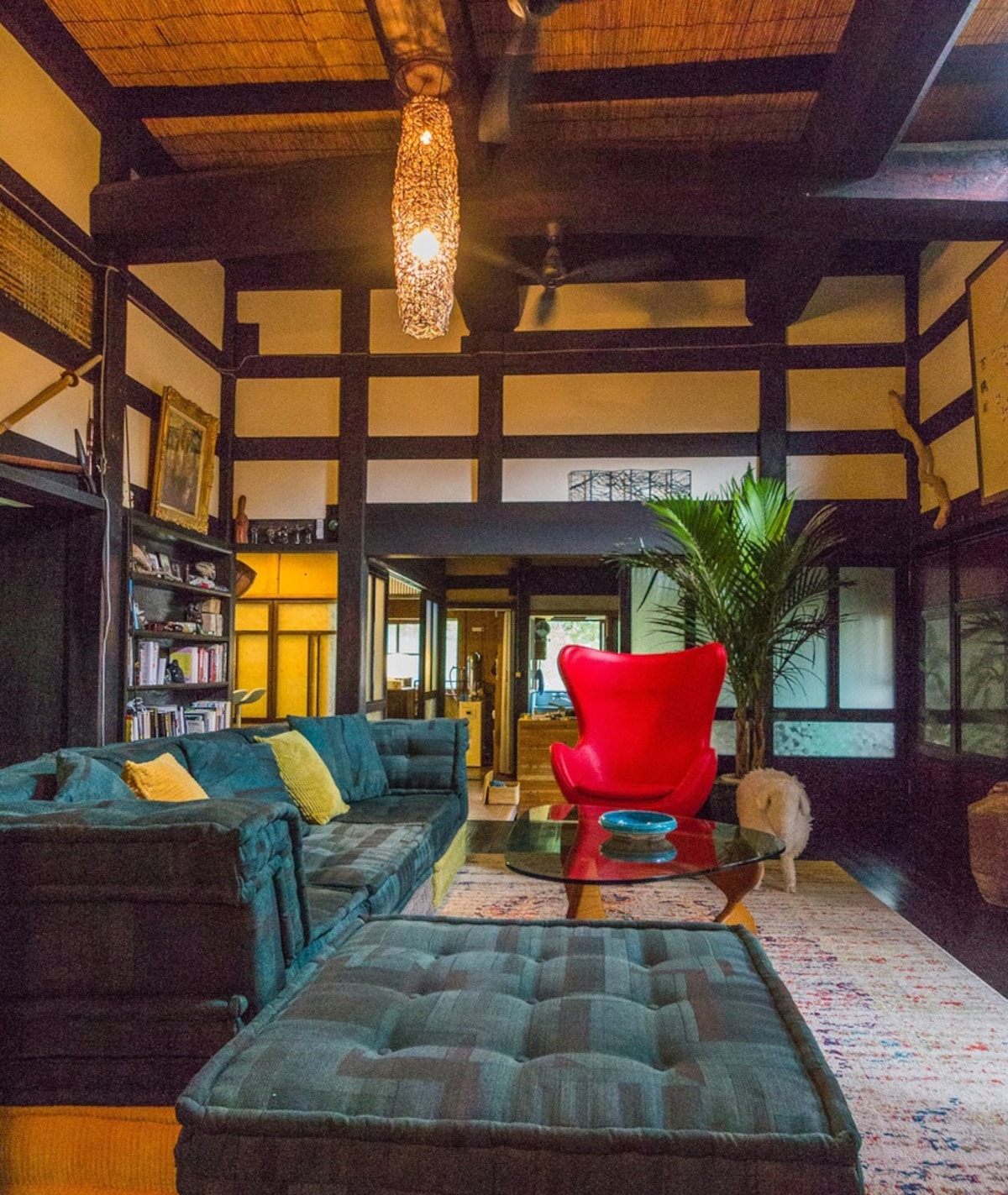
Despite their robust and assertive character, minka are adaptable and can comfortably accommodate many tastes and lifestyles. The hiroma of this 19th-century minka near Kanazawa has been converted into a friendly modern living room (photo: Lauren Scharf)
I had worked on many building sites back home and had never witnessed anything like this. I thought Japanese carpenters must possess a highly-developed capacity for three-dimensional visualization. These guys were alert, confident, competent, and casual. They moved in unison, almost wordlessly. Some were nearly toothless. One was a smiling teenager. They barely registered my presence, but afterward, squeezed into Hasegawa’s tiny kei-truck on the way to town for drinks before dinner, I felt I had been initiated. I was full of questions, but Hasegawa only drawled, “Don’t ask….just look.” He sadly passed away over a decade ago, but his advice has stayed with me.
Much has changed since then—and yet, in some ways, very little. My enthusiasm to know more about minka and other aspects of Japanese wooden construction opened doors. Contrary to my initial impressions, there was a large network of knowledgeable enthusiasts, and a good word from one would lead to a warm welcome from another. My professor at the University of Tokyo invited me to help document an outstanding minka he was researching in the Niigata region. Preservation was the keyword, but even then the outlook was bleak. Not enough people cared, despite the 1994 UNESCO World Heritage designation of the gassho-zukuri (“praying hands style) farmhouses of Shirakawa-go and Gokayama.
"Real estate companies that once served the urban expat luxury market now see opportunities in turnkey renovated minka."
Over time, I met people like Yoshihiro Takishita, who was relocating and restoring minka for non-Japanese owners, and fellow Yalie Alex Kerr, who superbly restored a minka in the remote Iya Valley of Shikoku in the 1970s. Alex went on to advise influential government bodies on the importance of preserving this heritage. (Unfortunately, they seemed to be only half-listening.) Everyone agreed on the scale of the challenges needed to stem the loss of minka.
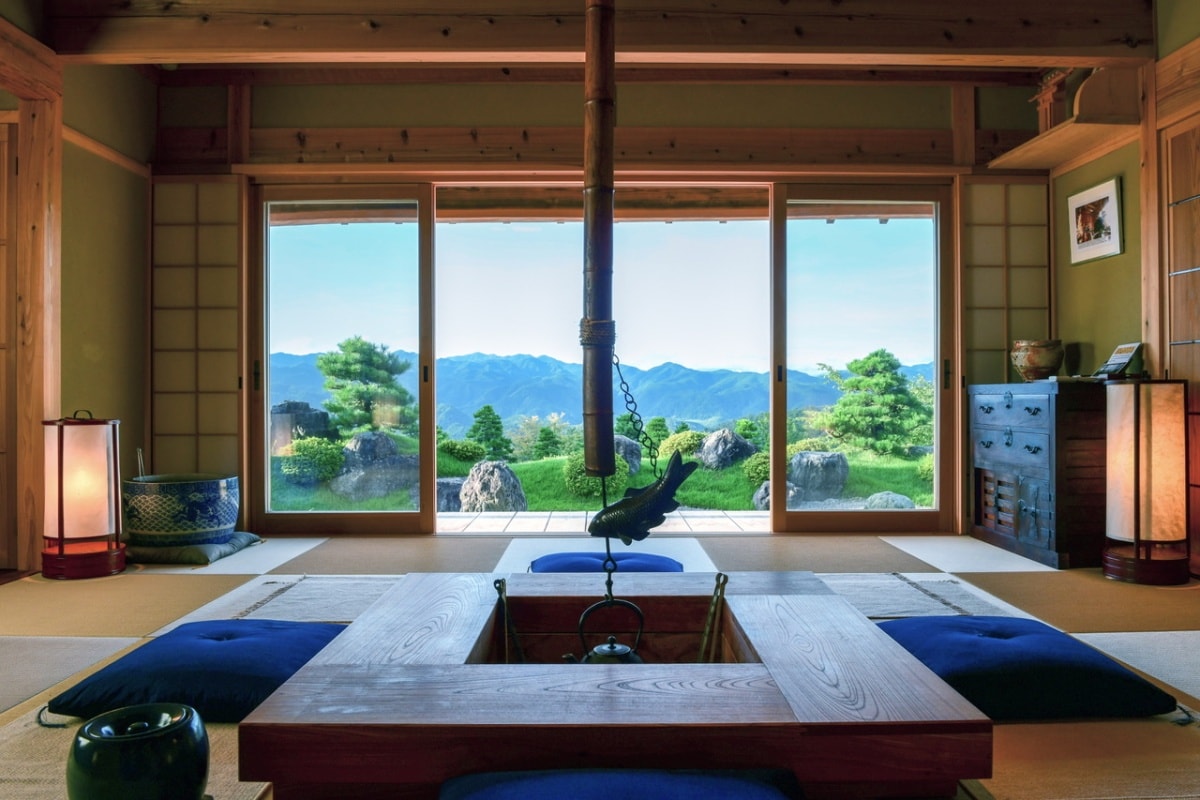
This contemporary restoration takes advantage of paper shoji and glass doors to extend the indoor space to the garden and mountains beyond. The traditional firepit has been raised to serve as a counter. (photo: Rice Terraces Villa Sasayuri Ann)
The reasons for the abandonment of minka are well known: an aging population, declining rural opportunities resulting in a diaspora of young people, and tax laws that can heavily burden property heirs. Minka are large, costly, and time-consuming to maintain, making neglect an easier choice than renovation or restoration. Government support at every level remains inadequate. But the growing global fascination with minka is undeniable. English-language YouTube channels devoted to minka restoration now attract hundreds of thousands of subscribers. This interest overlaps with the recent boom in akiya—abandoned houses—many of which can be purchased for a small fraction of comparable homes elsewhere. Real estate companies that once served the urban expat luxury market now see opportunities in turnkey renovated minka stocked with modern conveniences for use as vacation homes or corporate retreats.
Today, two minka-preservation organizations in Japan (see links at end)—whose participants are largely non-Japanese—host active online forums and organize annual weekend-long events in rural areas. These weekends include hands-on workshops on thatching and wall-plastering, as well as talks by experts on technical, financial, and regulatory challenges. Alex Kerr dubbed the first one of these, “The Woodstock of minka,” and I have found myself in congenial company there, sharing my own insights and experiences. These groups collaborate with older Japanese minka organizations, with international counterparts such as the US-based Timber Framers Guild, and craftspeople from other parts of Asia and Europe. The World Monuments Fund, for which I serve as a technical advisor, has also taken note. Minka have become a truly global phenomenon.
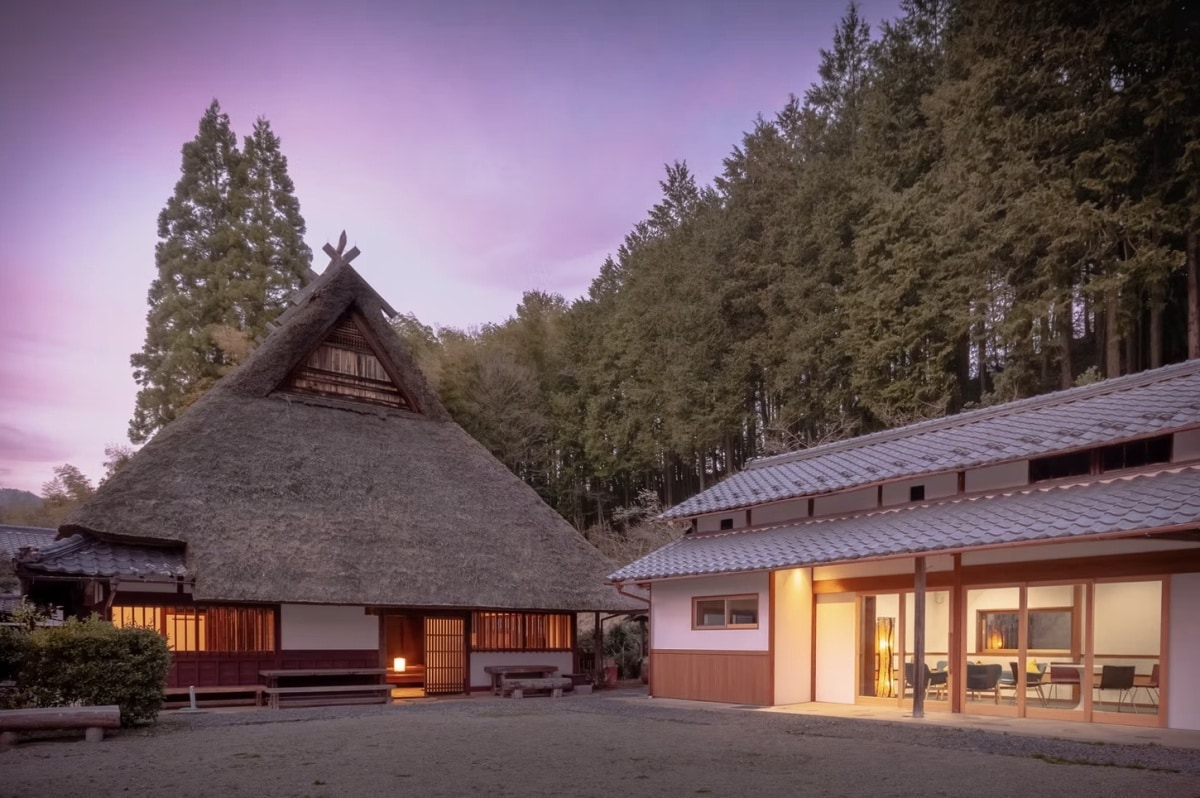
Miyama, north of Kyoto, has become known as Thatched Roof Village with nearly 40 well-preserved minka. While most are residences, some, like the 150-year-old Hotaruan pictured here, have been repurposed as inns. (photo: Miyama Futon and Breakfast)
As interest has grown, it has become easier to find skilled carpenters, thatchers, plasterers, and other craftspeople capable of high quality restoration work. But I can’t shake the feeling that time is running out. Despite this surge of enthusiasm, minka are still disappearing faster than they can be saved.
"Minka provide access to irreplaceable ways of understanding and experiencing the world--ways that have largely been lost."
Some have lamented that would-be owners are being priced out of the most attractive opportunities by luxury developers, especially in the areas convenient to Tokyo. I also see plenty of hype on social media that glosses over the real challenges of moving into rural communities—challenges that even Japanese nationals have to face. Success depends on consistent contributions to the local community, something few non-Japanese seem really prepared to do. And while I remain cautious about motivations driven by profit, I’m grateful whenever a beautiful minka is preserved, for any reason. Future inhabitants will surely be thankful that someone intervened when they did.
For me, minka preservation is a key component of broader efforts to restore the planet. They provide a beautiful context for learning about handcraft, natural materials, the importance of forest stewardship, and the deep interconnection between human life and the natural environment. They provide access to irreplaceable ways of understanding and experiencing the world--ways that have largely been lost. I never tire of pointing out that achievements in Japan’s past offer vital lessons in the careful use of limited resources while enhancing the quality of life. Whether imposing or humble, minka are prime embodiments of everything we need to learn. Preserving them helps ensure that we, too, become good ancestors for generations to come.
Minka Preservation Society
Kominka Japan

Azby Brown is a native of New Orleans, and has lived in Japan since 1985. He is a leading authority on Japanese architecture, design, and environmentalism, and the author of several influential books including The Very Small Home (2005), Just Enough: Lessons in living green from traditional Japan (2010), and The Genius of Japanese Carpentry (2014). Since the Fukushima Nuclear Power Plant disaster in March 2011, Azby has been lead researcher for Safecast.
azbybrown.com