For Every Ultraman . . . There's an Ultra Woman
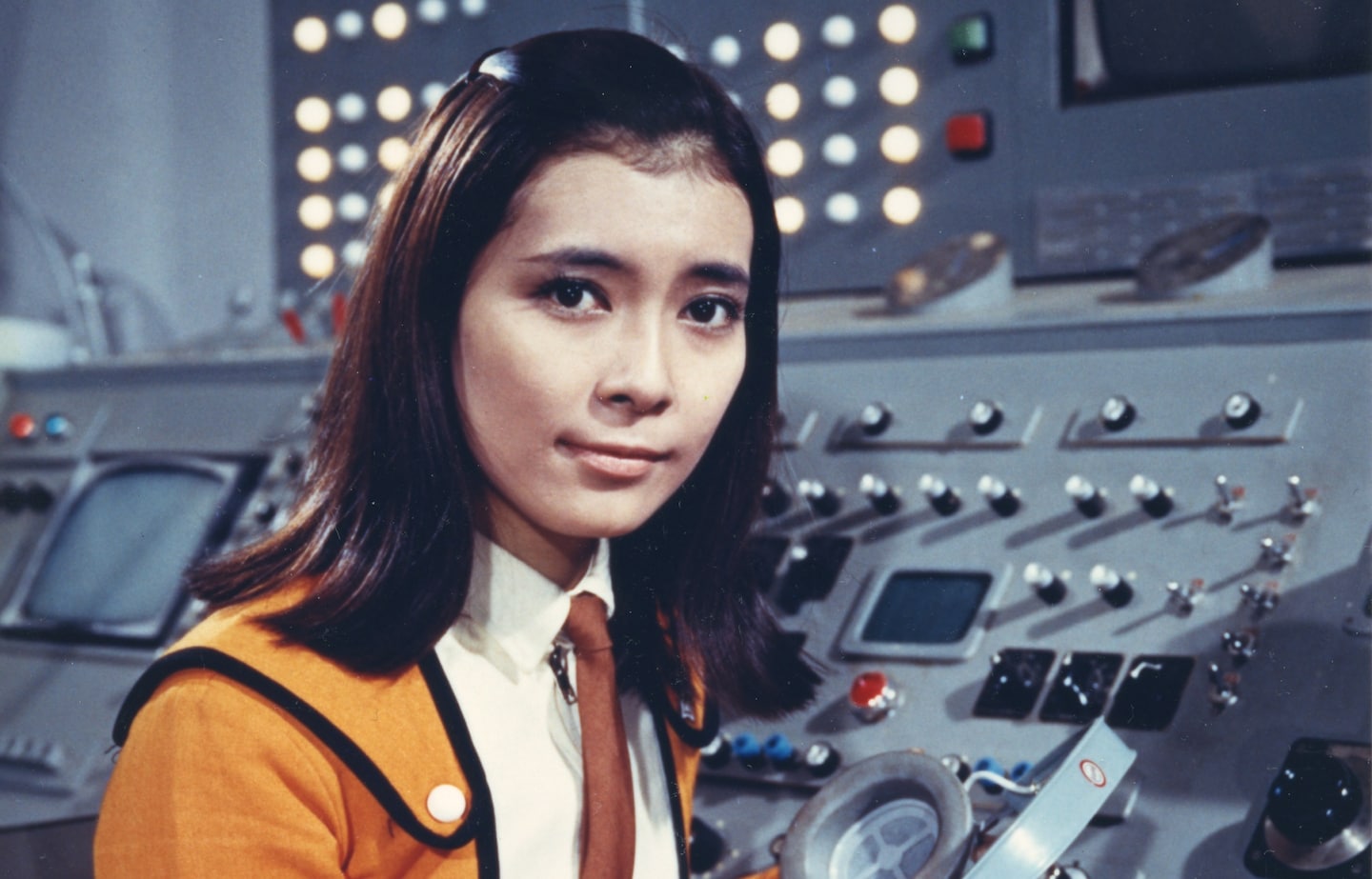
Akiko Fuji was the "communications officer" of the Science Patrol.
In the classic sixties TV show Ultraman, Hiroko Sakurai played Akiko Fuji, the female lead to the super-sized superhero. In an exclusive interview marking the show's 60th anniversary, she shares with long-time fan Matt Alt her memories of the launch, the creative team, and dealing with the fame of the ground-breaking program.
By Matt Alt
July 10th marks the sixtieth anniversary of a classic of Sixties television: the 1966 sci-fi spectacular Ultraman. The titular hero, with his striking red and silver appearance, represented a new kind of star: a superhero who wasn’t only super-powered but super-sized, too–the better to karate-chop the equally giant monsters that appeared in every episode. Originally envisioned as a kind of prestige TV series for Japanese kids, it soon attracted the attention of foreign distributors around the world, marking an early international success for Japanese pop culture. Iconic designs, immersive stories, and wild monsters gripped kids of the day like nothing before – and fueled the fantasies of future creators. Put another way, Ultraman walked so Power Rangers and Pokémon could run.
From the first moments of Ultraman’s intro, kids knew they were getting something special. A logo swirls into psychedelic focus in a special effect made by reversing footage of pigments swirling in a vat. A funky guitar riff plays over a series of paper cutouts of the titular hero and his giant-monster foes. And then we meet the five members of the Science Patrol, dressed like spacy salarymen in bright orange suits and ties, the perfect look for facing down interstellar threats. Lasers and explosions ensue, capped off by a giant monster wrestling match. Sixty years later, Ultraman may feel a little dated, but has lost nothing of its charms. It has, as they say, a vibe.
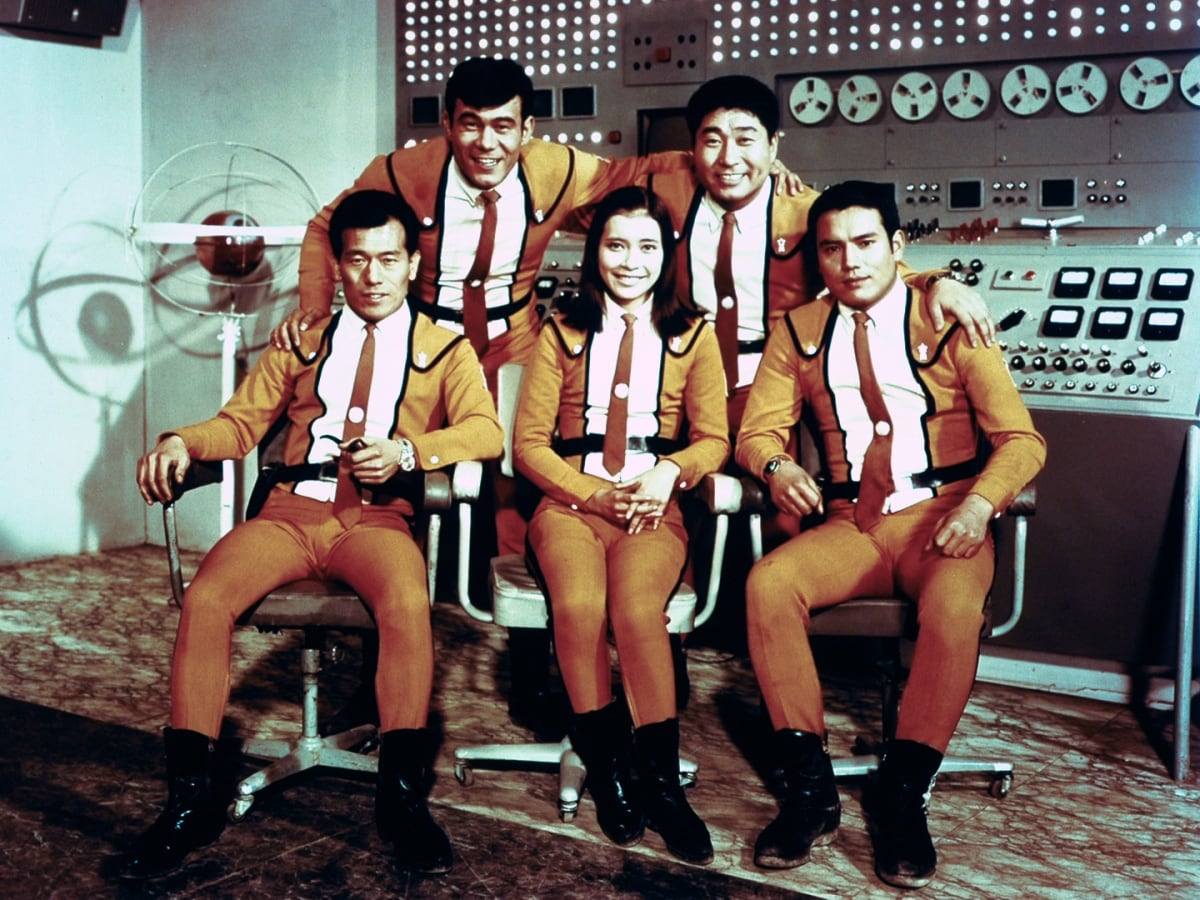
Taking a breather between kaiju battles at Science Patrol headquarters. Hiroko Sakurai, playing Akiko Fuji, at center.
The show was the brainchild of Eiji Tsuburaya, a special-effects director who brought Godzilla to life for director Inoshiro Honda’s seminal 1954 film, then went on to create scaly stars like Mothra, Rodan, and King Ghidora for Toho studios. In 1963, he founded the company that is now known as Tsuburaya Productions, with the aim of bringing special effects to television. His first show, Ultra Q, featured a team of three investigators pursuing supernatural phenomena. Ultraman upped the ante by making the climax of every episode a spectacular battle between the titanic hero and a giant-sized kaiju monster. This formula sparked a kaiju craze that swept Japan, and then the world. In many ways it never really died down; monsters enormous and pocket-sized remain staples of Japanese pop culture even today.
In honor of the sixtieth anniversary of the series, Tsuburaya Productions has released a documentary called The Origin of Ultraman. A host of international creatives including Guillermo Del Toro, Nicholas Winding Refn, and Hideo Kojima gush about the impact that the series, and its creator Eiji Tsuburaya, had on their lives and careers.
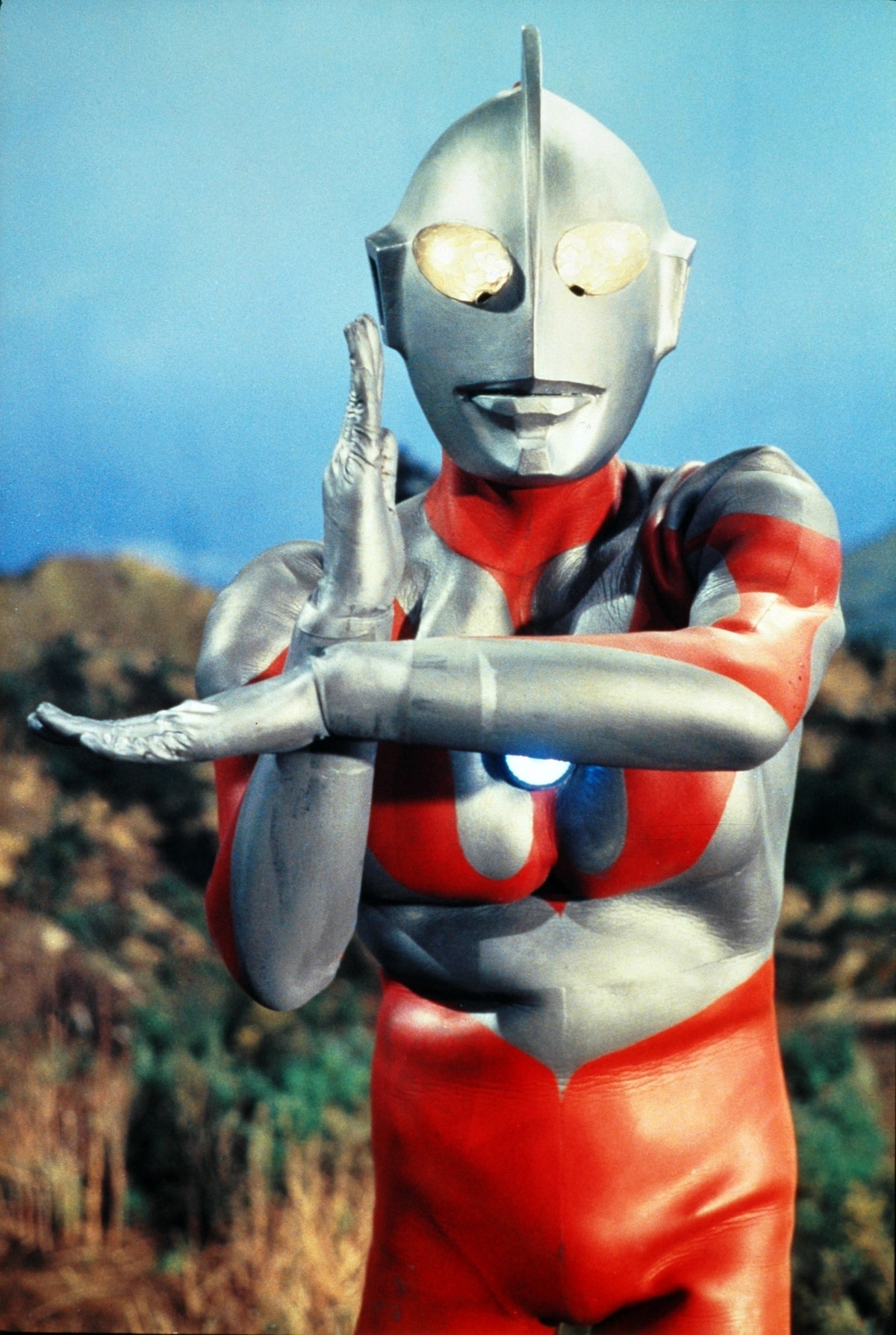
Ultraman, preparing to fire his trademark "Spacium Beam."
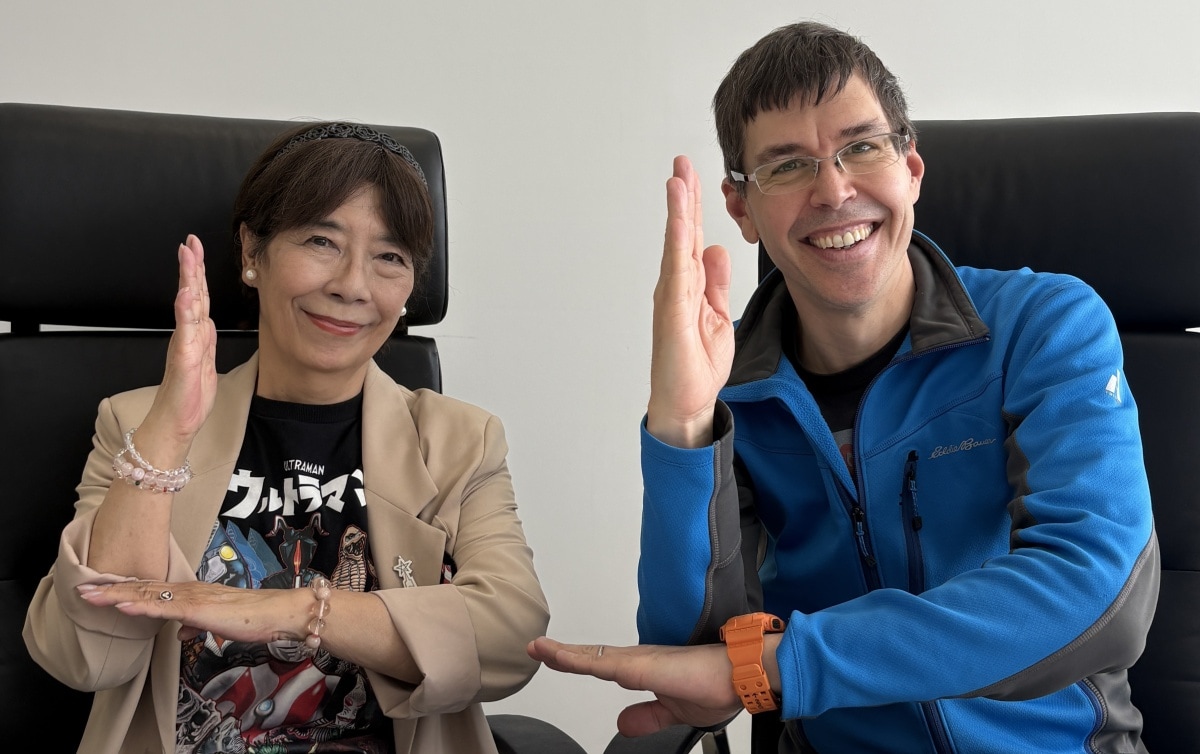
I can empathize. Ultraman, among many other Japanese pop hits, was what drove me to start studying Japanese as a teenager, and eventually make my own life and career here as an adult. In my work translating, writing, and exploring, I’ve had the chance to meet many of the heroes of my childhood. But one of my favorite connections was to the actress Hiroko Sakurai, who played the Science Patrol’s communications officer, Akiko Fuji. We were introduced by a mutual friend some twenty years ago, and have crossed paths many times since. But this represents the first time I’ve ever had a chance to sit down and talk with her on the record.
We met at Tsuburaya Productions headquarters, in a skyscraper just past the peak of Shibuya’s Dogenzaka hill. She arrived dressed for action, in a blazer over an Ultraman T-shirt, with a replica of the Science Patrol’s meteor-shaped emblem on her lapel. Bubbling with energy and enthusiasm, and quick with a sly aside when she spoke, it was easy to see why she’d been cast as the show’s female lead in 1966–and hard to believe she’d become an octogenarian just a few months prior.
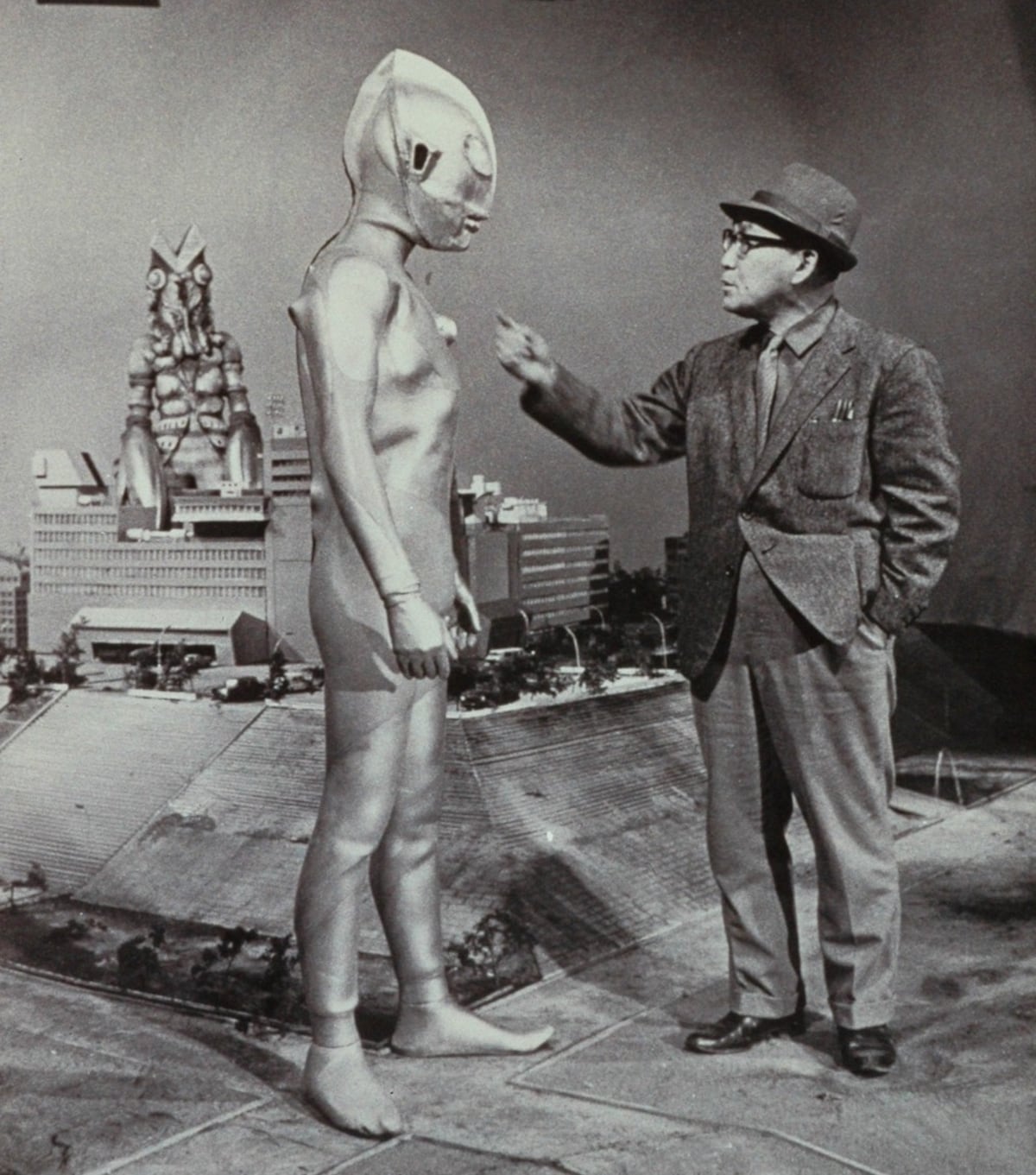
Special effects pioneer Eiji Tsuburaya, giving direction on the set.
Ultraman began production while the Ultra Q series was still running, and it began airing immediately after it ended. How did you get involved?
We were about two-thirds of the way through shooting Ultra Q when Hajime Tsuburaya, Eiji’s son, said, “We’re shooting a new spin-off and you’re in it.” I said, “okay,” and that was it. The crew was the same, but the cast was different, so I was a little nervous—as was Shin Kurobe, who played the hero Hayata. But we quickly relaxed and settled into a team.
Was there any sense among the cast that it might turn out to be big?
We had no idea. In fact it was kind of a mess at first, because the whole narrative changed from Ultra Q. Now there were kaiju in literally every episode. It was tough on us because the storytelling, the content, the acting, the style of filming, all of it changed 180 degrees. We were worried that it might not even make it to air. But we banded together to try to make it work.
The show’s focus on introducing kaiju every week sparked a huge fad for the "monsters”. . .
None of the actors had any idea. But that’s what Eiji Tsuburaya wanted to do. We just had our heads down working on this new show.
So when did the cast start realizing the show was a hit?
Though Ultra Q had been a ratings hit, we were nobodies. Actually, I feel more famous now than I ever did back then.
That's hard to believe. Monster shows and movies became so big back then that even Japan's young Crown Prince was spotted buying a kaiju guidebook. Were you aware of that?
I think age-wise he was more of a fan of Ultraseven, the 1967 sequel. When he grew up, he went to Gakushuin University, which had a famous pyramid-shaped building that was used as a setting in Ultraseven. In fact, when they knocked the building down in 2008 they had a ceremony to commemorate its history. The Crown Prince, who is now the emperor, gave a talk, and a few of us from Tsuburaya were invited. We gave him a replica of the “Ultra Eye” from the show, and there’s a photo of him putting them on for us.
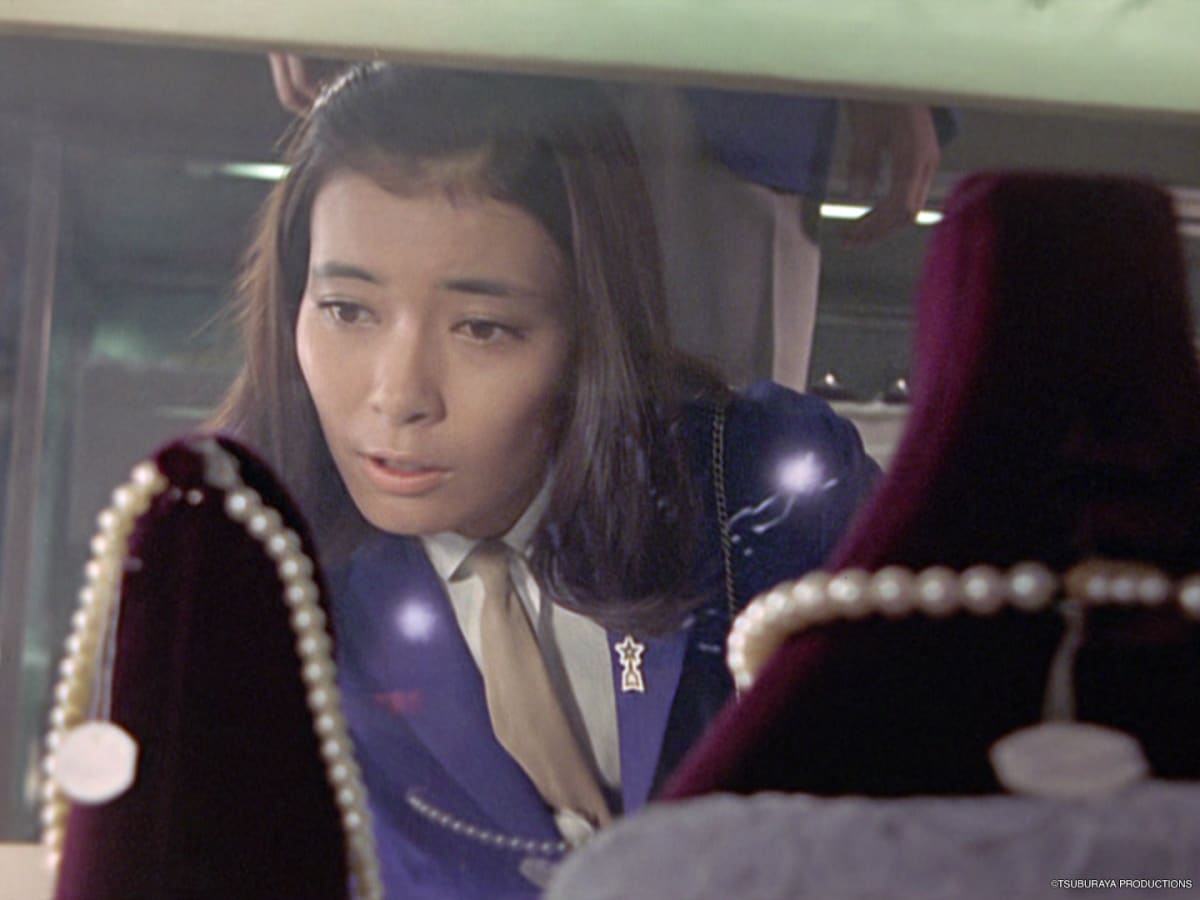
Shopping for pearls in the Ginza, from episode 14, the “Pearl Defense Directive.” Visually, Sakurai says, it's her favorite episode.
The Ultra Eye! Those glasses the hero put on to transform into Ultraseven! But a royal blessing from the young prince was surely a hint that Japan was going to become a pop culture superpower. (Laughs)
The emperor is very knowledgeable about pop culture. Masako Nozawa, the anime voice actress, told me that, at a tea party at the imperial palace, he told her he’d heard her voice in the anime Ge Ge Ge no Kitaro.
A clear sign he had something of a normal childhood. . . .
Yes! And, well, he’s a cultural ambassador, so it all makes sense. But, like I said, at the time, though, I had no sense of the show’s popularity Then, ten years later, people started recalling my appearance in Ultraman, and to be honest, it was kind of annoying. (Laughs) I had moved on in my career, and I didn’t want to be typecast. And now look! Sixty years later, I’m getting more interviews than ever!
Monster movies may have been invented in the West, but a lot of people think Japanese perfected them.
Eiji and Hajime made Ultraman in color for a reason. They called all of us together before the first shoot, and said their goal was to compete with Hollywood. They brought out a lot of big guns for directors, even though some were youngsters back then.
"He’s got no place on Earth, but he isn’t from space, so he has no place there, either. It felt like something that could happen."
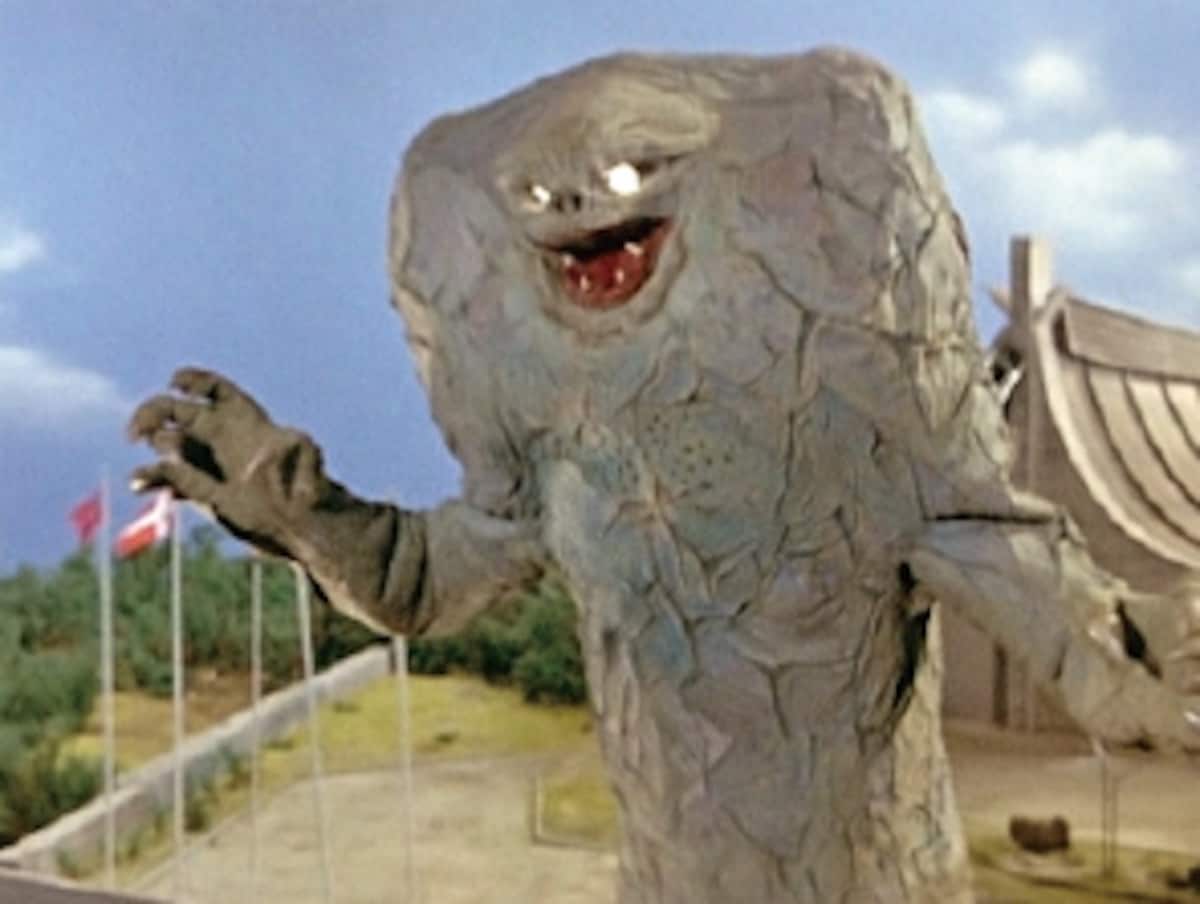
Jamila, astronaut turned monster, from the episode "My Home is Earth." " It felt like something that could happen," Sakurai says.
Well, some became quite famous. Like Akio Jissoji, who went on to become one of Japan’s most visually distinctive directors. His 1988 film Tokyo: The Last Megalopolis was in the top ten highest-earning Japanese films for a while there.
Oh, he was a pain—always asking us to do things that weren’t in the script (laughs). He’d change the costumes and the dialogue. For the “Pearl Defense Directive” episode, we were suddenly told we’d be shooting guerilla style in the middle of Ginza. We were really sweating bullets, thinking of wearing the bright orange Science Patrol uniforms right in the middle of Ginza! Luckily, we ended up wearing blue blazers instead.
What was your favorite episode from an actor’s perspective?
Visually, I always liked the “Pearl Defense Directive,” because Akio Jissoji did such a good job filming it. It just looked pretty. Story-wise, I always liked “My Home is Earth,” which starred a kaiju called Jamila. That one really tugs at your heartstrings.
That’s the sad one about an astronaut who comes back to Earth as a monster.
The story, which is about someone who goes to do their job, comes back changed, and then is treated as less than human, felt all too believable. He’s got no place on Earth, but he isn’t from space, so he has no place there, either. It felt like something that could happen.
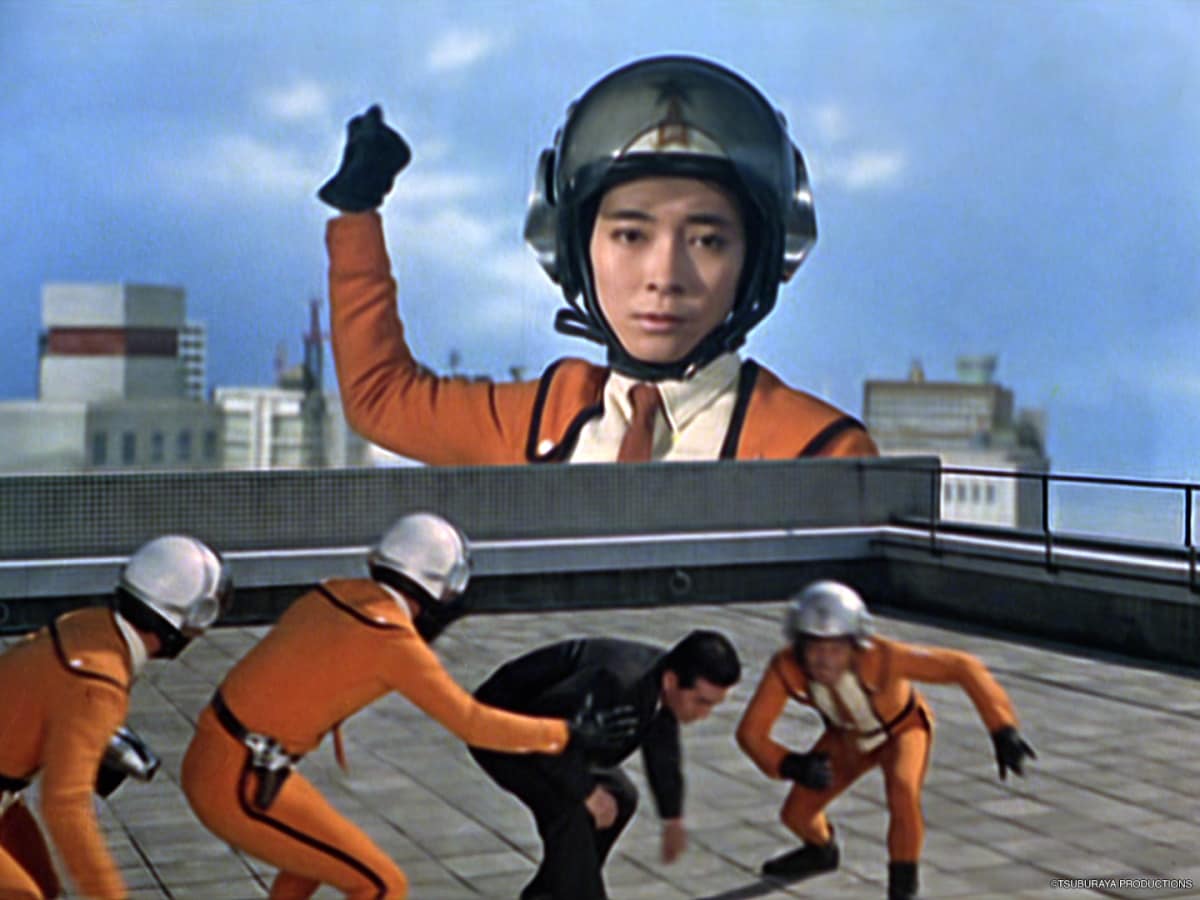
The monster-sized Akiko Fuji from episode 33 of Ultraman. Sorry, Hiroko!
My favorite episode is“The Forbidden Word,” in which an alien makes you giant-sized, and you terrorize the city.
I don’t like that episode! (Laughs) First of all, it was a pain to shoot. I had to go to the special effects studio for extra scenes, so it was just more work. But years later, a Japanese publisher included me in a guidebook to kaiju. Me! That really made me mad! [Laughs] In my day, actresses were always supposed to be beautiful. And truthfully, the scenes were beautifully shot. But I was enormous! And that really messed with my self image.
Really! I always saw it as a kind of girl’s empowerment thing!
Shinji Higuchi, the director of Shin Ultraman [2022], told me, with this big grin, “She’s gonna get big again!” And I thought, damn it! (Laughs) On set, Masami Nagasawa, who played Fuji, joked that I was “her big senpai (elder)” which ticked me off! When I asked her how she felt, she said she loved being a giant. I think getting big suited her proportions better than mine. Anyway, I’ve made my peace with it. I told them, go ahead, make the T-shirts of me. Make the acrylic figures. (Laughs)
You look great at any size, to me. (Laughs)
Thank you.
"Writer Tetsuo Kinjo had seen terrible things as a boy in Okinawa, and Director Toshihiro Ijima lived through the firebombing of Tokyo. But they never expressed their feelings directly."
But you know, there’s a kind of darkness in a lot of the episodes. For a kid’s show, it often portrayed things like pollution, or war, or invasions. Many of the kaiju were victims themselves.
The screenwriters had a knack for taking deep issues and making them so easy to understand even a kid would get it. But they were so subtle about it that it never felt like it was agitating or even lecturing. And the stories stick with you.
Japan was going through a lot of social turmoil during the time you were filming, including huge student protests. Did that influence the creative process?
Of course. And a lot of the staff had lived through the war. Writer Tetsuo Kinjo had seen terrible things as a boy in Okinawa, and Director Toshihiro Ijima lived through the firebombing of Tokyo. But they never expressed their feelings directly. They channeled them through their work, transforming their experiences into entertainment anyone could watch—yet something that would still pull at your heart in the end. That is really amazing to me.
When I was growing up in America, kids programs were really for kids. They didn’t have a lot of depth. Ultraman did, which drew me to the series.
None of us working on the show felt we were making a kids show.
Adults, kids, boys, girls – what is it that gives Ultraman such broad appeal?
I think viewers can sense that we were all taking it very seriously, I was shocked the first time I went to an event overseas in New Jersey, and the fans there put me on the same pedestal as Eiji Tsuburaya. I was just an actor playing the role of Akiko Fuji! But it really drove home how much the series means to foreign fans—and creators all over the world.
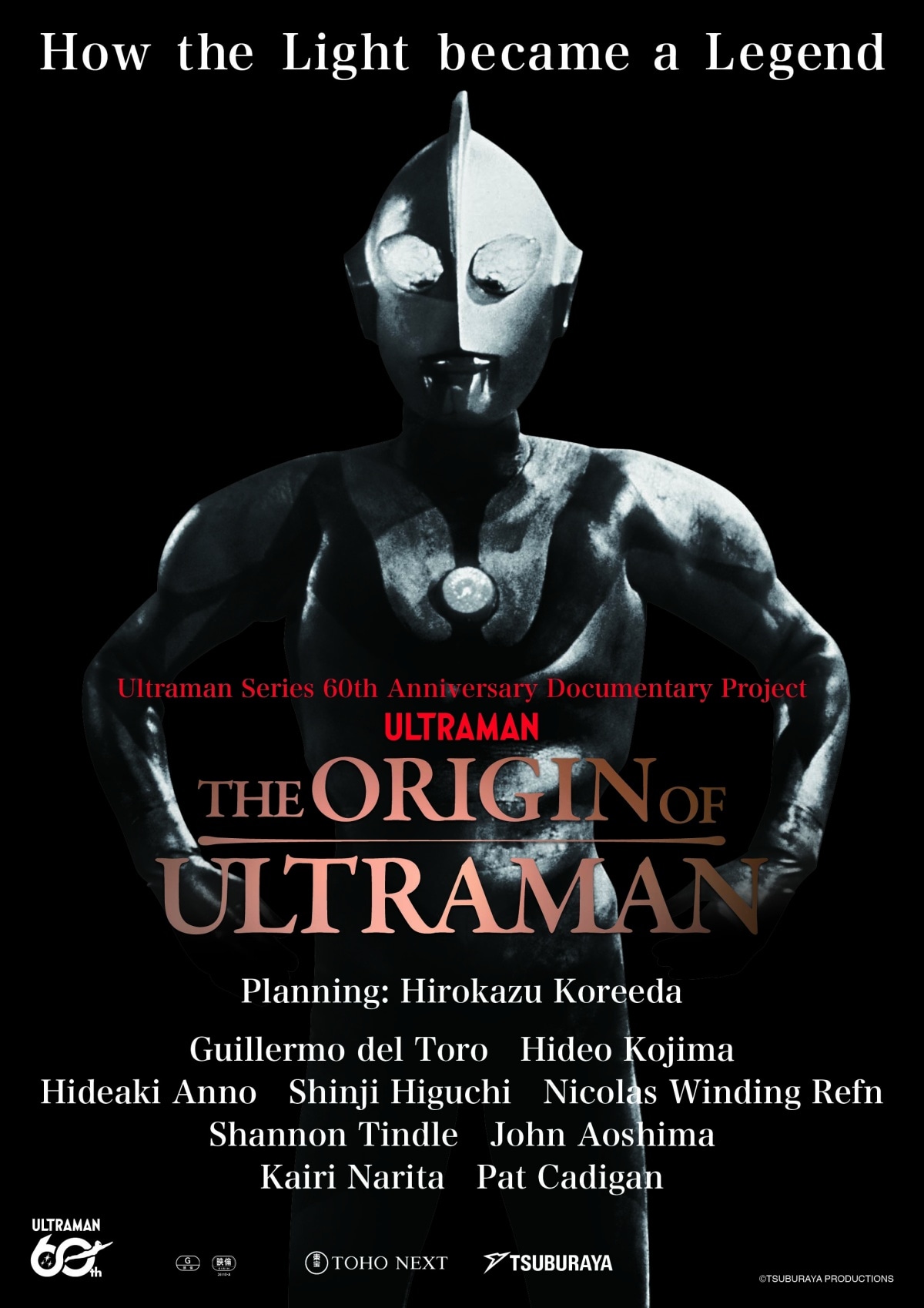
The documentary, The Origin of Ultraman, features a number of renowned international creatives sharing the influence the series had on their lives and careers.
So… what was Eiji like?
Everyone thinks of him as a creator, or a special effects master, but he was really a shokunin – a craftsman. He was like a kid with a new toy, you couldn’t get him to break away for anything, not even to eat. He’d dive into researching some new technique and then pop back up and say let’s do this! Always, always trying new things. The entire special-effects department had a blast working with him. He just had endless curiosity. He was the kind of guy who would look at how his miso dissolved in his soup in the morning, and think, I can use this. Special effects were always on his mind.
The kaiju he made have become Japan’s face to the world these days.
The people who designed them were really incredible. Tohl Narita, and the rest of the team. For instance, I remember Hajime telling me about his dad getting mad about one kaiju, Gomora, that burrows through the earth. When the suitmakers showed off the suit, Eiji got mad. He lives in the ground! Why’s he so clean? Where’s the dirt? He’d be covered in it, wouldn’t he? And they fixed it.
The kaiju weren’t simply monsters. They had individual characteristics and personalities.
Some were even friendly! And some were really sad. Ultraman wouldn’t harm those kinds; he’d release them back into space.That was an evolution from the previous series, Ultra Q, where they had just been monsters. Their histories, so to speak, combined with their visual appearances to make it work. It wouldn’t have worked if they’d just been monsters with no personality, and Ultraman defeated them and flew off.
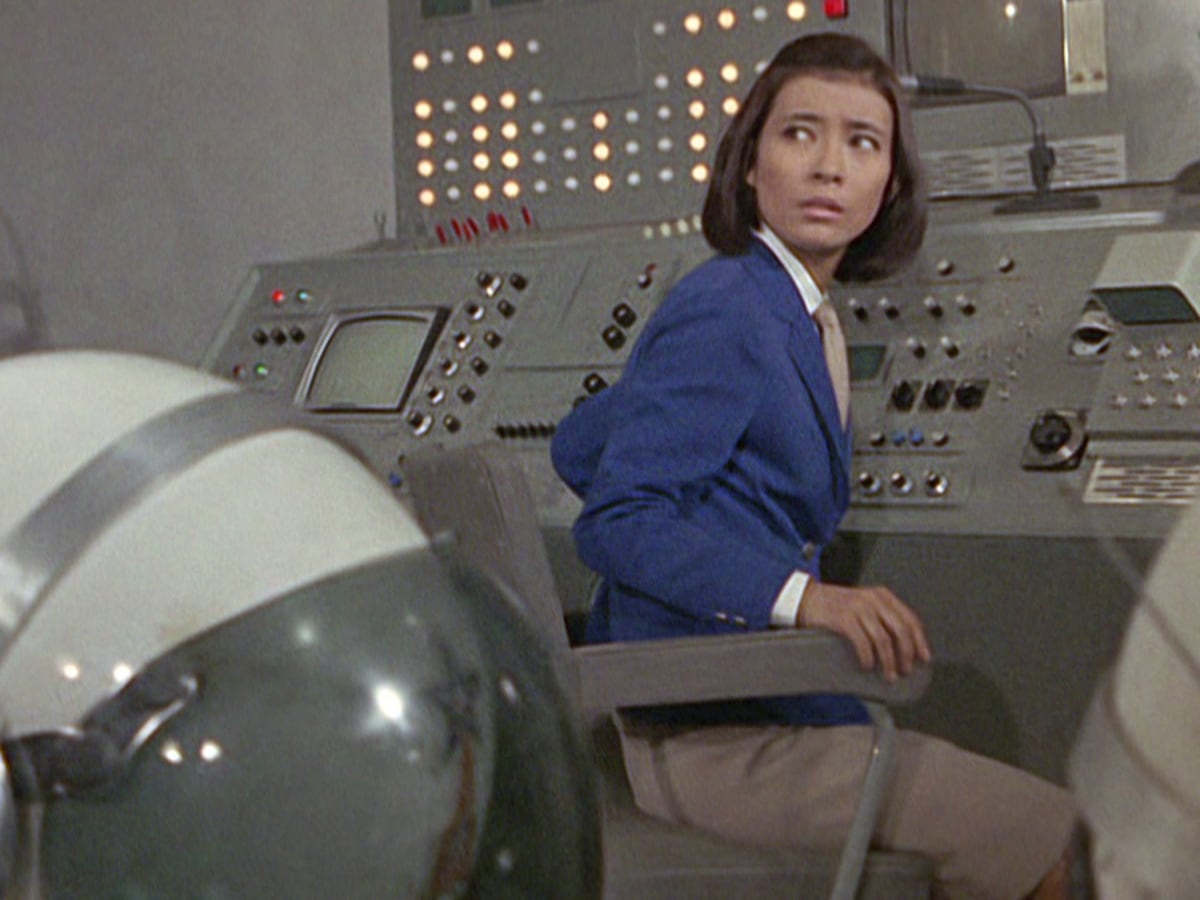
The Science Patrol's dress uniform: a blue blazer.
American filmmakers didn’t get serious about their creatures until Star Wars. Ultraman did it a decade earlier.
I’ve heard that the Star Wars people like George Lucas and Spielberg loved Ultraman.
You made many appearances and cameos in the Ultraman series over the years. Any plans to rejoin the cast again?
At this point, I don’t think I can embody Fuji Akiko in a way fans would want to see. I’m playing grandmother roles, which is more interesting as an actor. Though I still work as a coordinator here at Tsuburaya.
Looking back over sixty years, can you sum up how you feel about being part of the Ultraman series?
Surprise. I think Eiji, and his son Hajime, would be incredibly happy to see how far the series has come. It all played out just like he wanted it to. I just wish they were here to see it.
Eiji Tsuburaya passed away in 1971; his son, Hajime, passed away in 1973.