

Dive Into Tokyo’s Evolution at the Refurbished Edo-Tokyo Museum
If you’re visiting Tokyo, one of the best places to learn about local history is the Edo-Tokyo Museum. Overlooking the Sumida River, the landmark structure has told the story of the Japanese capital since it opened its doors in 1993. Following a four-year closure for refurbishment, it has now reopened to the public with new exhibits that create a more immersive journey through the evolution of one of the greatest cities in the world through revolution, natural disaster and war.
By Tim Hornyak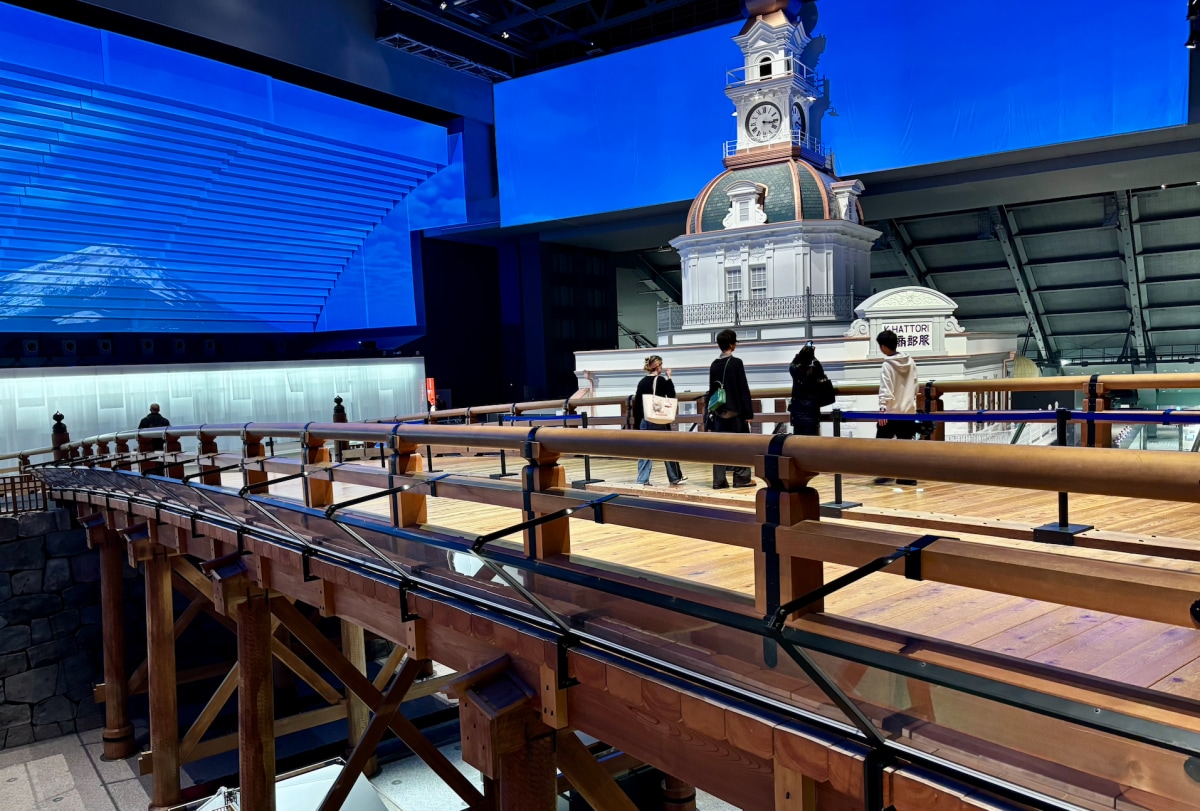
The recreation of the northern half of the Nihonbashi, or Bridge of Japan, stands by a model of the Hattori Clock Shop in the refurbished Edo-Tokyo Museum. (photo: Tim Hornyak).
The metropolis of Edo, once the world’s most populous, was renamed Tokyo in 1868 when Emperor Meiji reasserted imperial rule over Japan after centuries of Shogunate rule. The political revolution inaugurated not only a new regime but a program of modernization through which Japan played catchup with Western powers.
Because this happened relatively late in Japan’s history, much of its feudal culture remained intact. These two eras of Japanese history are the focus of the museum’s Edo Zone and Tokyo Zone. They meet in the fifth-floor main hall, separated by a life-sized recreation of the northern half of the Nihonbashi—the Bridge of Japan—that forms the symbolic and physical centerpiece of the building.
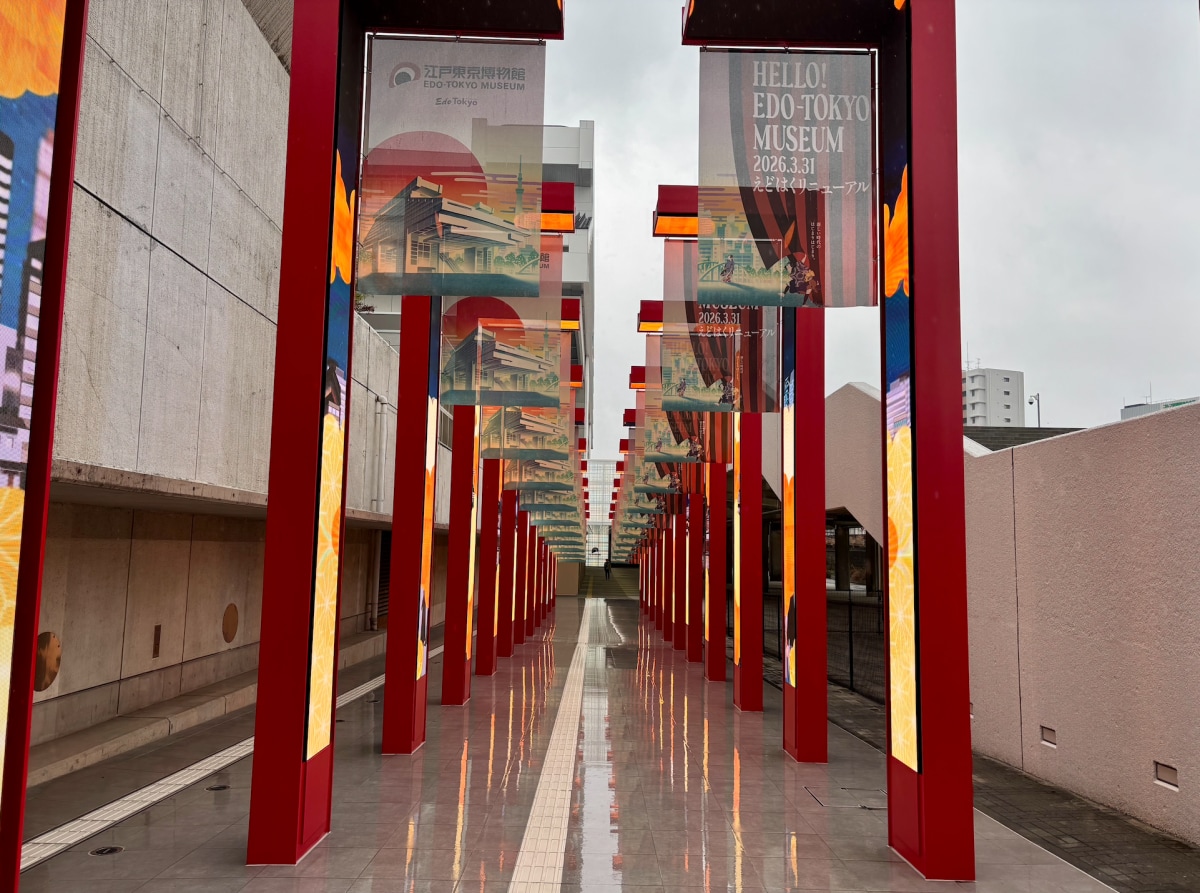
Near the west entrance to the museum, a series of arches reminiscent of Shinto torii gates have changing LED screens showing aspects of Tokyo's past. (photo: Tim Hornyak).
For anyone returning to the museum, a Metabolist icon designed by Kiyonori Kikutake, the visible changes are sometimes subtle; most involved barrier-free accessibility, waterproofing and HVAC updates. The walkway leading to the main entrance is now covered with a colonnade of vermillion columns evoking torii, the traditional Shinto gates that mark sacred spaces. The columns are fitted with LED displays showing animated characters from the Edo and Tokyo eras, which change with the time of day and the season.
Standing on the Nihonbashi, visitors will notice new screens displaying images of the sky and Mount Fuji, which was visible from the actual bridge before modern high-rises blotted it out. Like the torii gate LEDs, these change to represent different times of day.
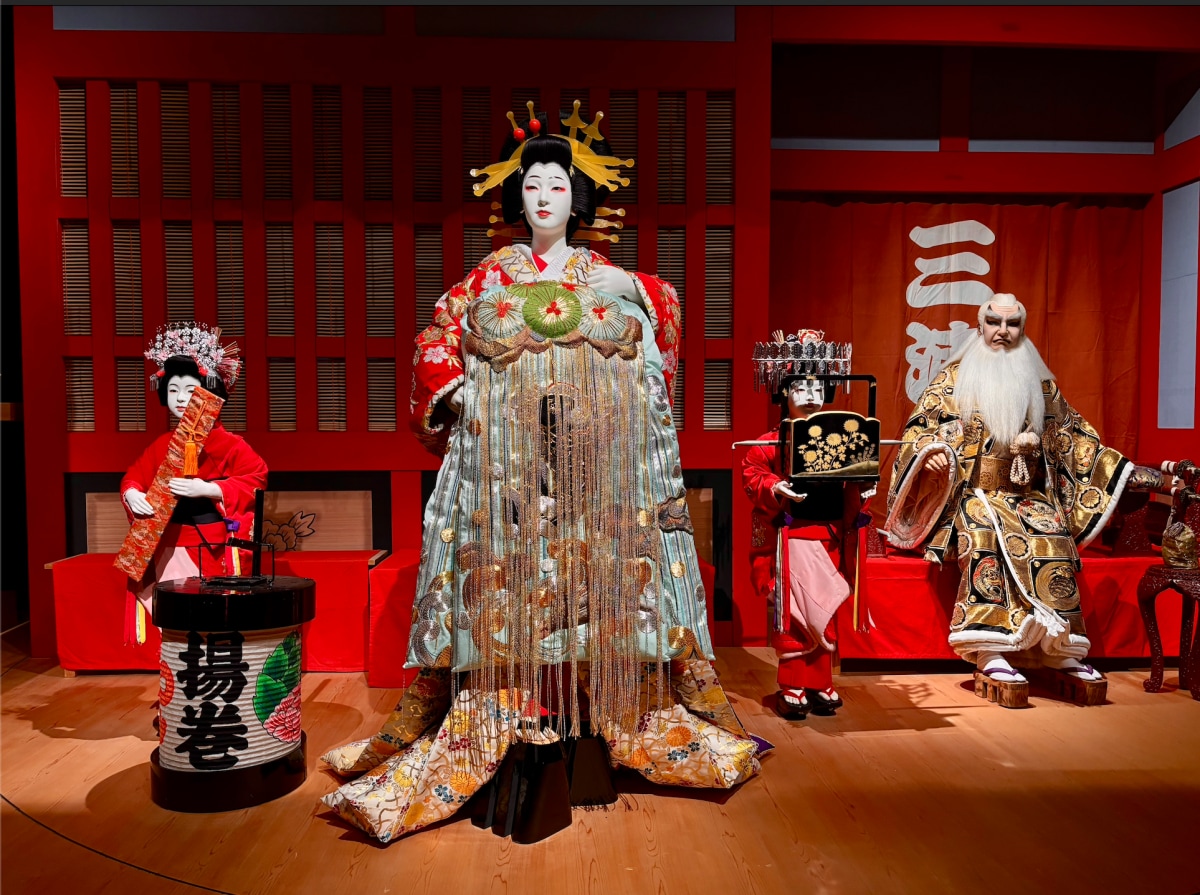
Colorful mannequins stand inside the recreated Nakamura-za kabuki theater, which visitors can now walk through. (photo: Tim Hornyak).
Below the bridge are two rebuilt exhibits in the permanent collection. On the left, in the Edo Zone, is the splendid Nakamura-za, which for over 250 years was one of the three main kabuki theaters of Edo along with the Morita-za and Ichimura-za. Reconstructed to full scale, it can now be entered by visitors—previously it could only be viewed from outside
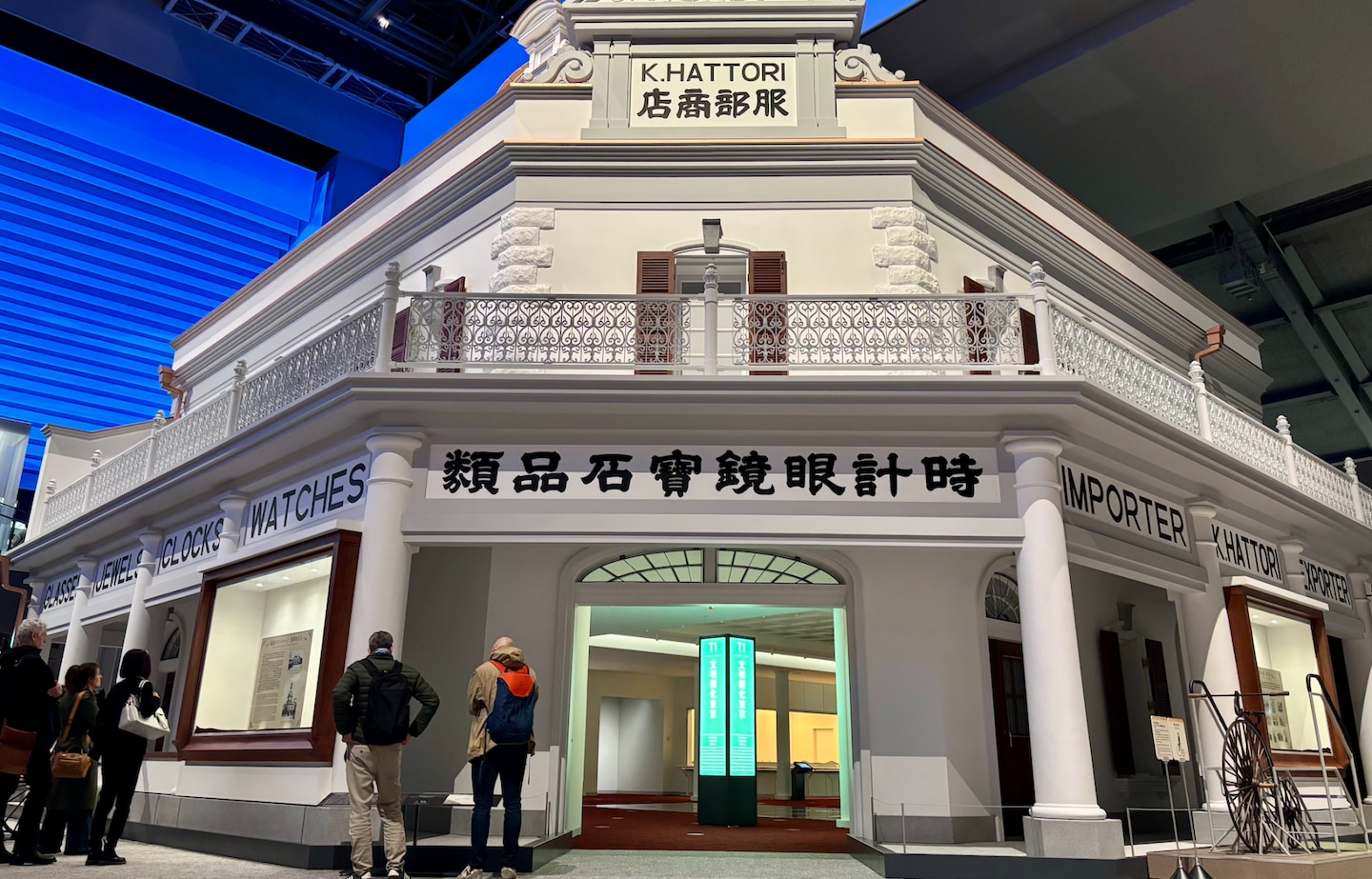
Opposite the theater, on the right side of the Nihonbashi, is a 26-meter-tall, walk-through model of the Hattori Clock Shop that stood in Ginza during the Meiji era. In a curious case of art imitating life, it replaces the museum’s previous exhibit, a large-scale model of the Choya Shimbunsha newspaper building—in 1894, that newspaper building was converted into the clock shop.
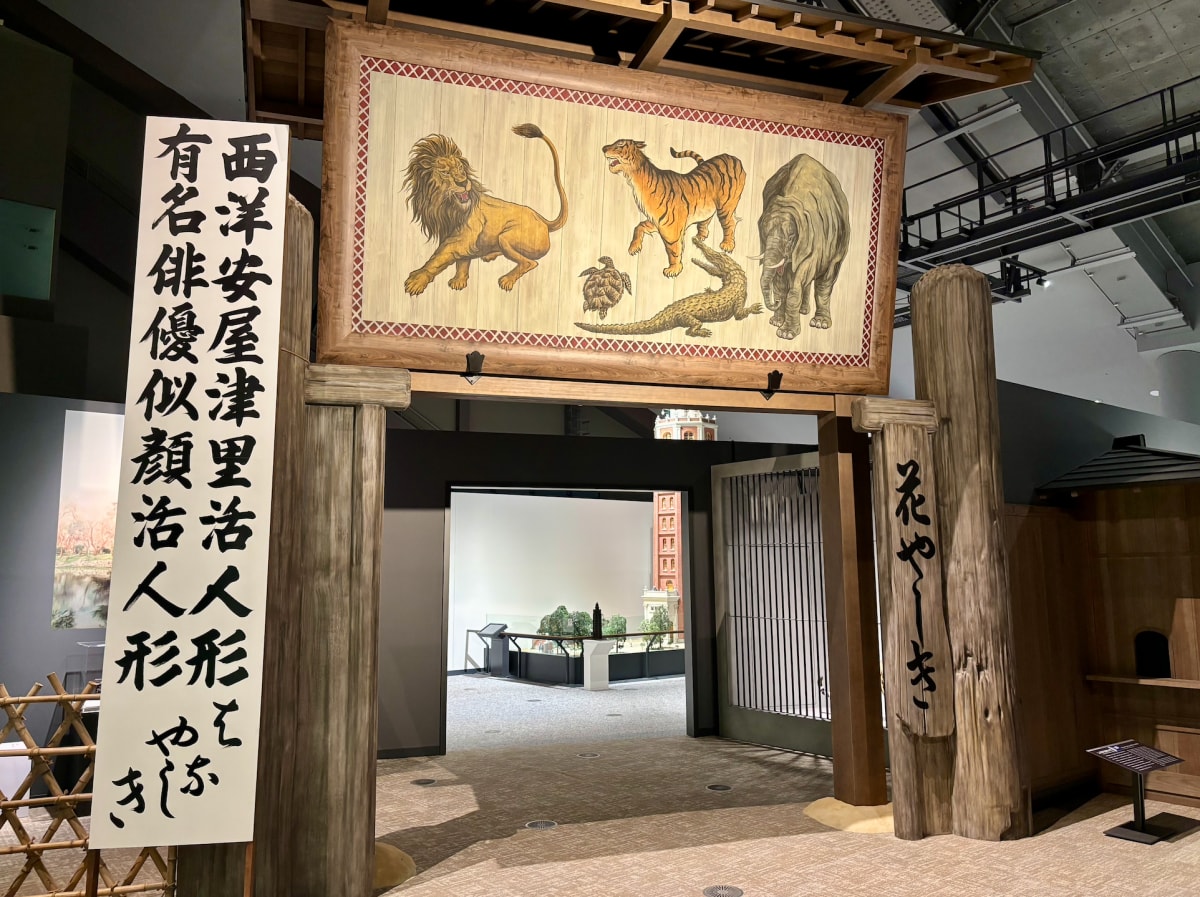
The museum has added a life-sized model of the gate to the Asakusa Hanayashiki amusement park ca. early 1900s, when it exhibited rare animals as well as cutting-edge technology such as phonographs and motion pictures (photo: Tim Hornyak).
Other major modifications to the museum include a life-sized model of the gate to the Asakusa Hanayashiki amusement park as it was in the early 1900s. A unit from the Dojunkai Daikanyama Apartments—an iconic complex of reinforced concrete that housed residents from 1927 to 1996—has been updated with furniture and household items that reflect the Showa era (1926–1989).
The museum has some smaller-scale additions. In the Edo Zone, street stalls have been added, evoking the vendors who would hawk all manner of goods, from flowers to medicine to tempura. A recreation of a nagaya (rowhouse tenement) has been opened so visitors can walk through it and get a sense of the cramped conditions in which Edo’s commoners lived.
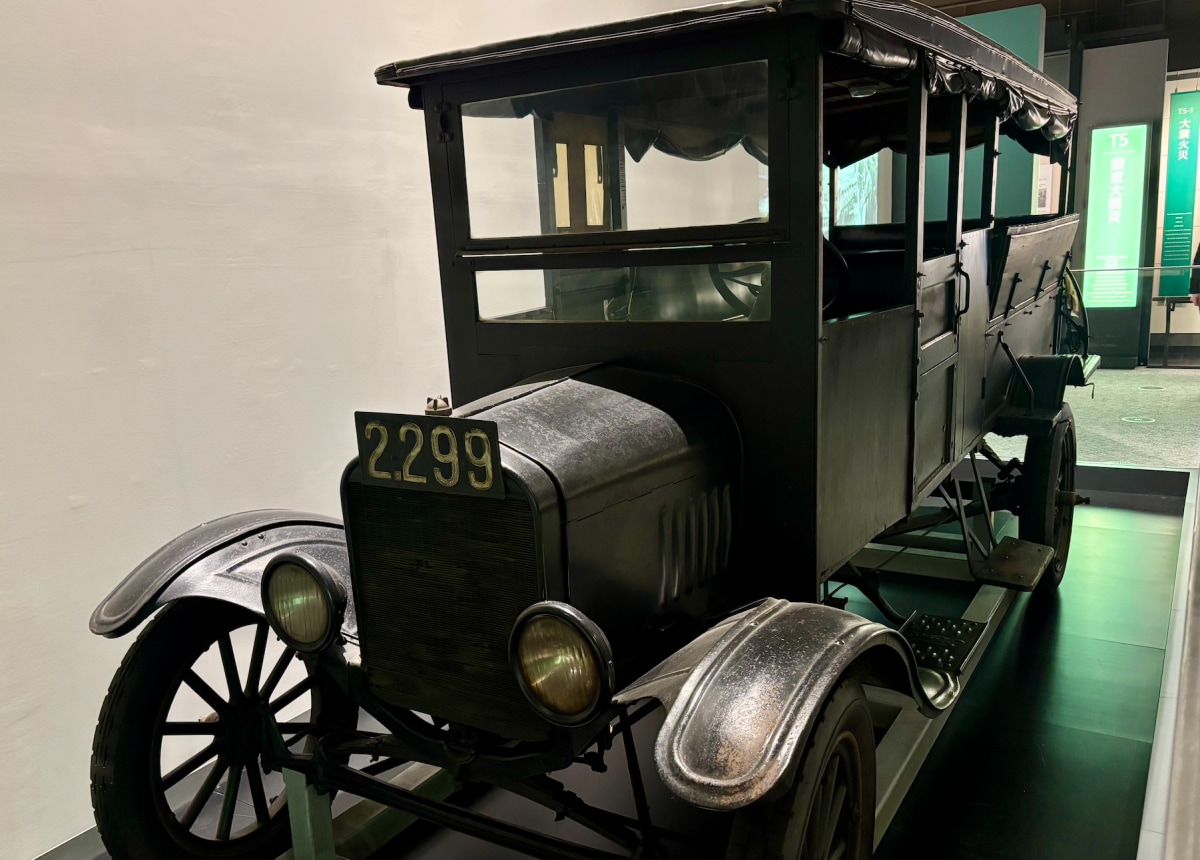
This Ford TT-type omnibus from 1923 is the oldest surviving public bus in Japan and the first vehicle to be recognized as an Important Cultural Property (photo: Tim Hornyak).
Back in the Tokyo Zone, a new display of an Important Cultural Property takes pride of place: the oldest surviving public bus in Japan, a Ford TT type Entaro omnibus from 1923, the year of the Great Kanto Earthquake that reshaped the capital. Nearby, expanded exhibits cover life in contemporary Tokyo, including the advent of smartphones, maid cafés, the coronavirus pandemic and the 2020 Tokyo Olympic and Paralympic Games.
The museum has added some temporary exhibition spaces to enhance the visibility of its collection of over 350,000 items, including 2,411 new acquisitions in fiscal 2024. On the far side of the Nihonbashi span, a large traditional noren curtain marks one such space, which opened with a showing of 11 suits of samurai armor exhibited in glass cases. In another section named Beauty of Edo, the museum is showing the complete set of Utagawa Hiroshige’s (1797–1858) famous woodblock print series, "One Hundred Famous Views of Edo."
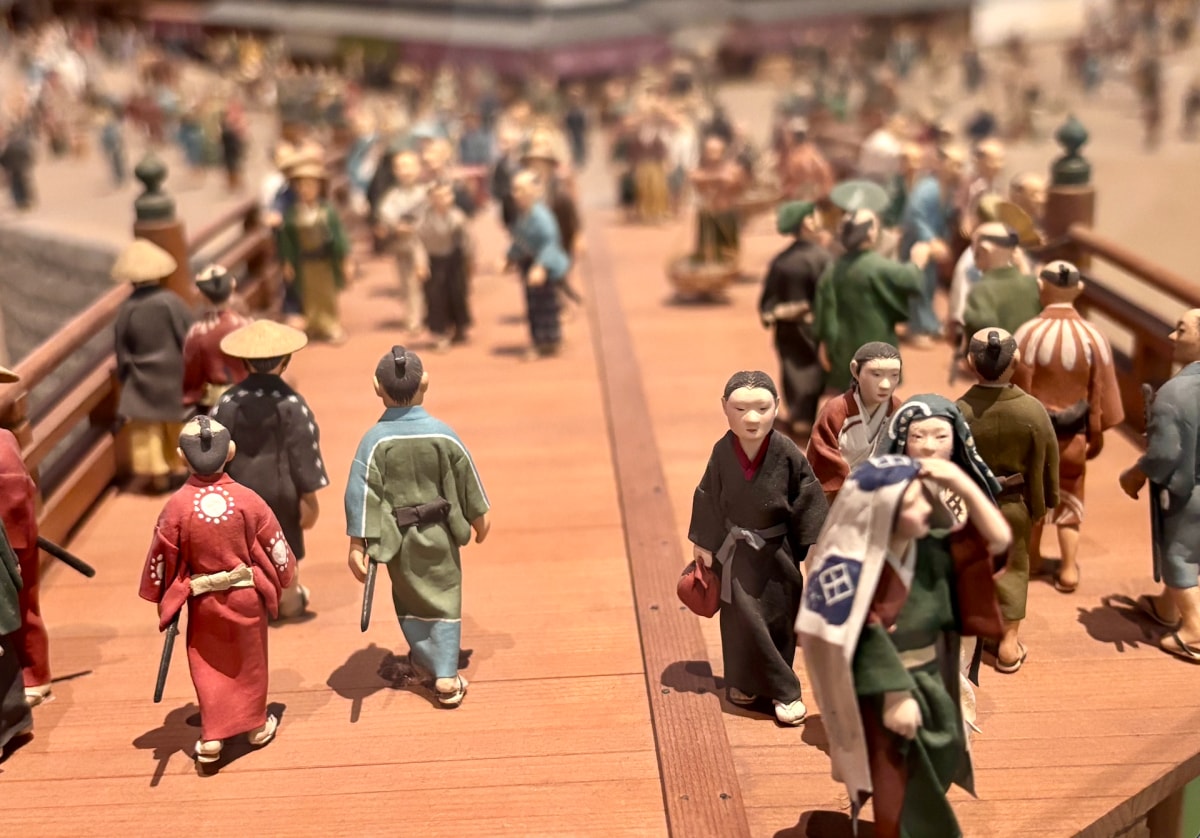
This model of the Nihonbashi bridge depicts the people of Edo in remarkable detail (photo: Tim Hornyak).
Some of the most fascinating parts of the museum, however, are displays you might easily overlook. One explains the Edo period’s variable-hour system of timekeeping, in which a day was divided into 12 periods, each named after an animal in the Chinese zodiac, their length varying by season and the time of day or night.
Another is a model of a “street television”— one of the TV sets that were mounted on 3-meter-tall pedestals outside train stations and other public facilities in the 1950s. It was the early years of broadcasting, when sets were too expensive for most Tokyoites rebuilding after U.S. firebombing destroyed much of the capital in World War II. Yet another is the remarkably detailed scale models of Nihonbashi, Ginza, daimyo warlord residences and other scenes, complete with figurines, that give visitors a sense of everyday life in Edo and 19th-century Tokyo.
The additions and changes to the museum may not be as extensive as one might expect given its four-year closure, but it is now better positioned than ever to continue telling the remarkable tale of this ever-changing metropolis—once a quiet fishing village.
Edo-Tokyo Museum
1-4-1 Yokoami, Sumida-ku, Tokyo 130-0015
TEL:+81-3-3626-9974

Tim Hornyak is a Canadian writer based in Tokyo, Japan, who has worked in journalism for more than 20 years. He has written extensively about travel, food, technology, science, culture and business in Japan for media including The New York Times, Nature, Science, Scientific American, CNBC, CNET, The Japan Times and IDG News. He is the author of Loving the Machine: The Art and Science of Japanese Robots.
www.timhornyak.com